
Ingredients That Don't Play Well Together in Skincare
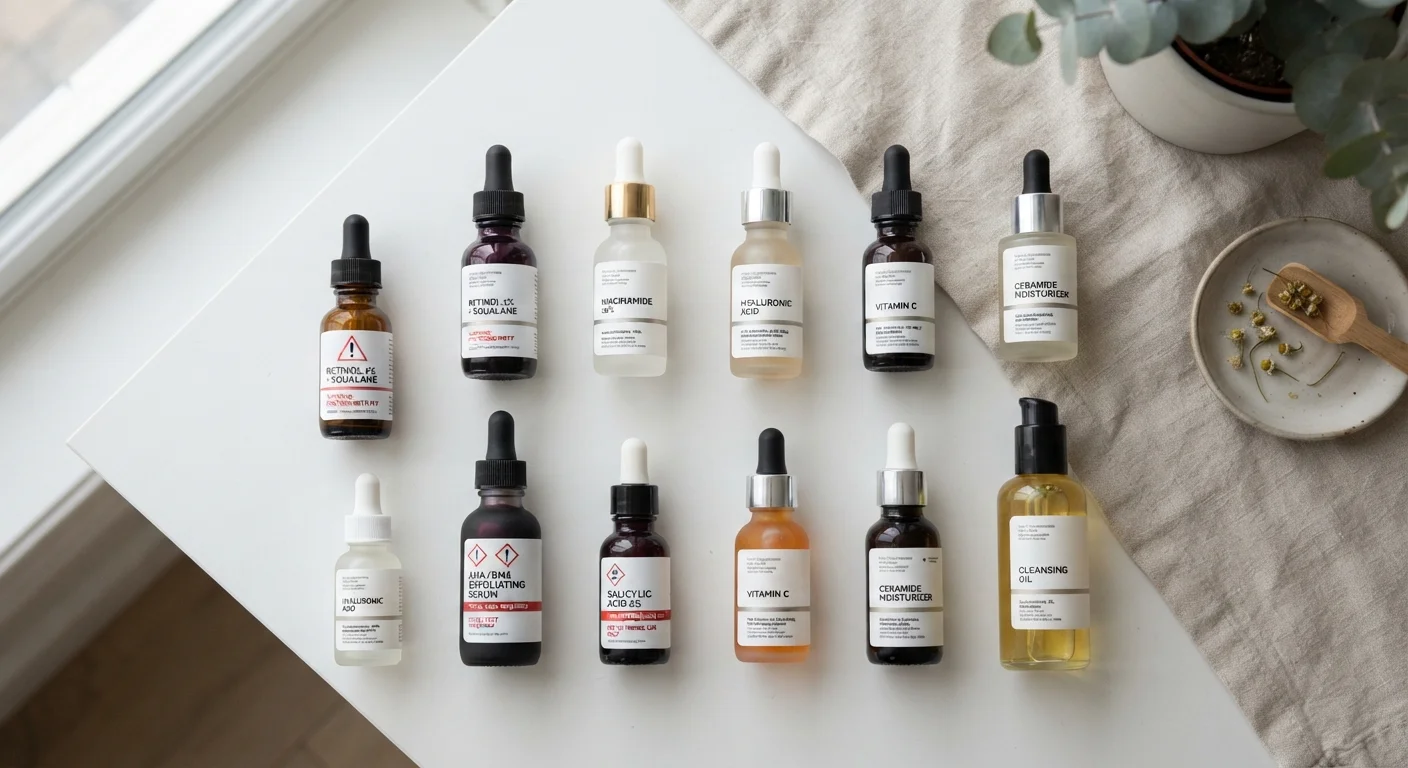
Photo credit: Infolagoon.com | Blogs To Rely On
In this article
Some ingredient pairings can reduce effectiveness or cause irritation. Here's a plain-language guide to common combinations to avoid.
Why Some Skincare Combos Backfire
Building a skincare routine feels empowering — until you layer the wrong ingredients and wind up with redness, breakouts, or products that simply stop working. The good news: you don't need a chemistry degree to avoid the most common mistakes. Understanding a handful of ingredient relationships can protect your skin and your investment in products.
Before diving in, a quick reminder: ingredient sensitivity varies widely from person to person. What causes a reaction on one skin type may be perfectly fine on another. If you're ever unsure, patch-testing and consulting a licensed dermatologist is always a smart move. This article is general educational information, not personalized medical or skincare advice.
For a stronger foundation, it also helps to know how to read a skincare label so you can actually spot these ingredients before purchasing.
| Most common irritation duo | Retinol + AHAs/BHAs (Consistently flagged by dermatologists for barrier disruption) |
| Retinol best used | Evening only (UV exposure increases retinol-related photosensitivity) |
| Vitamin C optimal pH | Below 3.5 (Ascorbic acid stability research, general formulation science) |
| Benzoyl peroxide effect on retinol | May oxidize and degrade it (General cosmetic chemistry consensus) |
| Safe solution for conflicting actives | Alternate AM/PM or alternate days (Standard guidance from licensed estheticians) |
The Most Common Problematic Pairings
Here are the ingredient combinations that dermatologists and estheticians most frequently flag:
Retinol + Vitamin C (Ascorbic Acid)
Both are high-performing actives, but they work best at different pH levels — retinol prefers a slightly higher pH, while ascorbic acid is most stable and active at a lower, more acidic pH. Using them together may reduce the effectiveness of one or both. A common workaround is using vitamin C in the morning and retinol in the evening.
Retinol + AHAs or BHAs
Pairing retinol with chemical exfoliants like glycolic acid (an AHA) or salicylic acid (a BHA) stacks two already-potent skin-renewing ingredients. The result for many people is over-exfoliation: irritation, dryness, and a compromised skin barrier. Learn more about how these exfoliants work in our guide to chemical exfoliants vs. physical scrubs.
Niacinamide + Vitamin C
This pairing has been debated heavily online. Older concerns suggested they form a compound that causes flushing, but more recent formulation research indicates the reaction is minimal at the concentrations found in most products. That said, if you experience redness, alternating them is a simple fix.
Benzoyl Peroxide + Retinol
Benzoyl peroxide can oxidize and degrade retinol, potentially rendering it less effective. If you're using both for acne and anti-aging, keep them in separate routines — one morning, one night.
Multiple Exfoliants at Once
Layering AHAs, BHAs, and physical scrubs in the same session is one of the quickest ways to strip your moisture barrier. More exfoliation is not better. Everyday habits like this can quietly compound into real skin issues over time.
AHA (Alpha Hydroxy Acid)
A class of water-soluble chemical exfoliants — including glycolic and lactic acid — that work on the skin's surface to loosen dead cells and improve texture and tone.
BHA (Beta Hydroxy Acid)
A oil-soluble exfoliant, most commonly salicylic acid, that penetrates into pores to clear congestion. Often recommended for acne-prone or oily skin types.
Retinol
A vitamin A derivative used in skincare to support cell turnover and address fine lines, uneven tone, and acne. It makes skin more sensitive to sunlight, so evening use and SPF are important.
Skin Barrier
The outermost layer of the skin that retains moisture and protects against environmental stressors. Over-exfoliation and harsh ingredient combinations can disrupt it, leading to redness and sensitivity.
pH Level
A measure of acidity or alkalinity on a scale of 0 to 14. Many skincare actives require a specific pH range to work properly; mismatched pH levels between products can reduce their effectiveness.
Benzoyl Peroxide
An antimicrobial ingredient commonly used to treat acne by killing bacteria on and in the skin. It is an oxidizing agent, which means it can degrade certain other actives when combined.
How to Rethink Your Routine
Once you know which ingredients conflict, the solution is usually simple: separate them by time of day or alternate days rather than eliminating them altogether.
Start Slow When Adding New Actives
Introducing multiple active ingredients at once makes it harder to identify what's causing a reaction. Dermatologists commonly recommend adding one new active ingredient at a time and waiting two to four weeks before introducing another. Patch testing on a small area — like the inner arm — before applying a new product to your entire face is also a widely recommended precaution. When in doubt, a dermatologist can help you build a routine tailored to your specific skin type and concerns.
- AM routine: Antioxidants like vitamin C, niacinamide, and SPF are generally morning-friendly.
- PM routine: Retinol, AHAs, and BHAs tend to work best at night when your skin isn't exposed to UV light, which can increase sensitivity.
- Alternate nights: If you want both retinol and a chemical exfoliant in your life, use them on different evenings rather than simultaneously.
Layering order also matters — applying products in the wrong sequence can block absorption or create a physical barrier. Our breakdown of skincare layering order explains the logic in plain terms. And if your moisturizer has been pilling or beading up, conflicting ingredients and layering missteps are often the culprit — see why your moisturizer keeps pilling off for solutions.
This article is for general informational purposes only and does not constitute medical, dermatological, or personalized skincare advice. If you have specific skin concerns, sensitivities, or conditions, please consult a qualified dermatologist or licensed skincare professional.

Author
Style & Beauty Editorial Team
Style & Beauty Editorial Team is the collective byline for our editorial team and contributor network. Articles published under this byline or an editorial pen name are researched, written, and reviewed according to our editorial standards for clarity, consistency, and independence before publication.
View all articles →