
Air Filter, Cabin Filter, Fuel Filter: What Each One Does and When It Matters
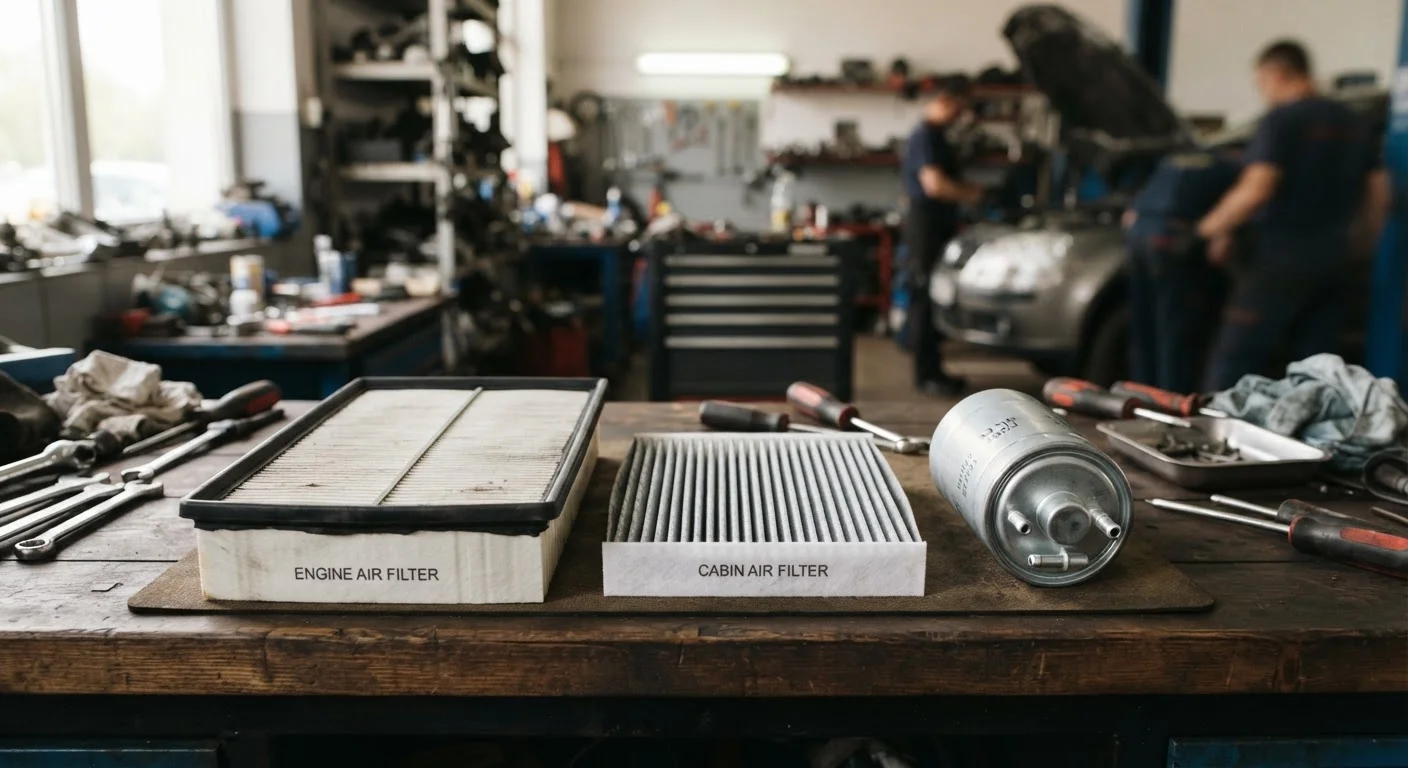
Photo credit: Infolagoon.com | Blogs To Rely On
In this article
Three filters, three jobs—and they're not interchangeable. Learn what each filter protects, how to spot wear, and why timing matters.
Key Takeaways
- The engine air filter, cabin air filter, and fuel filter each protect a different system and are not interchangeable.
- A clogged engine air filter can reduce fuel efficiency and strain engine performance over time.
- Cabin filters affect the air quality inside your car - not engine operation.
- Fuel filters are most critical on older vehicles; many newer cars have non-serviceable in-tank designs.
- Replacement intervals vary by vehicle and driving conditions - always check your owner's manual.
Why These Three Filters Get Confused
Ask a driver what their car's air filter does, and most can give a rough answer. Ask about the cabin filter or fuel filter, and things get murkier. All three are called "filters," all three wear out over time, and all three get mentioned at the service counter - often in the same breath. But they protect entirely different systems, fail in different ways, and matter in different situations.
Understanding each one on its own terms is the first step toward making smarter maintenance decisions. For a broader look at how filter replacements fit into your vehicle's overall upkeep, see our car maintenance schedule guide.
Engine Air Filter: Protecting Combustion
The engine air filter sits between the outside air and your engine's intake. Its job is to trap dust, dirt, pollen, and debris before they can enter the combustion chamber. Engines need a precise mix of air and fuel to run efficiently - contaminated air disrupts that balance.
A heavily clogged engine air filter restricts airflow, which can cause the engine to run rich (too much fuel relative to air), reduce fuel economy, and in severe cases, trigger a check-engine light. You may also notice sluggish acceleration or a rough idle.
Check Your Air Filter at Every Oil Change
Many mechanics will pull the engine air filter for a quick visual inspection during an oil change at no extra charge. Even if it doesn't need replacing yet, this gives you a reliable baseline for tracking wear. If you drive on unpaved roads or in dusty conditions regularly, ask about a shorter inspection interval.
Most manufacturers recommend replacing the engine air filter every 15,000 to 30,000 miles, but dusty or rural driving environments can shorten that interval significantly. Paper pleated filters are standard; some reusable oiled cotton gauze filters exist but require periodic cleaning rather than replacement.
Inspection is straightforward - a clean filter is white or light gray; a dark, visibly dirty filter is ready for replacement. This is one of the simpler DIY checks you can do yourself before a scheduled service.
Cabin Air Filter: Protecting the People Inside
The cabin air filter has nothing to do with engine performance. It filters the air that flows through your car's heating, ventilation, and air conditioning (HVAC) system - the air you and your passengers actually breathe. It captures dust, pollen, mold spores, and sometimes exhaust particles before they circulate through the interior.
15,000-25,000
Miles between cabin filter changes
General industry guidance; actual intervals vary by manufacturer and driving environment.
~25%
Potential fuel economy loss from clogged air filter
The U.S. Department of Energy has noted that a severely restricted air filter can noticeably reduce fuel efficiency on older carbureted engines; the effect is smaller on modern fuel-injected vehicles.
A neglected cabin filter reduces airflow through the HVAC system, which means weaker defrost performance, less effective air conditioning, and potentially musty odors inside the cabin. For drivers with allergies or respiratory sensitivities, a fresh cabin filter makes a tangible difference in ride comfort.
Replacement intervals are typically every 15,000 to 25,000 miles, though this varies. The filter is usually located behind the glove box or under the dashboard - locations and access difficulty vary by make and model. Some vehicles make it a five-minute job; others require more disassembly. When in doubt, a service technician can handle it quickly. Note that cabin filter maintenance shares some conceptual overlap with home HVAC upkeep - see our HVAC maintenance guide for homeowners for a useful comparison.
Fuel Filter: Protecting Fuel Delivery
The fuel filter screens contaminants - rust particles, sediment, and debris - out of the fuel before it reaches the fuel injectors or carburetor. Dirty fuel can clog injectors, reduce fuel pressure, and cause hesitation, hard starting, or stalling.
Here's where things get more nuanced: many modern vehicles (roughly 2000 and newer) have the fuel filter integrated inside the fuel tank as part of the fuel pump module. These are generally considered non-serviceable under normal conditions and are replaced only when the fuel pump assembly is replaced - typically not a routine maintenance item.
Older vehicles with an inline fuel filter - a small canister mounted along the fuel line under the hood or beneath the car - do require periodic replacement, often every 20,000 to 40,000 miles. If you drive an older vehicle and aren't sure which setup you have, your owner's manual will clarify, or a mechanic can identify it during a routine inspection.
Don't DIY Inline Fuel Filter Work Without Precautions
Replacing an inline fuel filter involves working with pressurized fuel lines. Fuel is flammable, and improper handling poses a fire risk. If you're not experienced with fuel system work, this task is best left to a qualified mechanic. Always depressurize the fuel system before disconnecting any fuel line, and never work near open flames or sparks.
For drivers evaluating how powertrain type affects filter needs, electric vehicles eliminate both the engine air filter and fuel filter entirely - see our gas, hybrid, and electric vehicle breakdown for more context.
Side-by-Side: How the Three Filters Compare
Putting all three filters in context helps clarify which service matters most for your situation and when to prioritize it.
| Engine Air Filter | Cabin Air Filter | Fuel Filter | |
|---|---|---|---|
| What it protects | Engine combustion system | Passenger air quality | Fuel injectors and delivery system |
| Typical replacement interval | 15,000-30,000 miles | 15,000-25,000 miles | 20,000-40,000 miles (inline only) |
| Symptom of neglect | Reduced power, poor fuel economy | Weak airflow, odors in cabin | Hard starts, stalling, hesitation |
| Applies to electric vehicles? | No | Yes | No |
| DIY-friendly? | Generally yes | Often yes, varies by model | Inline: sometimes; in-tank: no |
| Location | Engine intake area | Behind glove box or dashboard | Fuel line or inside fuel tank |
For a complete picture of how filter replacements fit alongside fluid checks and other routine upkeep, our fluid checks guide covers what to monitor between service visits.
This article is for general informational purposes only. Always consult your vehicle's owner's manual and a qualified mechanic for maintenance decisions specific to your car.

Author
Autos & Transport Editorial Team
Autos & Transport Editorial Team is the collective byline for our editorial team and contributor network. Articles published under this byline or an editorial pen name are researched, written, and reviewed according to our editorial standards for clarity, consistency, and independence before publication.
View all articles →