
Accessorizing Without Overdoing It: How Simplicity Often Reads as More Confident
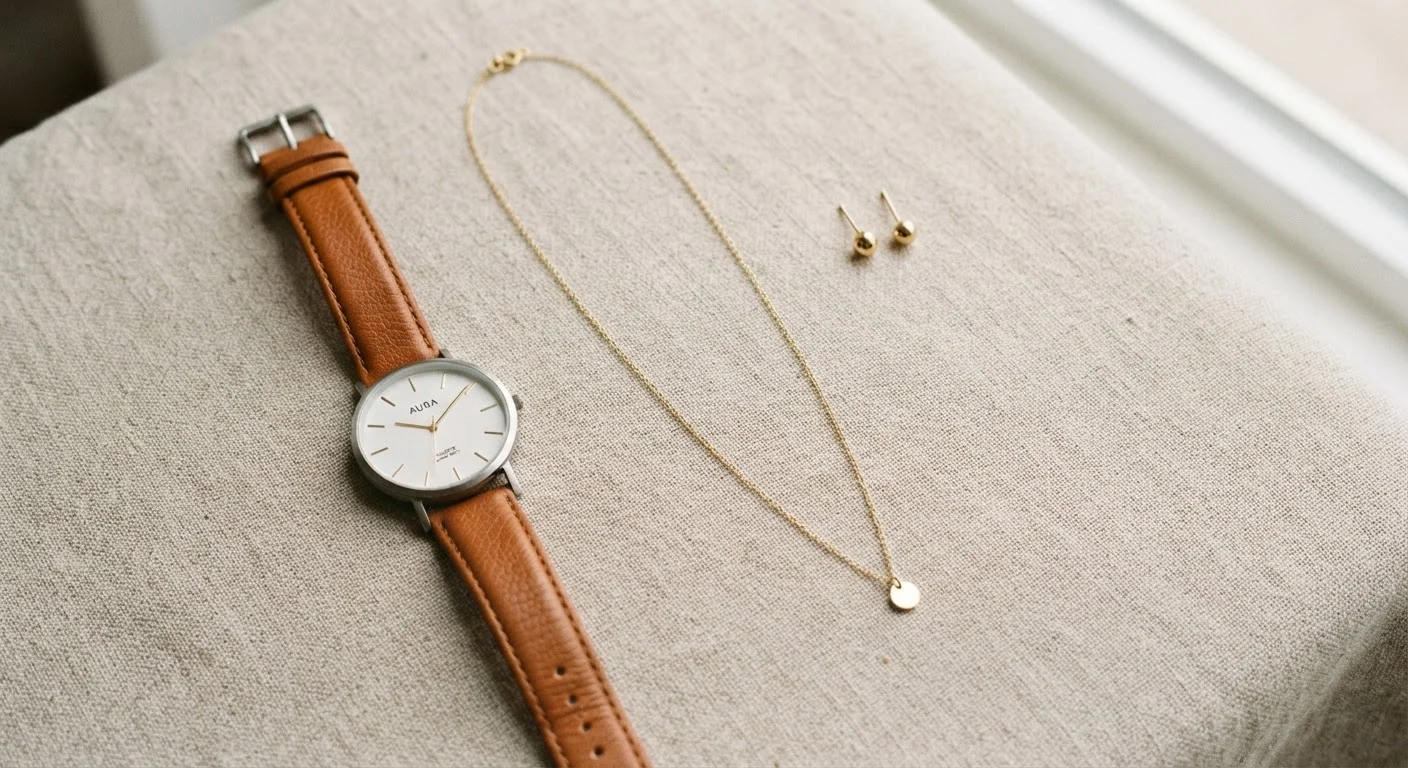
Photo credit: Infolagoon.com | Blogs To Rely On
In this article
Accessories can elevate or overwhelm an outfit. Here are the principles behind restraint in accessorizing and why less often communicates more clearly.
Key Takeaways
- Restraint in accessorizing often reads as more intentional and confident than layering many pieces.
- One focal point per outfit — a single standout piece — helps the eye land somewhere purposeful.
- Matching the weight of accessories to the outfit's formality prevents visual imbalance.
- Editing down, not adding up, is the most reliable path to a polished look.
- The goal isn't minimalism for its own sake — it's clarity and intention in every choice.
Why Restraint Reads as Confidence
Accessories are one of the fastest ways to elevate an outfit — and one of the easiest ways to muddy it. The instinct to add more is understandable: more color, more texture, more personality. But when multiple pieces compete for attention at once, the overall effect tends to feel busy rather than bold.
Visual confidence comes from clarity. When an outfit has a clear focal point — one piece that draws the eye — it signals that choices were made deliberately rather than by default. That sense of intention is what most people register as "put-together," even if they couldn't name exactly why.
This connects directly to the broader principles behind what makes an outfit look polished. Accessories follow the same logic: it's not about price or quantity, it's about whether each element is earning its place.
The Mirror Test Before You Leave
Before walking out the door, take a full-length look and ask: does anything feel like it's working hard to be noticed? Effortful-looking accessories often undercut the confidence effect you're going for. A look that feels easy to wear usually reads that way to others too.
The Principles Behind Thoughtful Accessorizing
Before walking through the steps, it helps to understand a few guiding ideas that make restraint feel natural rather than like deprivation.
- One focal point per look. Choose one piece to be the statement — a bold earring, a structured bag, a distinctive belt — and let everything else support it quietly.
- Scale matters as much as quantity. A chunky chain necklace worn alone can carry as much visual weight as five layered delicate pieces. Neither is wrong, but knowing which effect you want keeps things intentional.
- Match accessory weight to outfit formality. A silk blouse and tailored trousers call for something refined; a weekend denim look can handle something chunkier or more casual. Mismatches in formality create visual friction. For more on this, see how dress codes translate into real dressing decisions.
- Texture and color already count. If your outfit includes a printed fabric, an interesting knit, or a bold color, those elements are already doing work. Accessories on top of visual complexity often disappear anyway — or push the look into overwhelm.
These same balancing principles apply when thinking about neutral tones versus bolder statement choices in everyday wear.
Trends Can Distort Your Instincts
Social media styling often layers accessories heavily for photographic impact — it's designed to pop on a small screen, not necessarily to translate into everyday wearability. What reads as editorial boldness in a styled photo can feel like too much in real life. Use trend inspiration as a starting point, not a blueprint.
How to Edit Your Accessories
This process takes only a few minutes and works whether you're dressing for work, a casual outing, or an event.
Start fully dressed, then add accessories
Put on your complete outfit — clothing, shoes, bag — before adding a single accessory. This gives you an honest read on what the look already has going for it: texture, color, silhouette. Many outfits need very little on top of that.
Identify one piece you want to be the focal point
Ask yourself: what do I want someone to notice first? It might be a pair of earrings, a necklace, a watch, a belt, or a bag. Choose one. Everything else you add should be quieter than that piece — lower contrast, smaller scale, or more neutral in tone.
Add only what that focal point needs for balance
Bold earrings rarely need a necklace — especially if the neckline of your top already has visual interest. A standout necklace often looks cleaner with minimal or no earrings. Check whether any additional pieces you're considering are adding something distinct or just duplicating the focal point's energy without contributing anything new.
Step back and remove one thing
Once you've assembled everything, take one final look and remove at least one piece. This is the classic editing step — it consistently improves the outcome. If removing it makes the look feel incomplete, put it back. If the look is stronger without it, you have your answer.
Check proportion relative to your outfit and occasion
Oversized accessories on a very fitted, minimal outfit can work beautifully — the contrast is intentional. But large accessories on a heavily layered or textured look tend to compete rather than complement. Consider whether the scale of your accessories feels proportionate to both the outfit and where you're going. Proportion in outfit building applies to accessories as much as to silhouette.
Once you've developed the habit of editing before you leave the house, it becomes second nature. It's worth applying the same thinking to your overall wardrobe — if you're building your wardrobe from scratch, starting with fewer, more intentional pieces from the beginning makes the whole process easier. And if your closet already feels chaotic, many of the common wardrobe mistakes that complicate daily dressing apply to accessories just as much as clothing.

Author
Style & Beauty Editorial Team
Style & Beauty Editorial Team is the collective byline for our editorial team and contributor network. Articles published under this byline or an editorial pen name are researched, written, and reviewed according to our editorial standards for clarity, consistency, and independence before publication.
View all articles →