
5G Explained: What It Changes, What It Doesn't, and Who Actually Benefits
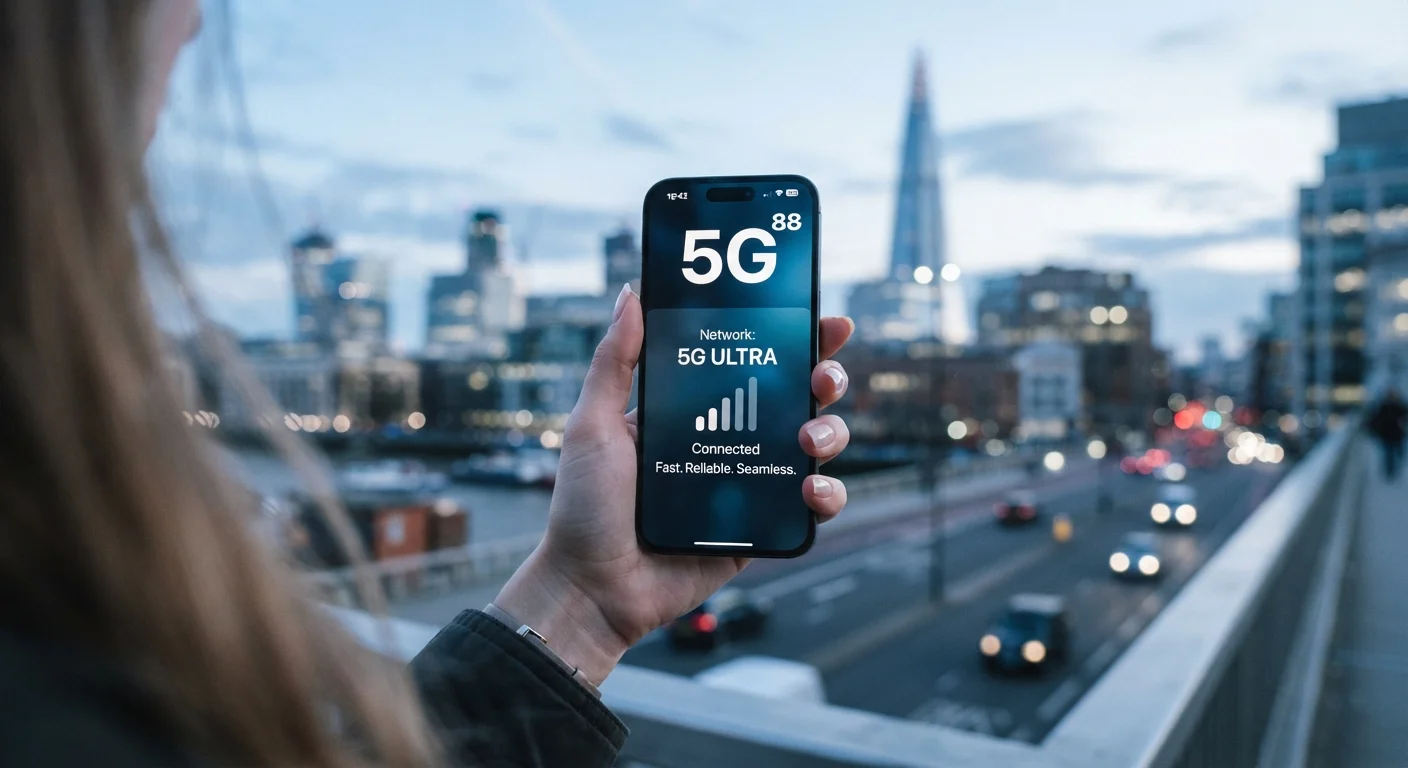
Photo credit: Infolagoon.com | Blogs To Rely On
In this article
5G has been talked up for years, but everyday consumers often feel little difference. Here's a clear-eyed look at what 5G really delivers.
Key Takeaways
- 5G is faster than 4G on paper, but real-world speeds depend heavily on your carrier and location.
- Most people will not notice a dramatic difference in daily tasks like browsing or streaming.
- Low-band 5G is widely available but only marginally faster than 4G LTE in many areas.
- Industries like healthcare, manufacturing, and logistics stand to gain more than individual consumers right now.
- A 5G-capable phone does not guarantee a 5G experience without compatible carrier coverage.
The Gap Between the Hype and Your Daily Experience
Since carriers began rolling out 5G networks, the marketing has been hard to miss — promises of lightning-fast downloads, seamless streaming, and a connected future. But millions of people upgraded to 5G-capable phones and noticed... mostly the same experience as before. That gap between promise and reality isn't a conspiracy or a lie. It's a function of how wireless networks actually get built.
5G is a genuine technological upgrade. Peak speeds in ideal lab conditions can be many times faster than 4G LTE. But building a network to deliver those speeds everywhere, to everyone, takes years of infrastructure investment. Right now, the U.S. 5G rollout is still very much a work in progress — which means the version of 5G most people connect to day-to-day is the more modest low-band variety.
~30%
Typical real-world 5G speed improvement over 4G in low-band coverage areas
Independent network testing by firms like Opensignal has consistently found that low-band 5G speeds in the U.S. are often only modestly higher than 4G LTE in practice.
3–5x
Speed advantage of mid-band 5G over 4G in covered areas
Mid-band 5G deployments in urban areas have shown substantially higher median download speeds in carrier and third-party network analyses, though coverage remains geographically limited.
Understanding what 5G actually is — and isn't — helps you make smarter decisions about your phone plan, your next device, and what to genuinely expect from your connection. For a broader look at how your phone manages different types of wireless signals, see how mobile data, Wi-Fi, and Bluetooth each work.
The Three Flavors of 5G (and Why They Matter)
Not all 5G is equal. Carriers deploy 5G across three spectrum bands, and each behaves very differently:
- Low-band 5G travels long distances and penetrates buildings well. It's what blankets most of the country. The trade-off: speeds are often only modestly faster than 4G LTE — sometimes just 20–50% quicker in practice.
- Mid-band 5G strikes a better balance of speed and range. In cities and suburbs where mid-band is deployed, users can see genuinely significant speed improvements. This is the variant most likely to make a noticeable difference to everyday consumers.
- Millimeter wave (mmWave) 5G is the ultra-fast version you've seen in headlines. It can deliver multi-gigabit speeds — but only within a short range of a tower, and it struggles to pass through walls or glass. Coverage is limited to dense urban areas and specific venues like stadiums.
The '5G' Icon Doesn't Tell the Full Story
iPhones and Android phones display a single '5G' label regardless of which band you're connected to. Some phones show distinctions like '5G UC' or '5G+' to indicate faster mid-band or mmWave connections — but this varies by carrier and device. If you want to know your actual connection speed, a free speed-test app gives a more accurate picture than the status bar icon.
When your phone displays a '5G' icon, it doesn't tell you which band you're on. That context matters enormously for understanding why your experience may feel underwhelming despite the label.
What 5G Actually Changes Right Now
For most consumers today, the honest answer is: not much that's immediately visible in daily tasks. Browsing, social media, email, and standard video streaming work perfectly well on 4G LTE, and 5G doesn't fundamentally change those experiences.
Where 5G does show up meaningfully today:
- Crowded locations. Stadiums, concerts, and busy urban centers can overwhelm 4G networks. 5G's greater capacity to serve many devices simultaneously can improve reliability in those spots.
- Large file downloads. Downloading a full movie or a large app update is noticeably faster on strong mid-band 5G compared to 4G.
- Fixed wireless home internet. In areas without cable or fiber, 5G home internet products are providing broadband-level speeds to households that previously had limited options.
Check Your Carrier's Coverage Map Before Expecting a Speed Boost
Before assuming your 5G phone will deliver fast speeds in your area, look up your carrier's coverage map and check whether your location shows mid-band or only low-band 5G. Most carrier maps now distinguish between coverage tiers. If you're only in a low-band area, managing your expectations is the practical move — and your 4G LTE backup is likely performing comparably.
The sectors seeing the most transformative early impact from 5G aren't consumer phones — they're industries. Factories using 5G for real-time machine monitoring, hospitals piloting remote diagnostics, and logistics networks tracking equipment are among the early adopters experiencing genuine operational change.
Who Actually Benefits — and When
Splitting the question honestly: businesses and industries are seeing the most meaningful early benefits from 5G. The combination of speed, low latency (the delay between sending and receiving data), and the ability to connect thousands of devices per square kilometer opens doors for automation, remote operations, and real-time data that weren't practical before.
For individual consumers, the benefits are real but incremental for now. If you live in a city with strong mid-band coverage, use your phone intensively for video, or regularly deal with spotty coverage in crowded places, a 5G phone on a capable network can be a genuine improvement. If you live in a rural or suburban area primarily served by low-band 5G, the upgrade may be barely perceptible.
The fuller consumer payoff — think immersive augmented reality, truly lag-free cloud gaming, and richer smart-home ecosystems — depends on both continued network buildout and new applications being developed to use 5G's capabilities. For context on how connected home technology is evolving alongside these networks, here's a plain-language look at what smart home technology really involves.
The short version: most people buying a new phone today will get a 5G device whether they seek it out or not, and that's fine. Just don't expect the network icon to change your daily life overnight — the infrastructure catching up to the potential is the story still being written.
“The most transformative applications of 5G haven't been invented yet. The infrastructure being built today is the foundation — but the experiences that will make it feel revolutionary are still a few years away for most consumers.”
— A wireless industry analyst, Telecommunications policy researcher, widely cited in industry coverage
Frequently Asked Questions

Author
Tech & Gadgets Editorial Team
Tech & Gadgets Editorial Team is the collective byline for our editorial team and contributor network. Articles published under this byline or an editorial pen name are researched, written, and reviewed according to our editorial standards for clarity, consistency, and independence before publication.
View all articles →