
Why Your Moisturizer Keeps Pilling Off
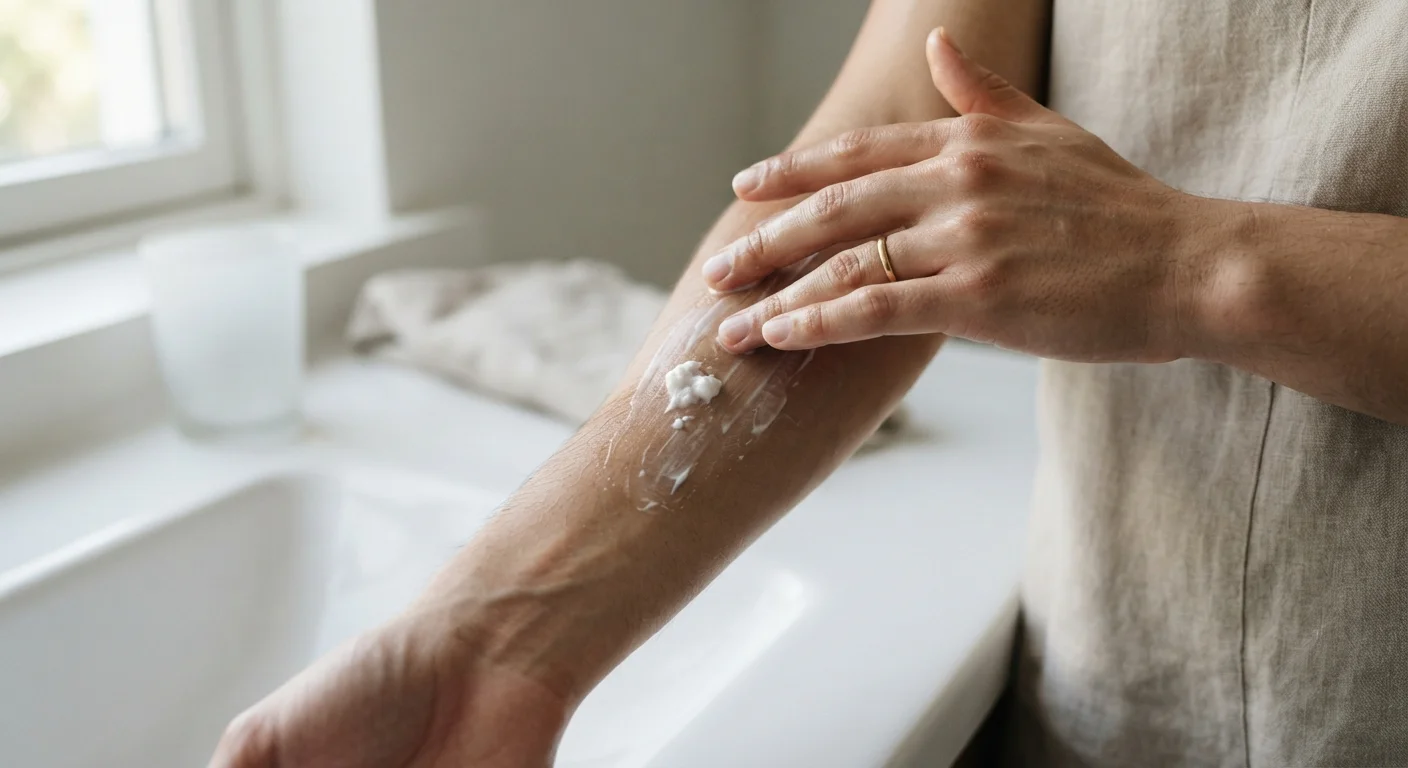
Photo credit: Infolagoon.com | Blogs To Rely On
In this article
That balled-up, flaky mess on your skin has a cause. Here's what's going wrong in your routine and how to fix it for good.
Key Takeaways
- Pilling happens when product formulas or textures conflict with each other on the skin's surface.
- Applying too much product or layering too quickly are the most common triggers.
- Silicone-heavy formulas and certain film-forming ingredients are frequent culprits.
- Slowing down your routine and letting each layer absorb fully solves most pilling problems.
- Exfoliating regularly helps create a smoother surface so products sit — not slide — on skin.
What Pilling Actually Is (and Why It Happens)
Pilling is those annoying little balls or flakes of product that form on your skin when you're applying moisturizer or when you rub your face. It looks a lot like when a sweater starts to bobble — the same basic physics is at play. Two or more substances that don't bond well meet on your skin's surface, and instead of merging smoothly, they clump together and roll off.
The good news: pilling is almost never a sign that a product is defective or that your skin has a fundamental problem. It's a routine issue, and routine issues have routine fixes. Understanding the mechanics makes it much easier to troubleshoot your specific situation.
Pilling Means Products Aren't Absorbing
When moisturizer pills, it's a signal that your skin isn't actually receiving the product's benefits — it's just rolling off. Continuing with a pilling routine means you may be wasting product and leaving your skin under-moisturized. Addressing the root cause is worth the effort, not just for aesthetics but for your skin's actual health.
The Most Common Mistakes That Cause Pilling
Most pilling traces back to one or more of these predictable errors. Work through them honestly — chances are you'll spot your culprit quickly.
Layering products too quickly without allowing each one to absorb first.
Why it happens: Morning routines are rushed, and waiting between steps feels unnecessary when products look absorbed after a few seconds.
Using too much product at once, especially with thicker creams.
Why it happens: Many people assume more product equals more hydration, so they apply generously without realizing the skin can only absorb so much at a time.
Mixing silicone-based products with water-based formulas in the wrong order.
Why it happens: Silicone creates a smooth, occlusive layer on skin that water-based products can't penetrate — so anything applied on top physically can't bond and ends up balling up.
Skipping exfoliation, which leaves dry, flaky skin cells on the surface.
Why it happens: Dead skin buildup creates an uneven, rough texture that disrupts how moisturizer sits and spreads, making pilling far more likely.
Using incompatible ingredient combinations that don't play well together.
Why it happens: Some ingredients actively repel each other at a chemical level, causing separation on the skin's surface that presents as pilling or balling.
If you're also experiencing issues with foundation or concealer pilling over your skincare, check out our piece on everyday makeup habits that harm your skin — several of the same layering principles apply.
Simple Fixes to Stop Pilling for Good
Once you've identified which mistake is driving your pilling, the fix is usually straightforward. Here's a quick reset routine that works for most people:
- Cleanse and pat dry — start with a clean, dry surface. Excess water on skin can disrupt product absorption immediately.
- Apply thin layers in the right order — lightest texture first, heaviest last. When in doubt, our skincare layering order explainer maps it all out.
- Wait between steps — use that 60-second window to brush your teeth, check your phone, or simply breathe. The pause is the strategy.
- Use less product — a genuinely tiny amount is almost always enough.
- Press, don't rub — pressing product into the skin rather than rubbing it across the surface dramatically reduces friction-driven pilling.
Don't Add More Product to Fix Pilling
A common instinct is to apply extra moisturizer when you see pilling, assuming the skin needs more. This usually makes the problem significantly worse. If pilling starts mid-application, stop, gently pat (don't rub) the skin, and let everything settle before continuing.
One honest reminder: if you've corrected your technique and pilling still persists, the formula combination you're using may simply not be compatible. There's no shame in adjusting which products you use together. Skin care should work with your routine, not against it.
60–90 sec
Ideal wait time between skincare layers
Dermatologists commonly recommend allowing at least 60 seconds of absorption time between each skincare step to reduce product interaction issues.
~50%
Of pilling cases linked to over-application
Cosmetic chemists frequently cite product overuse as one of the top two causes of pilling alongside incompatible formula layering.

Author
Style & Beauty Editorial Team
Style & Beauty Editorial Team is the collective byline for our editorial team and contributor network. Articles published under this byline or an editorial pen name are researched, written, and reviewed according to our editorial standards for clarity, consistency, and independence before publication.
View all articles →