
Skincare Layering Order, Explained
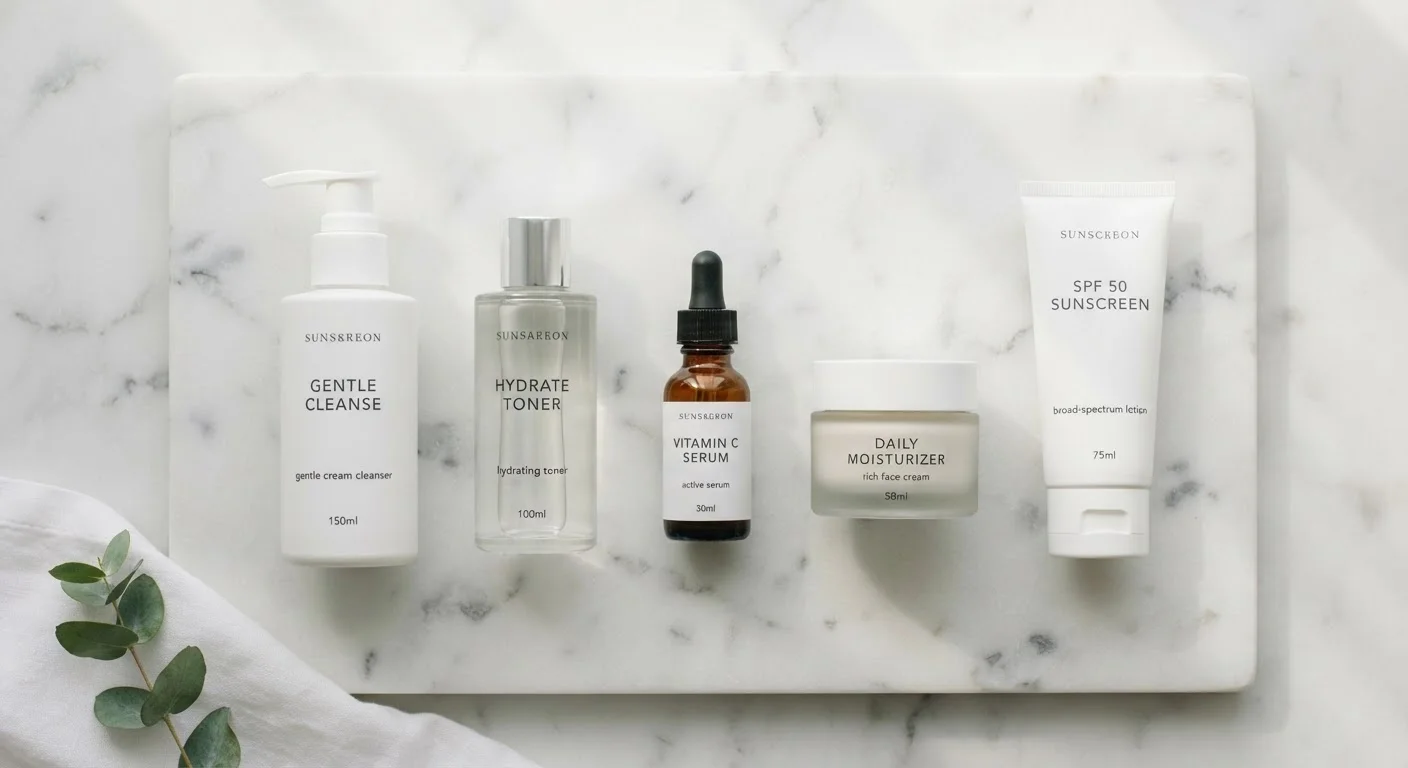
Photo credit: Infolagoon.com | Blogs To Rely On
In this article
Confused about what goes on first? Learn the logic behind skincare layering so every product you use actually does its job.
Key Takeaways
- Apply products from thinnest to thickest consistency as a reliable starting rule.
- Cleansing always comes first — no product works well on top of dirt or makeup.
- Sunscreen goes on last in the morning; retinol and heavier treatments go on last at night.
- Waiting 30–60 seconds between steps helps each layer absorb before the next is applied.
- Layering too many products at once can cause irritation or reduce effectiveness.
Why the Order You Apply Products Actually Matters
Most people assume skincare is just about which products you use. But dermatologists and estheticians consistently point out that when you apply them — and in what sequence — plays a significant role in whether they work at all.
Think of your skin as a layered surface. When you apply a thick, occlusive moisturizer first, it creates a partial barrier. Water-based serums loaded with active ingredients applied afterward sit on top of that barrier rather than absorbing into the skin. The sequence logic is straightforward: products that need direct skin contact go on first.
The simplified rule most professionals use: thinnest to thickest. Start with liquids and lightweight essences, move through serums and treatments, and finish with creams and oils. This approach ensures each layer can actually reach the skin rather than getting blocked by the one below it.
The 'Thin to Thick' Rule Has Limits
Texture is a useful shortcut, but it's not perfect. Some serums are gel-like and thicker than certain lightweight moisturizers. When in doubt, check the product's intended step on the label or brand instructions. If you're mixing chemical exfoliants or prescription treatments into your routine, the layering logic may need adjusting — and a dermatologist's input is worth seeking.
The Core Sequence: A Step-by-Step Breakdown
Here's how a standard full routine breaks down — morning and evening share the same logic, with a few key differences at the end.
- Cleanser — Always the first step. Removes sweat, oil, sunscreen, and residue. Nothing else works well on unclean skin.
- Toner or essence — These lightweight liquids prep the skin and can help water-based actives absorb better. Apply while skin is still slightly damp.
- Serums and targeted treatments — This is where your actives live: vitamin C, hyaluronic acid, niacinamide, exfoliating acids. These are thin, concentrated, and need to go on before anything heavier.
- Eye cream — Typically applied before general moisturizer since the skin around the eyes is thinner and more delicate.
- Moisturizer — Locks in the layers below and provides hydration and barrier support.
- Face oil (if used) — Oils are occlusive and go on after moisturizer, not before.
- Sunscreen (morning only) — The final step every single morning, no exceptions.
If you want a complete checklist format, our skincare routine checklist walks through morning and evening steps side by side.
7+
Distinct steps in a full skincare routine
Dermatology educators commonly outline up to seven or more distinct product steps in a complete morning or evening routine, from cleanser through SPF.
30–60 sec
Recommended wait time between layers
Estheticians widely recommend a brief pause between layers to allow absorption and reduce product pilling on the skin's surface.
Morning vs. Evening: Where the Sequence Differs
The core order holds for both routines, but the emphasis shifts depending on the time of day.
Morning routines focus on protection. You're preparing your skin for UV exposure, environmental pollutants, and the friction of daily life. Antioxidant serums (like vitamin C) are particularly useful in the morning because they help neutralize free radical damage. Sunscreen is non-negotiable as the final step — and it goes over moisturizer, not under it. For a full morning walkthrough, see our guide on building a morning skincare routine from scratch.
Evening routines focus on repair and renewal. Skin cell turnover naturally increases overnight, making it the right time for treatments like retinol or chemical exfoliants. These go on after cleansing, before moisturizer. Because you skip sunscreen at night, moisturizer or a heavier overnight treatment typically closes out the routine. The case for a nighttime routine explains why the evening window is worth using well.
Start Simple, Then Build
If you're new to skincare routines, start with just three steps: cleanser, moisturizer, and sunscreen (morning). Once those feel automatic, add one product at a time — a serum or treatment — so you can actually notice what's working. Piling on six products from day one makes it impossible to troubleshoot.
Common Layering Mistakes and How to Avoid Them
Even with the best products, a few habits consistently get in the way of results.
- Applying oil before moisturizer — Face oils are occlusive; moisturizer needs to go on first so it can hydrate the skin directly.
- Layering too many actives at once — Stacking multiple strong ingredients (like retinol, AHAs, and vitamin C all in one routine) can overwhelm the skin. Less is often more effective. Our guide to ingredients that don't play well together covers specific combinations to separate or avoid.
- Skipping the wait — Rushing straight from one product to the next can cause pilling and reduces absorption time. A 30–60 second pause is usually enough.
- Putting sunscreen on before moisturizer — Sunscreen is designed to work as the outermost layer. Applying moisturizer over it disrupts its protective film.
If you're building a routine and want to understand what's actually in each product before layering it, reading a skincare label is a helpful skill to develop alongside your sequencing knowledge.
Frequently Asked Questions

Author
Style & Beauty Editorial Team
Style & Beauty Editorial Team is the collective byline for our editorial team and contributor network. Articles published under this byline or an editorial pen name are researched, written, and reviewed according to our editorial standards for clarity, consistency, and independence before publication.
View all articles →