
DIY Maintenance vs. Licensed Contractor: Knowing Where the Line Is
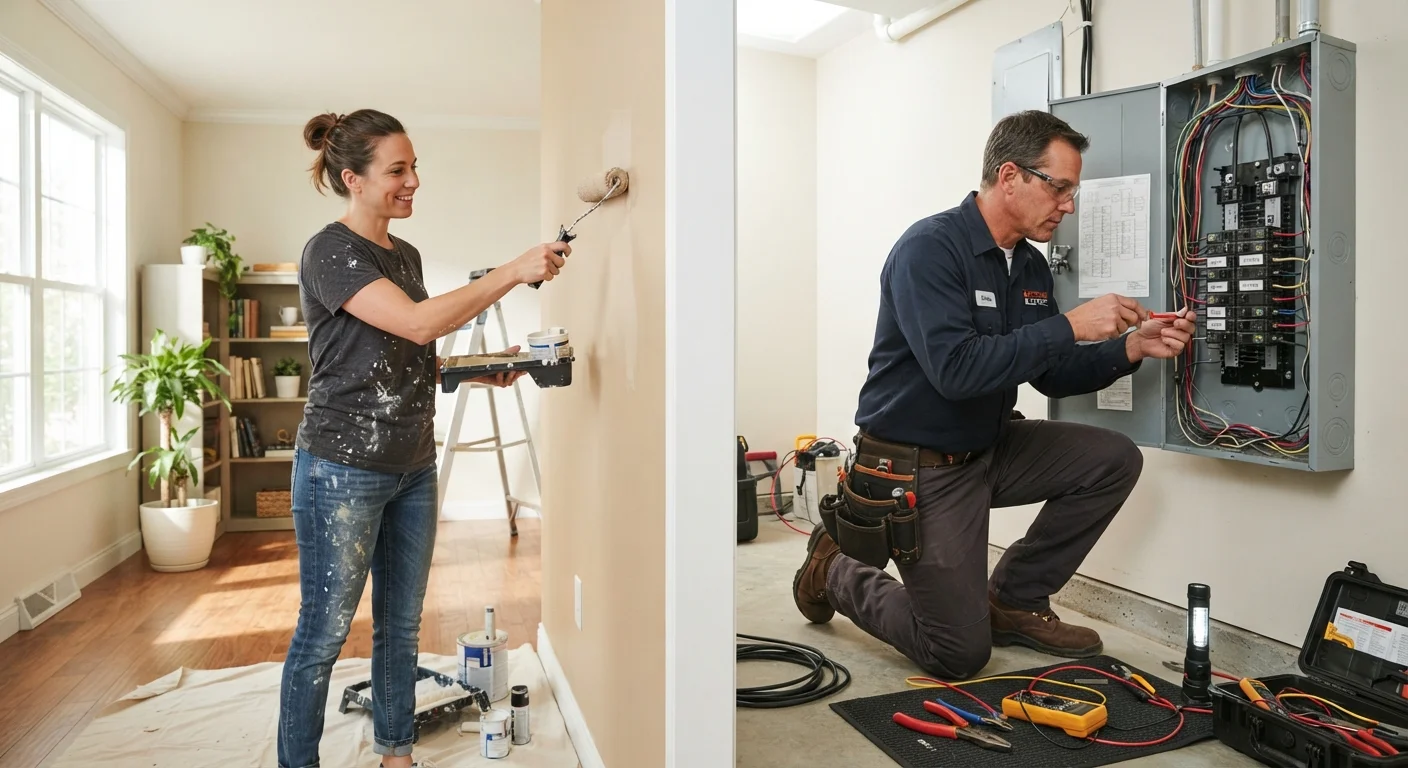
Photo credit: Infolagoon.com | Blogs To Rely On
In this article
Some tasks are safe for confident homeowners; others carry legal, safety, or warranty risks. Here's a practical framework for deciding.
Key Takeaways
- DIY maintenance is appropriate for low-risk, reversible tasks that don't require permits or specialized licensing.
- Electrical, gas, structural, and major plumbing work almost always requires a licensed contractor and often a permit.
- Skipping permits on regulated work can create legal issues, void insurance coverage, and complicate home sales.
- Your skill level, available tools, and potential consequences of error are the three most important factors in any DIY decision.
- When in doubt, a paid consultation with a licensed contractor is far cheaper than fixing a dangerous mistake.
Why the DIY vs. Contractor Decision Matters
Homeownership comes with a constant stream of maintenance decisions. Some tasks — swapping a light fixture, patching drywall, replacing a faucet — are genuinely manageable for a careful, prepared homeowner. Others carry legal requirements, safety stakes, or warranty implications that make professional help not just advisable, but necessary.
Getting this decision wrong in either direction costs money. Hiring out work you could safely do yourself adds up quickly. But DIYing something that requires a permit or licensed trade can result in fines, failed inspections, voided homeowner's insurance, and expensive remediation down the road.
If you're new to owning a home, our foundation guide for new homeowners covers essential tools and first principles for this exact decision. For those building a full maintenance routine, see your home's annual maintenance calendar for a seasonal breakdown of what needs attention — and when.
Tasks That Are Generally Safe for DIY
The sweet spot for DIY work is tasks that are low-risk, reversible, and don't require permits or licensed trades. These typically include:
- Cleaning and upkeep: Gutters, HVAC filters, dryer vents, window tracks, and exterior surfaces
- Cosmetic repairs: Painting interior and exterior walls, patching small drywall holes, caulking around windows, tubs, and trim
- Landscaping and drainage: Grading soil away from the foundation, clearing downspout extensions, pruning shrubs
- Basic plumbing: Replacing a faucet, toilet flapper, or showerhead — tasks that don't involve cutting into supply lines or drain stacks
- Minor carpentry: Installing shelving, replacing interior door hardware, patching minor wood rot on trim
The common thread: if something goes wrong, the consequences are limited and fixable. A poorly caulked window is an annoyance; a poorly wired circuit is a fire hazard.
When in Doubt, Pay for a Consultation
Many licensed contractors offer paid diagnostic or consultation visits for a modest fee. Having a professional assess a repair before you start can confirm whether it's DIY-safe or flag hidden complications — saving you from a costly mistake. This is especially worthwhile before opening walls or working near utilities.
For plain-language help understanding materials and measurements before tackling a project, see our reference on measurements, materials, and DIY terms.
When You Should Hire a Licensed Contractor
Certain categories of home work are regulated for good reason. Errors in these areas can cause injury, structural failure, fire, or carbon monoxide exposure. In most U.S. jurisdictions, they also require permits and licensed tradespeople to perform legally.
Never DIY Electrical, Gas, or Structural Work Without Verifying Local Requirements
These three categories are the most common sources of dangerous DIY errors and permit violations. Even if you've seen it done on a video or done similar work before, local codes differ significantly by city and state. Performing this work without the proper permits or licensing can result in fines, required teardown, and complications when selling your home.
- Electrical work beyond simple swaps: Panel upgrades, new circuit installation, rewiring, and anything involving the service entrance must be handled by a licensed electrician in most states. Even replacing outlets in older homes can expose knob-and-tube wiring that needs professional assessment.
- Gas lines and appliances: Any work on gas supply lines — including moving, extending, or repairing them — should be performed by a licensed plumber or gas fitter. Improper connections are a serious safety hazard.
- Structural modifications: Removing walls (especially load-bearing ones), altering roof structures, or modifying the foundation requires engineering input and typically a building permit.
- Major plumbing: Work involving drain-waste-vent (DWV) systems, water heater replacement (in some states), or cutting into main supply lines usually requires a licensed plumber and permit.
- Roofing on steep or high pitches: Beyond safety risk, many roofing warranties require licensed installation to remain valid.
Our article on permits, inspections, and building codes explains which projects most commonly require permits and what's at stake if you skip them.
Comparing DIY and Licensed Contractor Approaches
Use the table below as a quick reference when evaluating a specific task. Keep in mind that local codes vary — always verify requirements with your municipal building department before starting regulated work.
| Task Type | DIY Appropriate | Licensed Contractor Required | |
|---|---|---|---|
| Permit typically required | Task Type | Rarely | Often or always |
| Safety risk if done incorrectly | Task Type | Low (cosmetic/minor) | High (fire, flood, injury) |
| Examples | Task Type | Painting, caulking, filter changes | Electrical panels, gas lines, load-bearing walls |
| Typical tools needed | Task Type | Basic household tools | Specialized, licensed-trade equipment |
| Insurance/warranty implications | Task Type | Minimal | May void coverage if unpermitted |
| Resale inspection risk | Task Type | Low | High if work is unpermitted |
A Framework for Making the Call
When you're standing in front of a problem and trying to decide, run through these four questions:
- Is a permit required? If yes, a licensed contractor is almost certainly needed. Check with your local building department if you're unsure.
- What's the worst-case outcome if I make a mistake? Cosmetic damage is recoverable. Fire, flooding, structural failure, or gas leaks are not.
- Do I have the right tools and knowledge? Watching one tutorial video isn't the same as hands-on competency. Be honest about your experience level.
- Could this affect my insurance or home's resale value? Unpermitted work can complicate or block a home sale and may void coverage for related claims.
If budget is a real constraint, focus your DIY effort on genuinely safe tasks and prioritize contractor spend on anything safety-critical. Our guide on maintaining a home on a tight budget can help you triage what matters most.
This article provides general home maintenance guidance for informational purposes only. Local building codes, permit requirements, and licensing rules vary by jurisdiction. Always verify requirements with your local building department and consult a licensed professional before undertaking regulated or hazardous work.

Author
Home & Living Editorial Team
Home & Living Editorial Team is the collective byline for our editorial team and contributor network. Articles published under this byline or an editorial pen name are researched, written, and reviewed according to our editorial standards for clarity, consistency, and independence before publication.
View all articles →