
Gray Hair: What Triggers It, What Doesn't, and What You Can Realistically Do
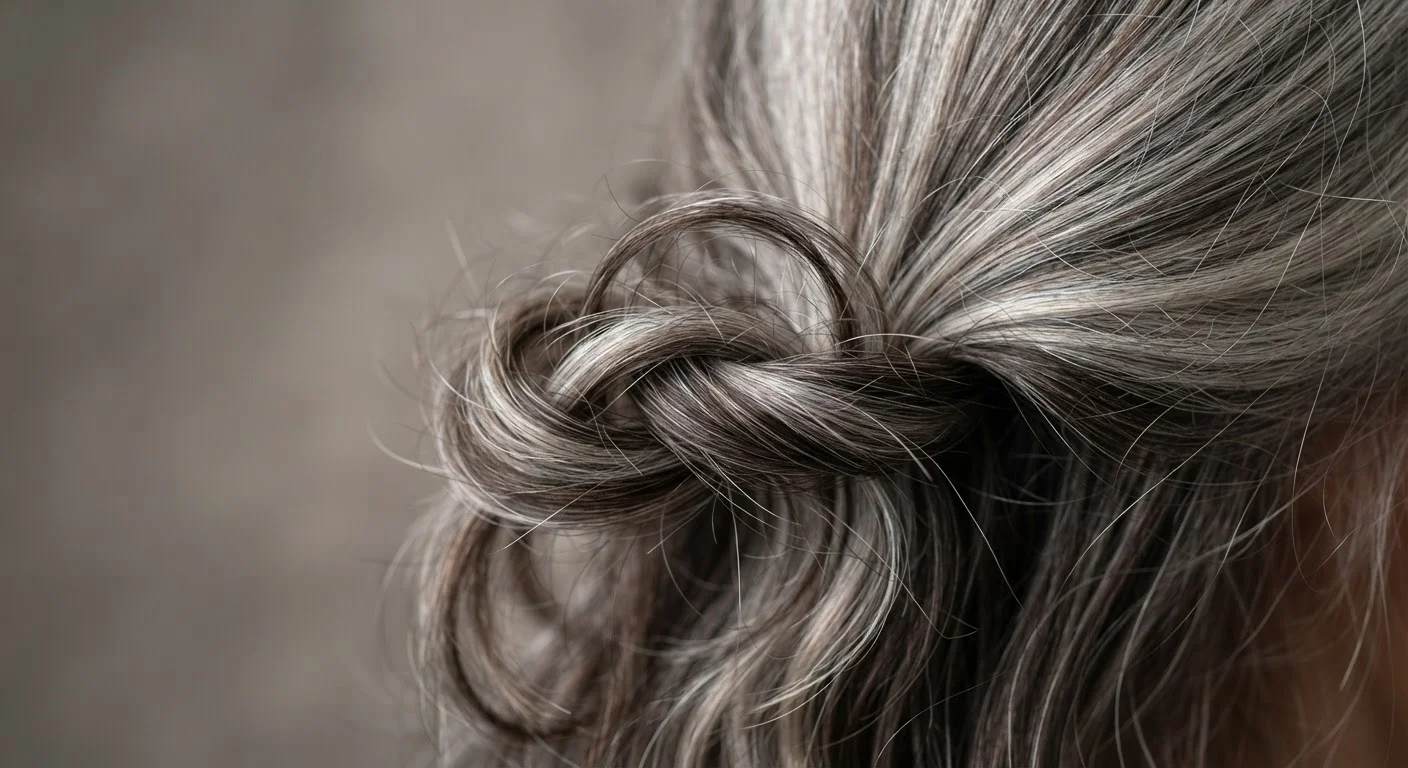
Photo credit: Infolagoon.com | Blogs To Rely On
In this article
Stress, genetics, nutrition — sorting fact from fiction on what causes gray hair and how to care for it once it arrives.
Key Takeaways
- Genetics is the single strongest predictor of when and how quickly your hair goes gray.
- Chronic stress may accelerate graying, but plucking gray hairs absolutely does not spread it.
- Nutritional deficiencies — especially B12, folate, and copper — are linked to premature graying.
- No topical product can permanently reverse gray hair; color treatments are the most reliable cosmetic option.
- Gray hair has a different texture and porosity than pigmented hair, requiring adjusted care routines.
The Science Behind Going Gray
Hair gets its color from melanin, a pigment produced by specialized cells called melanocytes located in each hair follicle. As we age, those melanocytes gradually produce less pigment — and eventually stop altogether — leaving new strands transparent, which we perceive as white or gray. The timing of this process is overwhelmingly governed by genetics. If your parents went gray early, the chances are meaningful that you will too.
Research also points to oxidative stress inside the follicle itself. Hydrogen peroxide naturally accumulates in hair follicles over time, and if the body's antioxidant defenses can't keep pace, that buildup can damage melanocytes and hasten pigment loss. This is an active area of scientific study, and while the mechanisms are becoming clearer, they also illustrate why gray hair is genuinely complex — not just a simple on/off switch.
For a broader look at how your overall biology shapes hair, see everything that influences hair growth.
Myths vs. Facts: Sorting the Real Triggers
Few topics in hair care carry as many persistent myths as graying. Let's set the record straight.
Myth
Plucking one gray hair causes several more to grow back in its place.
Fact
Plucking a gray hair has no effect on neighboring follicles — each follicle operates independently.
This is one of the most enduring hair myths around. Each hair follicle functions on its own cycle and has no communication pathway that would trigger adjacent follicles to change color or multiply. What likely fuels this belief is that people often notice one gray hair, pluck it, and then observe more grays appearing over the following months — but that's simply the natural progression of graying, not a consequence of plucking. Habitual plucking, however, can damage the follicle over time and potentially cause localized thinning, so it's worth avoiding for that reason alone.
Myth
Stress can turn your hair gray overnight.
Fact
Sudden, total overnight graying is not biologically possible, but chronic stress is genuinely linked to accelerated pigment loss.
The dramatic overnight-graying story — often told about historical figures under extreme duress — is not supported by how hair biology works. Hair that has already grown out of the follicle cannot change color while it sits on your head. However, research published in peer-reviewed journals has found that severe psychological stress can accelerate the depletion of melanocyte stem cells in follicles, potentially speeding up when new growth comes in without pigment. So stress matters, but the timeline is weeks to months of ongoing follicle impact — not a single dramatic night.
Myth
Only genetics determines when you go gray.
Fact
Genetics is the dominant factor, but nutritional deficiencies, smoking, and certain medical conditions can accelerate graying.
Studies have associated deficiencies in vitamin B12, folate, copper, and vitamin D with premature graying, and some of these are reversible when the deficiency is corrected — particularly in younger individuals. Smoking has also been independently linked to earlier onset of gray hair in multiple studies, likely due to oxidative damage. Autoimmune conditions like alopecia areata and thyroid disorders can also affect pigmentation. This means that while you can't outrun your DNA, supporting overall health through balanced nutrition and not smoking may influence the pace of graying to a modest degree.
Myth
Coloring gray hair makes it grow back grayer or damages the follicle permanently.
Fact
Hair color products applied to the shaft do not reach or damage the follicle, so they have no effect on how new hair grows in.
The follicle lives beneath the scalp, and topical dyes — whether permanent, semi-permanent, or temporary — work on the hair shaft above the skin's surface. They cannot alter the follicle's pigment-producing behavior. New growth reflects whatever your follicles are currently producing, which is determined by genetics and internal health factors, not by what you've applied to existing hair. That said, some coloring processes can affect the texture and integrity of the hair shaft itself over time, so conditioning care between color sessions remains important. A regular hair and grooming self-check can help you monitor how your strands are holding up.
Myth
Supplements and serums can reverse gray hair.
Fact
No over-the-counter supplement or topical product has been proven to reliably reverse established gray hair in humans.
Some early-stage research has explored compounds like pseudocatalase and antioxidant combinations, but none have crossed the threshold of robust, peer-reviewed human clinical trials demonstrating reliable reversal of gray hair. Correcting an underlying nutritional deficiency may restore pigmentation in some people — but that's treating a deficiency, not reversing normal age-related graying. Be skeptical of products making strong reversal claims; the science, as of current knowledge, does not support them for typical age-related graying.
What the Numbers Actually Show
Context matters when you're evaluating claims about gray hair. A few data points help frame the conversation honestly.
~50%
Of people with half their hair gray by age 50
A widely cited dermatological rule of thumb holds that roughly half of people have 50% gray hair by age 50, though individual variation is significant.
10–20 yrs
Earlier onset linked to smoking
Research has suggested smokers may experience premature graying up to a decade or two earlier than non-smokers, highlighting oxidative stress as a real contributing factor.
4–6 weeks
Hair growth cycle before new color is visible
Because hair grows roughly half an inch per month, any internal changes affecting follicle pigmentation take weeks to become visible at the scalp.
Caring for Gray Hair Once It Arrives
Gray and white hair has genuinely different structural properties. The cortex tends to be coarser, and the cuticle — the outer protective layer — is often more raised, making gray strands more porous and prone to absorbing environmental pollutants and minerals from hard water (which can cause a yellow or brassy tint). Adjusting your routine with this in mind makes a real difference.
- Moisture first: Use hydrating conditioners and periodic deep conditioning treatments. Porous hair benefits from ingredients like glycerin and natural oils that help seal the cuticle.
- Purple or blue toning: Violet-pigmented shampoos and conditioners neutralize yellow tones in gray and white hair — use them once or twice a week rather than every wash to avoid over-toning.
- Heat care: Gray hair can be more vulnerable to heat damage. Using a heat protectant before styling tools is worth the extra step.
- Scalp attention: A healthy scalp remains important regardless of hair color. Scalp health 101 covers what to watch for and how to address common issues.
Sudden or Patchy Graying Deserves Attention
If you notice rapid, patchy, or very premature graying (before your mid-20s), it can occasionally signal an underlying health issue such as a thyroid disorder, vitamin B12 deficiency, or an autoimmune condition. This is not cause for alarm, but it is worth mentioning to a healthcare provider. A simple blood panel can often identify or rule out correctable causes.
If you're noticing breakage alongside color changes, the two issues may have separate causes. Understanding hair breakage can help you tell them apart. And for a look at everyday habits worth reconsidering, common grooming habits that damage hair is a useful read.
This article is for general informational purposes only and does not constitute medical or dermatological advice. If you have concerns about sudden or significant changes in your hair or scalp, consult a qualified healthcare professional.

Author
Style & Beauty Editorial Team
Style & Beauty Editorial Team is the collective byline for our editorial team and contributor network. Articles published under this byline or an editorial pen name are researched, written, and reviewed according to our editorial standards for clarity, consistency, and independence before publication.
View all articles →