
Grooming Habits That Quietly Damage Your Hair Over Time
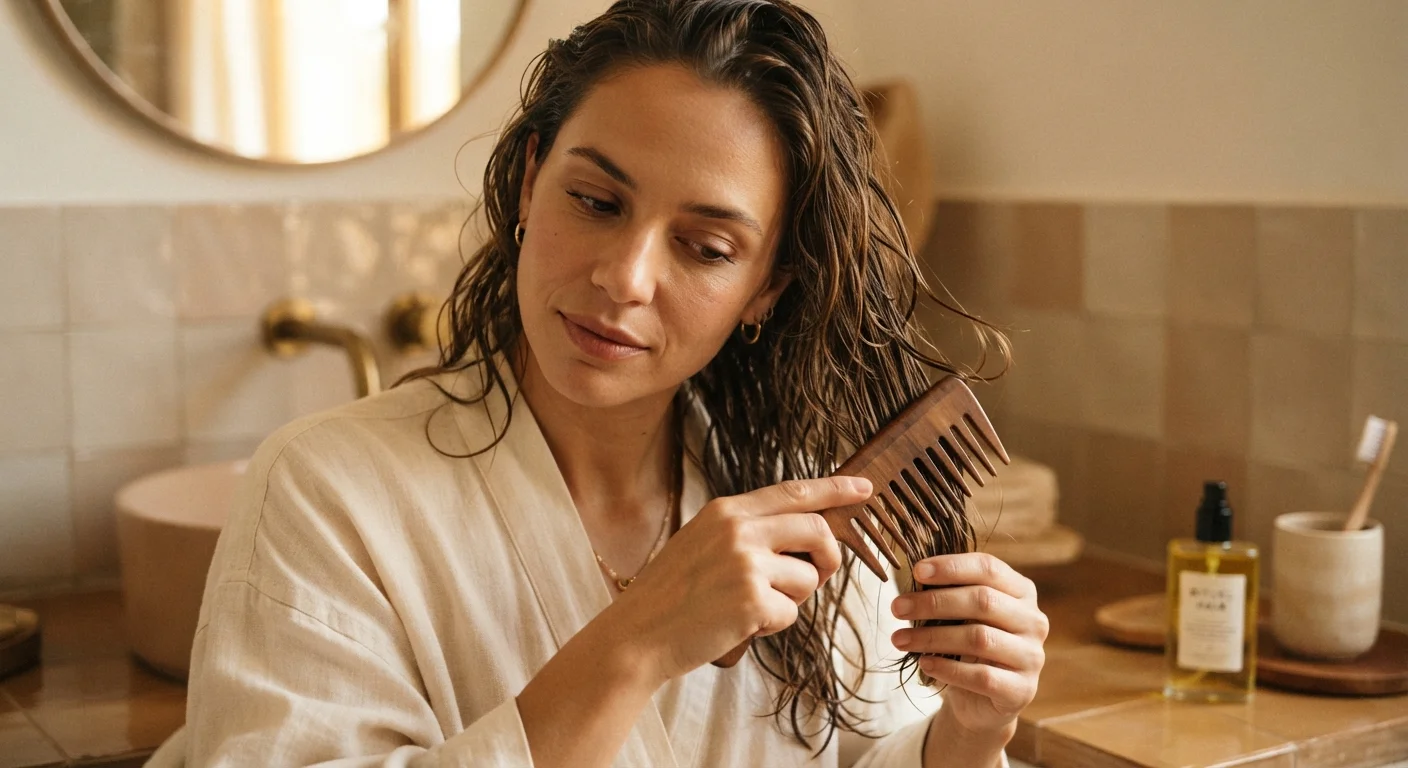
Photo credit: Infolagoon.com | Blogs To Rely On
Tight ponytails, rough towel-drying, skipping trims — everyday habits that add up to real damage and how to adjust them.
Key Takeaways
- Tight hairstyles worn repeatedly can cause traction alopecia, a form of gradual, preventable hair loss.
- Rough towel-drying damages the cuticle layer and increases breakage, especially on wet, vulnerable strands.
- Skipping regular trims allows split ends to travel up the shaft, worsening breakage over time.
- Over-washing strips natural scalp oils, while under-washing can clog follicles and impair hair growth.
- Brushing wet hair without the right tool or technique is one of the most common causes of breakage.
- Heat tool damage compounds silently — consistent high temperatures degrade the hair's protein structure over months.
The Damage You Don't See Coming
Most hair damage doesn't announce itself. It accumulates slowly, habit by habit, until you notice thinning edges, chronic breakage, or hair that's lost its elasticity and shine. The tricky part is that most of the culprits feel completely routine — even sensible. A ponytail before the gym. Towel-drying after a shower. Skipping a haircut because your ends look fine today.
Understanding which everyday grooming habits are working against your hair is the first step toward changing them. You don't need to overhaul your entire routine — just make smarter, better-informed adjustments. If you want a systematic way to evaluate your current habits, our weekly hair and grooming audit is a useful companion to this article.
Wearing tight hairstyles too often
Ponytails, buns, and braids are practical staples — but when worn very tight and repeatedly in the same position, they place chronic tension on the hair follicle. Over time, this can lead to traction alopecia, a gradual form of hair loss that typically appears along the hairline and temples. It starts as breakage and soreness, but prolonged tension can cause permanent follicle damage.
The fix isn't to abandon these styles — it's to vary your part and ponytail placement, use fabric-covered elastics instead of rubber bands, and give your hair regular rest days without tension. Our article on the real trade-offs of protective styles explores this tension dynamic in detail.
Rotating your ponytail placement is one of the simplest ways to prevent traction alopecia.
Rough towel-drying after washing
Wet hair is in its most structurally vulnerable state — the cuticle (the outer protective layer of each strand) lifts slightly when hair is saturated, making it more susceptible to friction damage. Vigorously rubbing your hair with a standard terry cloth towel roughens the cuticle, causes frizz, and contributes significantly to breakage.
Instead, gently squeeze water from sections of hair, or use a soft microfiber towel or an old cotton T-shirt to blot — not rub — the hair. This small change noticeably reduces both frizz and breakage, especially for those with fine, chemically treated, or textured hair.
Blotting rather than rubbing wet hair protects the cuticle and dramatically reduces frizz.
Brushing hair while it's wet
Wet hair stretches before it snaps, which means aggressive brushing when hair is soaked creates significant breakage that doesn't always look dramatic in the moment. A standard paddle brush or fine-tooth comb on dripping wet hair is a recipe for cumulative strand loss.
For most hair types, a wide-tooth comb or a brush specifically designed for wet detangling is far less damaging. Start from the ends and work upward to minimize tension. Adding a detangling product or leave-in conditioner first reduces friction further. Understanding your hair's porosity can also help you choose the right detangling products.
Always detangle from ends to roots — working from the top down multiplies the stress on each strand.
Skipping regular trims
Split ends don't just sit at the tip of a strand — they travel. When a split isn't removed, the fracture continues up the hair shaft, weakening increasingly longer sections of the strand. Skipping trims in the name of length retention often backfires: the breakage that results can leave hair shorter and thinner than a timely trim would have.
How often you need a trim depends on your hair type, styling habits, and how fast your hair grows — but ignoring splits entirely is rarely a winning strategy. A small snip every 8–12 weeks is a general guideline for many people, though individual needs vary. A stylist who understands your hair's specific needs is the best resource for personalized timing.
Skipping trims to gain length often causes more breakage than a small, timely cut would.
Washing too frequently — or not enough
Both extremes can cause problems. Washing daily with a strong shampoo strips the scalp of its natural sebum (oil), which plays a protective and moisturizing role. Without it, the scalp may overcompensate by producing more oil, and strands can become dry and brittle. This is particularly relevant for people with naturally dry, coily, or chemically processed hair.
On the other end, significantly under-washing allows product buildup, dead skin cells, and excess sebum to clog follicles — which can impair healthy hair growth over time. Finding the right wash frequency for your scalp type and styling habits matters. A regular self-check of your scalp condition can help you identify where your balance currently sits.
There's no universal wash frequency — the right schedule depends on your scalp type and styling habits.
Using heat tools without adequate protection — or at excessive temperatures
Heat damage is one of the most well-documented sources of hair fiber degradation. High temperatures alter the protein structure of the hair shaft, reducing elasticity and causing the cuticle to crack. The damage is often cumulative: one blowout rarely shows dramatic effects, but months of unprotected daily heat styling compound into brittle, dull, breakage-prone hair.
A heat protectant product creates a buffer between the tool and the strand. Using the lowest effective temperature setting — rather than defaulting to the highest — also makes a meaningful difference over time. Our article on heat styling tools and hair damage separates the science from the scaremongering so you can make informed choices.
Using the lowest effective heat setting protects the hair's protein structure without sacrificing styling results.
Small Adjustments, Real Results
None of these habits require dramatic lifestyle changes. Swapping a terry cloth towel for a microfiber one, loosening your ponytail by half an inch, letting your hair air-dry occasionally — these are low-effort shifts with compounding benefits over time. Hair health is largely cumulative: the damage you prevent today is the strength you preserve next year.
Build Awareness Before Changing Everything
Rather than trying to fix all your habits at once, identify the one or two that apply most to your current routine and address those first. Incremental changes are easier to sustain and easier to evaluate. Once those adjustments feel natural, layer in the next ones.
If breakage is already a persistent issue, it's worth exploring what else might be contributing. Our guide on why your hair keeps breaking maps out the full range of causes beyond your shampoo shelf. And if you're navigating a specific texture or curl pattern, building a routine around your curl pattern can help you tailor these principles to your hair type.
This article is for general informational purposes only and does not constitute medical advice. If you're experiencing significant hair loss or scalp changes, consult a qualified healthcare professional or dermatologist.

Author
Style & Beauty Editorial Team
Style & Beauty Editorial Team is the collective byline for our editorial team and contributor network. Articles published under this byline or an editorial pen name are researched, written, and reviewed according to our editorial standards for clarity, consistency, and independence before publication.
View all articles →