
What Makes an Outfit Look Polished vs. Pulled Together by Accident
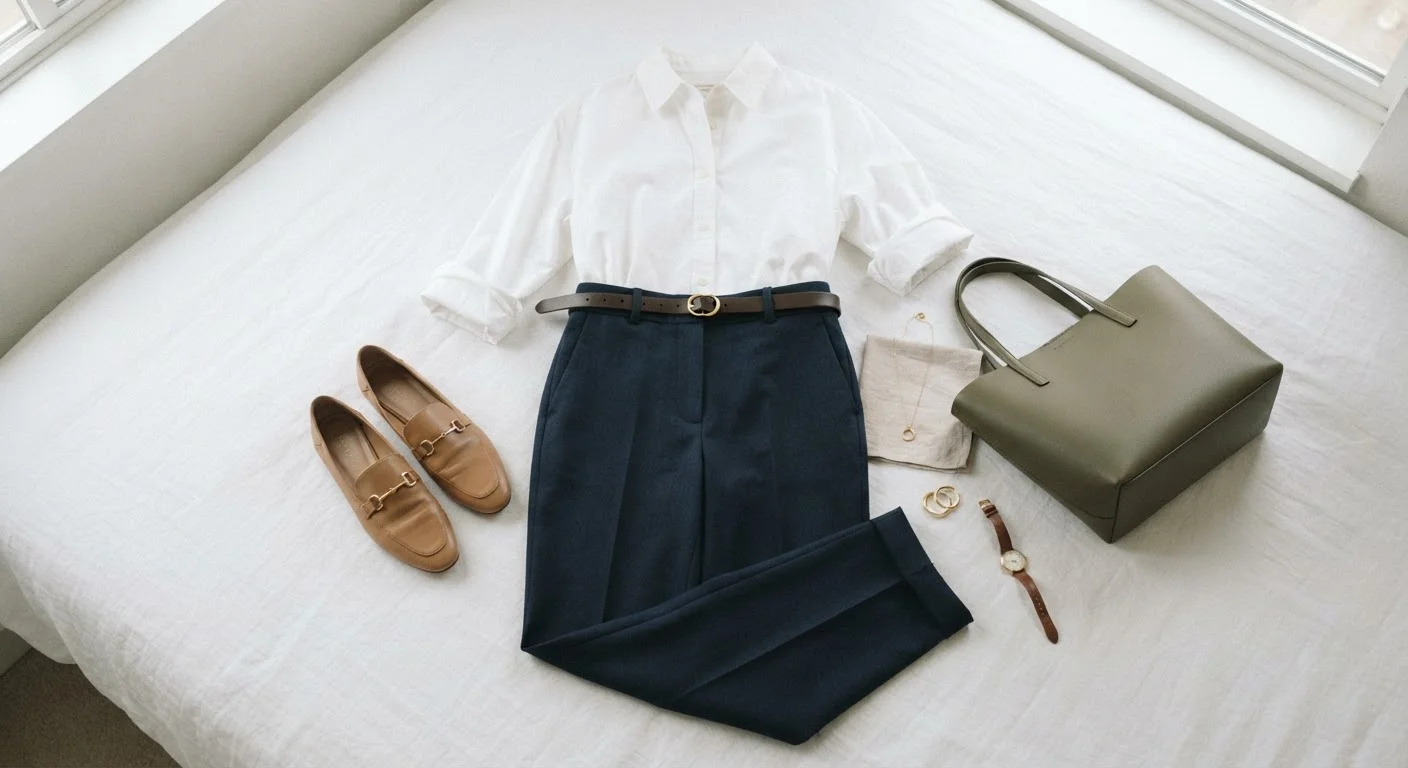
Photo credit: Infolagoon.com | Blogs To Rely On
In this article
Some outfits just work — and it's rarely about price. Here are the visual principles behind clothes that look intentional rather than accidental.
Key Takeaways
- Fit is the single biggest visual factor separating polished from accidental dressing.
- Color coherence — not matching — creates outfits that read as intentional.
- Proportion balance between fitted and relaxed pieces signals awareness of silhouette.
- Small details like tucking, rolling, or layering communicate effort without extra cost.
- Accessories either reinforce or undermine an outfit's overall impression.
The Real Difference Between Polished and Accidental
Two people can wear the same price-point clothes and land in completely different visual territory. One looks like they made a decision; the other looks like they grabbed whatever was nearest the door. The gap isn't budget — it's intention made visible.
A polished outfit communicates through a handful of visual cues that work below conscious awareness. Most people can feel when something is off before they can name it. Understanding those cues helps you make them work for you. If you've ever wondered why your wardrobe feels frustrating to use, common wardrobe missteps could be the starting point — but the principles below are what shift the outcome once you're dressed.
The Mirror Test That Actually Works
Before leaving the house, step back from the mirror and squint slightly. This blurs details and lets you see your outfit as a silhouette and color story rather than individual pieces. If something jumps out as disruptive, that's the element to swap or adjust. It takes ten seconds and catches most problems immediately.
Fit: The Non-Negotiable Foundation
Fit does more visual heavy lifting than any other factor. Clothes that skim the body — not too tight, not swimming — signal that someone chose this garment for themselves rather than grabbed a size at random. Excess fabric creates visual noise. Clothes that pull or strain send the wrong message even if they're technically the right size.
This doesn't require tailoring every piece, though a tailor is genuinely one of the highest-return investments in your wardrobe. It does mean being honest about what currently fits your body now — not the body you had three years ago or hope to have next year. An outfit built on accurate fit instantly reads as considered.
Fit and Body Diversity
Fit looks different across body types, and 'well-fitting' means something different for every person. The principle — that clothes should sit without excess drag or visible strain — applies universally, but what that looks like in practice is individual. Trying on before committing and knowing your measurements both help more than relying on size labels alone.
Color Coherence Over Matching
Matching — wearing the exact same shade head to toe — isn't the goal. Coherence is. Coherence means the colors in your outfit share something: a warm or cool undertone, a similar level of saturation, or a deliberate tonal family. When colors fight each other in undertone (a cool gray paired with a warm camel, for instance), the outfit fragments visually even if both pieces are technically neutral.
Balancing neutral and statement pieces is one of the clearest ways to apply this day to day. A reliable starting point: build your outfit around one anchor color, support it with a closely related neutral, and let one element introduce contrast. That structure gives the eye a clear path without making everything disappear into sameness.
~60%
Of first impressions shaped by clothing fit and neatness
Research in social psychology consistently suggests that physical appearance — including how clothes fit — heavily influences rapid social judgments, often within the first few seconds of meeting someone.
2–3
Colors in most visually cohesive everyday outfits
Style educators broadly recommend limiting everyday outfit palettes to two to three colors that share an undertone, as this constraint is the most reliable path to visual coherence for non-specialists.
Proportion and the Silhouette Signal
Proportion is the relationship between fitted and relaxed elements in an outfit. When everything is oversized, the look reads shapeless. When everything is tight, it can feel effortful. The visual sweet spot pairs one fitted element with one that has ease — a relaxed blazer over a slim pant, a flowy skirt with a tucked-in top.
This principle is explored in depth in proportion in outfit building, but the practical shorthand is: before you walk out the door, identify where your outfit has volume and where it has structure. If both exist intentionally, you're in good shape.
Details That Signal Deliberateness
Small finishing moves are what separate someone who got dressed from someone who styled themselves. A front tuck adds structure. A rolled sleeve shows ease. Clean shoes — regardless of style — signal care. Lint-free fabric, a collar that sits flat, a hem that isn't coming undone: none of these cost money, but all of them register.
Accessories follow the same logic. One or two that reinforce the outfit's color story or mood elevate the whole; too many competing pieces pull focus in every direction. Restraint in accessorizing is consistently the move that reads as confident rather than chaotic.
“Style is knowing who you are, what you want to say, and not giving a damn. But the saying it clearly — that's craft.”
— Gore Vidal, American author and cultural commentator
Putting It Into Practice
The goal isn't to overhaul your wardrobe or follow seasonal trends. It's to get dressed with a light layer of awareness: Does this fit right? Do these colors share something? Is there a proportion balance? Did I finish the look with intention?
If your closet makes it hard to see what you own — which makes all of this harder — closet organization approaches can help surface pieces you've forgotten. Polish, ultimately, is what happens when small deliberate choices accumulate. None of them are complicated. Together, they're the difference between an outfit that works and one that just happened.
Frequently Asked Questions

Author
Style & Beauty Editorial Team
Style & Beauty Editorial Team is the collective byline for our editorial team and contributor network. Articles published under this byline or an editorial pen name are researched, written, and reviewed according to our editorial standards for clarity, consistency, and independence before publication.
View all articles →