
Proportion in Outfit Building: The Unspoken Reason Some Clothes Just Click
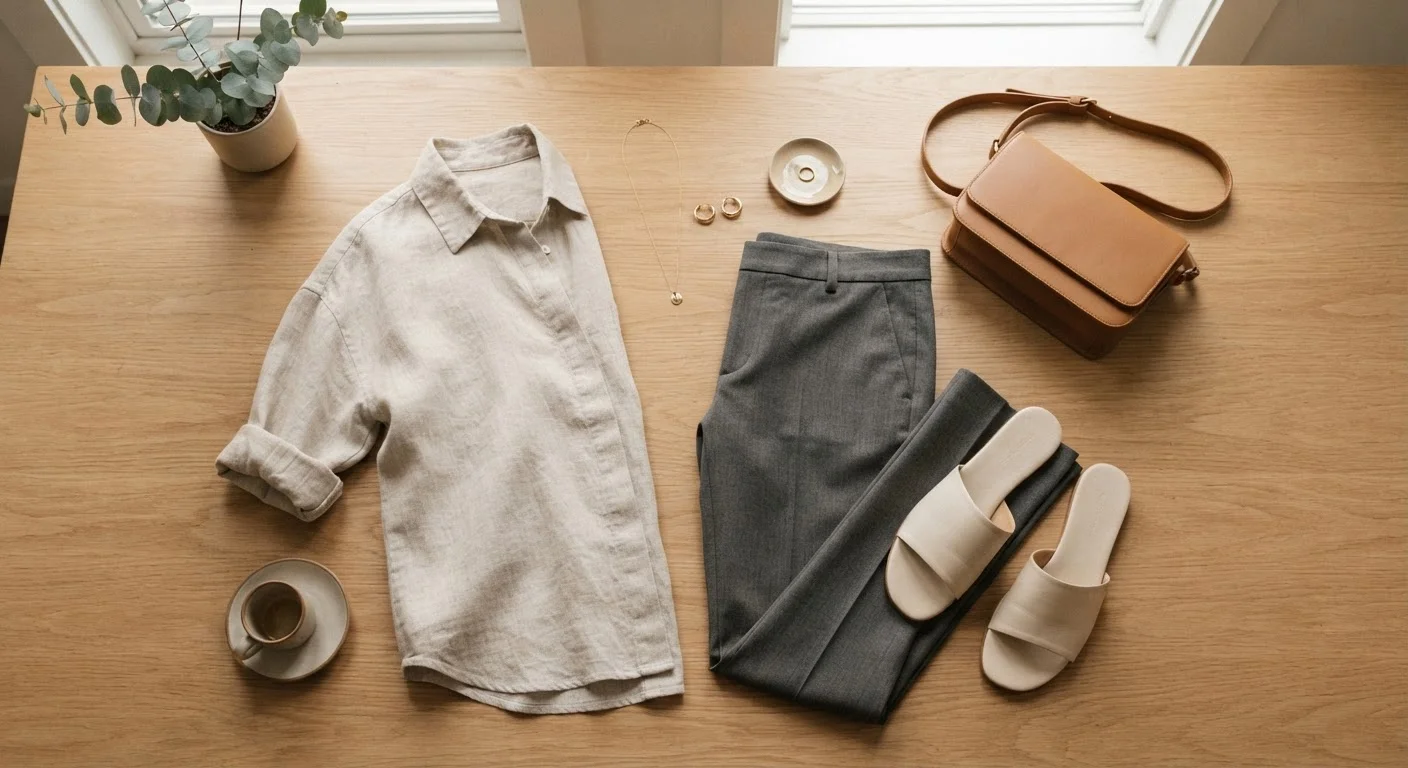
Photo credit: Infolagoon.com | Blogs To Rely On
In this article
Proportion — the balance between fitted and loose, long and short — shapes how an outfit reads. Here's how to apply it without following rigid rules.
Key Takeaways
- Proportion is about balancing volume, length, and silhouette across an outfit — not following strict rules.
- Pairing one fitted piece with one relaxed piece is the most reliable starting point for most outfits.
- Waist definition, hemline placement, and layering all affect how proportion reads on any body.
- You don't need new clothes to improve proportion — small adjustments to what you own can shift the whole look.
- Proportion works alongside fit and polish to make outfits look intentional rather than accidental.
What Proportion Actually Means in Getting Dressed
Proportion in fashion refers to the visual relationship between different parts of an outfit — how volume, length, and structure interact to create a cohesive whole. It's the reason a chunky sweater can look effortless over slim pants but feel overwhelming with wide-leg trousers in the same weight fabric. Nothing is technically wrong, but something feels off.
Most people instinctively sense proportion without being able to name it. When an outfit "just works," proportion is usually doing the heavy lifting. When something feels slightly off but you can't pinpoint why, proportion is often the culprit — not the color, not the quality, and not your body.
Understanding this takes away a lot of the guesswork. Rather than chasing trends or buying new pieces, you can look at what you already own through a different lens — one that asks: how do these pieces relate to each other visually? That shift in thinking is what separates a polished outfit from a lucky one.
Balance one fitted piece with one relaxed piece in every outfit
When both pieces carry equal volume, the eye has nowhere to rest and the silhouette can look shapeless or heavy. Contrast gives the outfit definition and makes each piece read more clearly. This single principle solves most proportion problems without any additional effort.
Anchor your outfit's visual weight at one point — waist, hem, or shoulder
Proportion feels unstable when visual weight is distributed evenly or randomly. Choosing one focal point — a tucked-in hem, a defined shoulder, a cropped length — creates a clear starting point for the eye and gives the rest of the outfit room to flow naturally.
Use hemline length to signal where your silhouette begins and ends
The length of a top, jacket, or dress controls how the body is visually divided. A longer top worn over trousers can blur the waist-to-leg transition; a cropped top creates a higher visual divide that can make legs appear longer. Understanding what each length signals lets you make intentional choices rather than accidental ones.
Limit heavy volume to one zone of the body at a time
Fabric volume draws the eye. When it's concentrated in one area — a voluminous skirt, a statement sleeve, a billowy top — it creates a deliberate focal point. When it's spread everywhere, the outfit can feel overwhelming or disproportionate regardless of how well each individual piece fits.
Consider layering as a proportion tool, not just a weather solution
Layers add depth and visual complexity, but they also add bulk. A well-proportioned layered look treats each layer as part of the whole composition — the length of the underlayer relative to the outer piece, the weight of fabrics, and the amount of each layer that's visible all affect the final balance.
The Core Practices That Make Proportion Work
These aren't hard-and-fast rules — they're reliable starting points that you can bend once you understand why they work. Think of them as a visual language you're learning to speak, not a dress code you're expected to follow.
Proportion and the Body You're Dressing Right Now
Body-shape advice has been recycled for decades, much of it oversimplified or built around a narrow idea of what a "good" silhouette looks like. Proportion thinking is more flexible than that — it's about visual balance, not correction. For a fuller look at why traditional rules often miss the mark, see how body-shape dressing rules fall short.
What proportion does do well is give you a repeatable framework: start with one anchor piece — the item that sets the dominant silhouette — and build around it intentionally. If your anchor is loose and long, introduce structure or definition somewhere else. If your anchor is cropped and fitted, there's more room to play with relaxed volume below. This logic applies regardless of your size, height, or body shape.
Proportion Is Not About "Flattering"
Much traditional style advice frames proportion as a tool for making the body look a certain way — slimmer, taller, more "balanced" by some external standard. That's not how this guide approaches it. Proportion here is purely about visual cohesion: do the pieces relate well to each other? An outfit can be deliberately oversized, deliberately bold, or deliberately rule-breaking and still have strong internal proportion. The goal is intentionality, not conformity.
It's also worth remembering that fit evolves. Fabrics stretch, waistbands shift, and construction changes how a garment drapes over time. If proportion suddenly feels off in a piece you've worn comfortably before, the garment itself may have changed — something worth understanding before blaming yourself.
Finally, proportion doesn't end at clothing. Accessories add visual weight too — a bulky bag with a heavily layered outfit tips the balance quickly. Knowing when to pull back is its own skill, and one that often reads as more confidence, not less.

Author
Style & Beauty Editorial Team
Style & Beauty Editorial Team is the collective byline for our editorial team and contributor network. Articles published under this byline or an editorial pen name are researched, written, and reviewed according to our editorial standards for clarity, consistency, and independence before publication.
View all articles →