
Neutral Colors vs. Statement Pieces: Finding the Right Balance for Everyday Wear
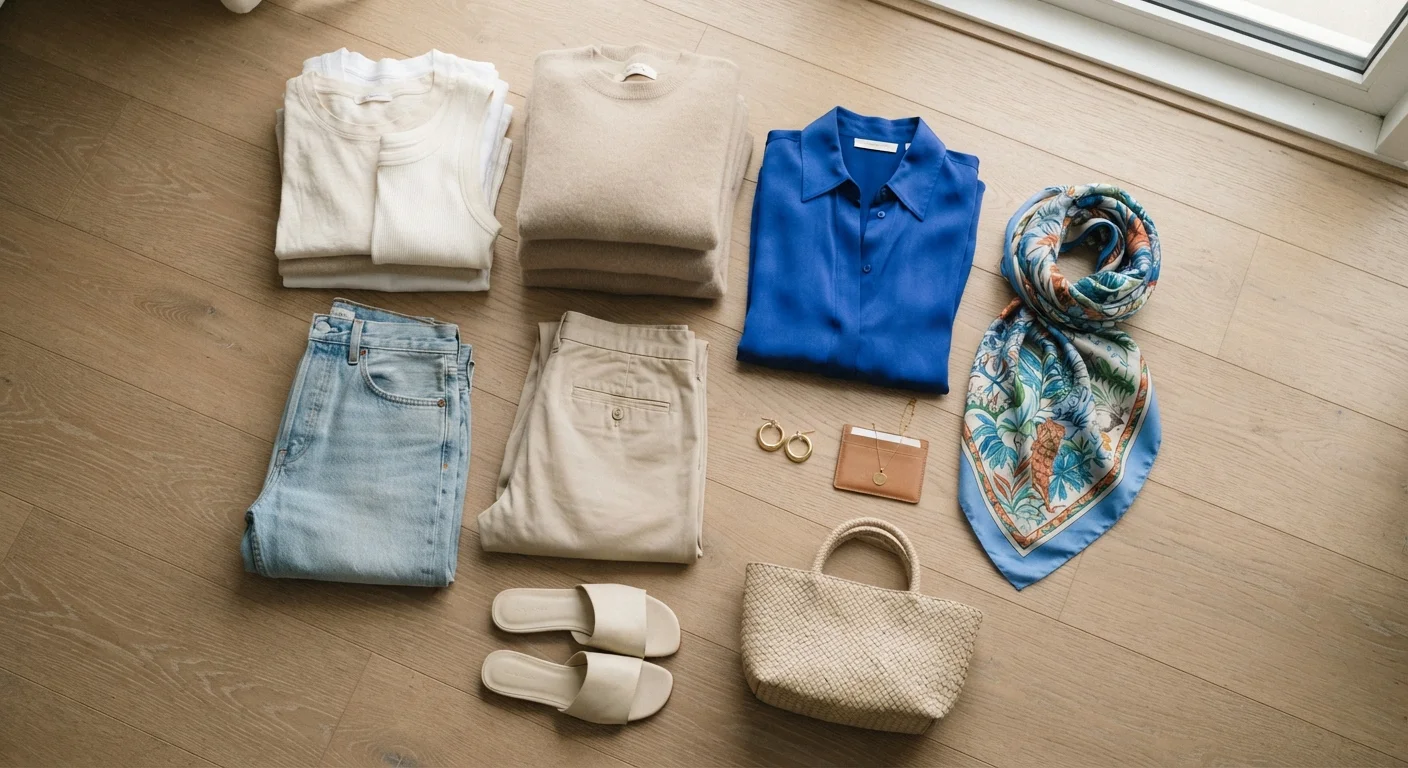
Photo credit: Infolagoon.com | Blogs To Rely On
In this article
Should your wardrobe lean quiet or bold? This breakdown helps you weigh both approaches and mix them in a way that actually works day to day.
Key Takeaways
- Neutral basics offer maximum outfit versatility and are easier to dress up or down.
- Statement pieces create visual interest and can express personality with a single item.
- A wardrobe weighted toward neutrals with a few bold accents tends to be the most practical approach.
- Statement pieces work best when the rest of the outfit stays calm and uncompetitive.
- Personal context — lifestyle, dress codes, comfort level — should drive the balance, not trends.
What We Mean by Neutral vs. Statement
Before you can find a balance, it helps to define what you're actually balancing. Neutral colors typically include white, black, ivory, gray, navy, tan, camel, and taupe — shades that rarely compete with other colors and tend to recede visually. They're not inherently boring; they're foundational. A well-cut black trouser or a crisp white shirt can look just as intentional as anything louder.
Statement pieces, by contrast, are items that draw the eye — whether through bold color (think a fire-engine red blazer or cobalt blue dress), a distinctive print, an unexpected silhouette, or an unusual texture. One statement item can anchor an entire outfit's identity. The key word is one: when multiple pieces compete for attention simultaneously, the overall look tends to read as chaotic rather than confident. For more on that visual principle, see what makes outfits look polished.
The Real-World Case for Neutrals
Neutrals earn their reputation as wardrobe workhorses because they genuinely earn it. A navy blazer goes to a job interview, a casual dinner, and a weekend farmers market. Beige trousers work with virtually any top you own. That kind of flexibility is especially valuable if you're still building a wardrobe from scratch or working with a tight budget.
Neutrals also age gracefully. Because they're not tied to a specific trend cycle, a well-made neutral piece bought this year looks just as relevant three years from now. They're also easier to coordinate instinctively — most people find it simpler to get dressed without stress when the majority of their closet naturally speaks to itself.
| Criterion | Neutral Colors | Statement Pieces |
|---|---|---|
| Outfit versatility | Very high — pairs with nearly everything | Lower — requires careful pairing |
| Visual impact | Subtle, relies on fit and texture | Immediate and attention-drawing |
| Trend longevity | Long — rarely goes out of style | Variable — some trends date quickly |
| Ease of getting dressed | High — low decision effort | Requires more intentional pairing |
| Personality expression | Subtle — relies on styling details | Strong — communicates mood directly |
| Best wardrobe role | Foundation and base layer | Focal point and accent |
That said, an all-neutral wardrobe can feel flat if it lacks variation in texture, fit, or proportion. A cream linen shirt paired with sand chinos in identical fabric weights can disappear visually. The fix isn't adding color — it's adding contrast through material or silhouette.
When Statement Pieces Earn Their Place
A well-chosen statement piece does something neutrals can't: it communicates personality without requiring any explanation. A boldly patterned scarf, a jewel-toned coat, or a pair of wide-leg trousers in a vivid print signals that the wearer made a deliberate choice — and that confidence reads clearly to others.
Statement pieces are also surprisingly practical when you understand how to use them. One distinctive jacket can differentiate three separate outfits built from the same neutral basics underneath. In that sense, a statement piece isn't extravagant — it's efficient. For guidance on keeping that energy balanced at the accessory level, accessorizing with restraint is worth a read.
~80%
Of outfits built on neutral foundations
Style educators commonly suggest that most functional wardrobes are composed primarily of neutral pieces, with bold items used sparingly for accent and variety.
1 rule
One statement item per outfit
A widely cited principle in wardrobe styling holds that limiting bold items to one per outfit prevents visual competition and keeps looks cohesive.
The practical rule most stylists work with: let one piece lead, and let everything else support it. If the statement is your top, keep the bottom neutral. If it's a print trouser, anchor it with a solid, muted shirt. The outfit still has personality — it just has a clear focal point rather than five competing ones.
Building a Balance That Actually Works
For most everyday Americans, the most functional wardrobe ratio leans roughly 70–80% neutral basics with 20–30% statement items — though that's a guideline, not a rule. Your lifestyle matters enormously here. Someone who works in a conservative office environment and spends weekends outdoors will have very different needs than someone in a creative field with a vibrant social calendar. Understanding dress codes can help you map those contexts clearly.
When adding statement pieces, consider which ones earn broad use. A boldly colored blazer in a flattering cut might work across casual, smart casual, and even some professional settings. A novelty graphic tee in a very specific niche print has a narrower lane. Neither is wrong — just be honest about how often each will realistically get worn.
Transitioning between seasons is another moment where this balance gets tested. Statement pieces that felt perfect in summer can feel jarring when layered for fall. Seasonal wardrobe transitions offers smart guidance on working with what you already own across changing conditions.
There's No Universal Right Answer
The neutral-vs-statement balance is deeply personal and context-dependent. Someone who finds bold color energizing and lives a creatively expressive lifestyle may thrive with a more statement-heavy closet. Someone who prefers calm mornings and moves between formal and casual environments frequently may find a predominantly neutral wardrobe far more livable. There's no single correct ratio — only the one that works for your actual life.
Ultimately, dressing well isn't about following a formula — it's about understanding the logic well enough to make your own choices with confidence. Neutrals give you freedom. Statement pieces give you identity. A thoughtful mix of both gives you a wardrobe that's genuinely yours.

Author
Style & Beauty Editorial Team
Style & Beauty Editorial Team is the collective byline for our editorial team and contributor network. Articles published under this byline or an editorial pen name are researched, written, and reviewed according to our editorial standards for clarity, consistency, and independence before publication.
View all articles →