
Closet Organization: The Methods That Help You See Everything You Own
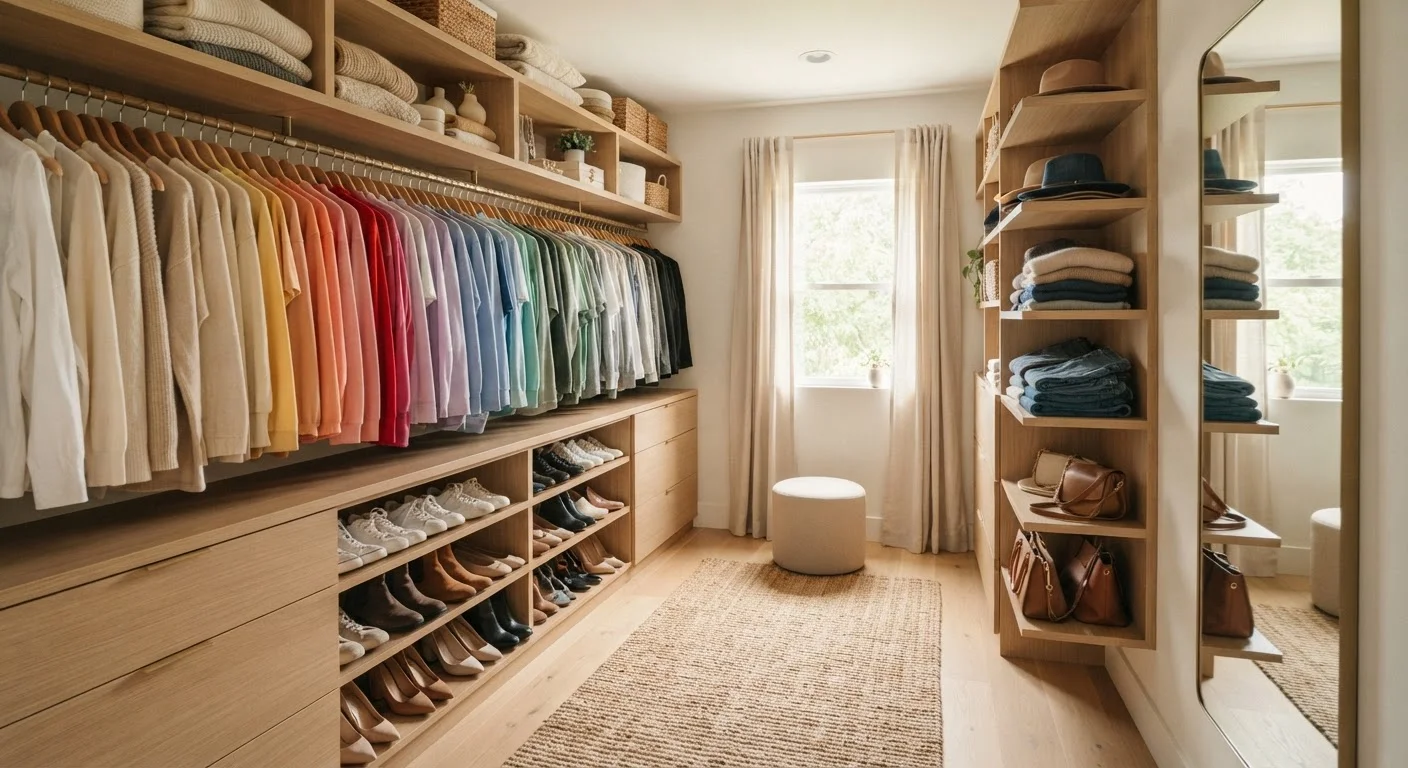
Photo credit: Infolagoon.com | Blogs To Rely On
An organized closet isn't just neat — it makes forgotten items visible and getting dressed easier. Here are the approaches that work.
Key Takeaways
- Visibility is the core goal — if you can't see it, you won't wear it or use it.
- Grouping by category and color reduces daily decision fatigue significantly.
- Seasonal rotation and a regular audit prevent closets from silently filling back up.
- Folding methods and shelf placement affect how much space you actually recover.
- Consistency in how items are returned matters as much as the initial organization.
Why most closets work against you
The problem with most closets isn't lack of space — it's lack of visibility. When items are stacked, buried, or mixed together without logic, the closet becomes a storage unit you avoid rather than a functional part of your daily routine. You default to the same few pieces you can see and forget everything else exists.
The methods below don't require a renovation or a complete overhaul in a single afternoon. Each addresses a specific reason things get lost or overlooked, and they work in closets of every size — from a small reach-in to a walk-in setup. If you're not sure what you're actually working with, a structured closet audit is a useful starting point before reorganizing.
More storage isn't always the answer
It's tempting to solve a crowded closet by adding more bins, hooks, or organizers. But adding storage before reducing volume often just redistributes the clutter into neater-looking piles. Before investing in any new system or hardware, consider what can be removed first. The case against buying more storage containers explains this dynamic in more detail.
Sort by category before anything else
Before thinking about bins, hangers, or shelf dividers, sort everything by what it is. Shirts together, pants together, jackets together — not by outfit or occasion. This single step reveals what you actually own, including duplicates and items you forgot existed.
Most closet chaos stems from mixing categories. When a blazer lives between gym shorts and sweaters, nothing feels findable. Grouping by type creates a mental map of your closet that sticks without effort.
Grouping by type creates a mental map of your closet that sticks without effort.
Use color sequencing within each category
Once items are sorted by type, arrange each group by color — typically from light to dark, or in rainbow order. This isn't about aesthetics. It means that when you're looking for a navy shirt, your eye goes straight to the dark end of that section rather than scanning everything.
Color sequencing also makes gaps visible. If you have six black tops but no mid-tone options, that pattern becomes obvious at a glance. This pairs well with a closet audit that helps you assess what's actually earning its place.
Color sequencing makes gaps in your wardrobe visible at a glance.
Place frequently worn items at eye level
Closet real estate is not equal. Eye-level hanging rods and shelves get used; floor-level bins and top-shelf boxes get ignored. Audit which items you reach for daily or weekly, then move them to the most accessible zone.
Seasonal pieces, special-occasion clothes, and rarely used bags belong higher up or in less accessible spots. Rotating these items out twice a year keeps your active space genuinely useful. See our guide to seasonal wardrobe transitions for a practical rotation approach.
Eye-level space is your most valuable closet real estate — use it for daily items.
Fold strategically — vertically, not in stacks
Stacking folded clothes obscures everything below the top item. Vertical folding — sometimes called the file-fold method — means items stand upright in a drawer or on a shelf so every piece is visible at once, similar to flipping through file folders.
This works especially well for t-shirts, jeans, and knit items. It also makes it immediately apparent when a drawer is getting overfull, which helps prevent slow re-accumulation of clutter. Storing clothes properly also extends garment life; the guide to caring for clothes covers storage habits that protect fabric long-term.
Vertical folding means every item is visible — not just the one on top.
Give every item a fixed return address
Organization breaks down when things don't have a specific home to return to. Vague zones — "the shelf" or "the drawer" — lead to drift. Specific return spots — "navy folded tees, second row left" — create the habit of putting things back correctly.
This is especially important in shared closets or household spaces, where different people's habits can unravel a system quickly. Labeling shelves or bins, even temporarily while a system is new, reinforces the structure until it becomes automatic.
Specific return spots are what keep a system working after the first week.
Rotate and audit on a regular schedule
Even a well-organized closet gradually fills with items that shouldn't be there — worn-out pieces kept out of habit, impulse additions that don't fit anything, or seasonal items that never got rotated out. A scheduled review prevents this slow drift.
Twice a year is a common rhythm: once when putting away winter clothes, once when pulling them back out. A seasonal decluttering schedule can make this feel manageable rather than like a major project.
A twice-yearly audit keeps closet drift from quietly undoing your system.
Turning a method into a lasting habit
The difference between a closet that stays organized and one that falls apart within a month is usually maintenance, not the initial setup. Once a system is in place, the only habit required is returning items to their fixed spots consistently — and doing a brief review a couple of times a year.
Start with a single section
Overhauling an entire closet in one session often leads to abandoned projects. Instead, pick one category — just your hanging tops, or just one shelf — and apply the method there first. A working small system is more motivating than a half-finished large one, and it gives you a template to replicate across the rest of the space.
If your closet is shared, agreeing on a basic structure with the other person matters as much as the method itself. A system that only one person understands won't hold. For broader home organization beyond the closet, the same principles of visibility and fixed zones apply — whether you're tackling a junk drawer or a garage storage setup. A calm, functional home tends to be built one small, well-maintained system at a time.

Author
Home & Living Editorial Team
Home & Living Editorial Team is the collective byline for our editorial team and contributor network. Articles published under this byline or an editorial pen name are researched, written, and reviewed according to our editorial standards for clarity, consistency, and independence before publication.
View all articles →