
The Case for a Nighttime Skincare Routine
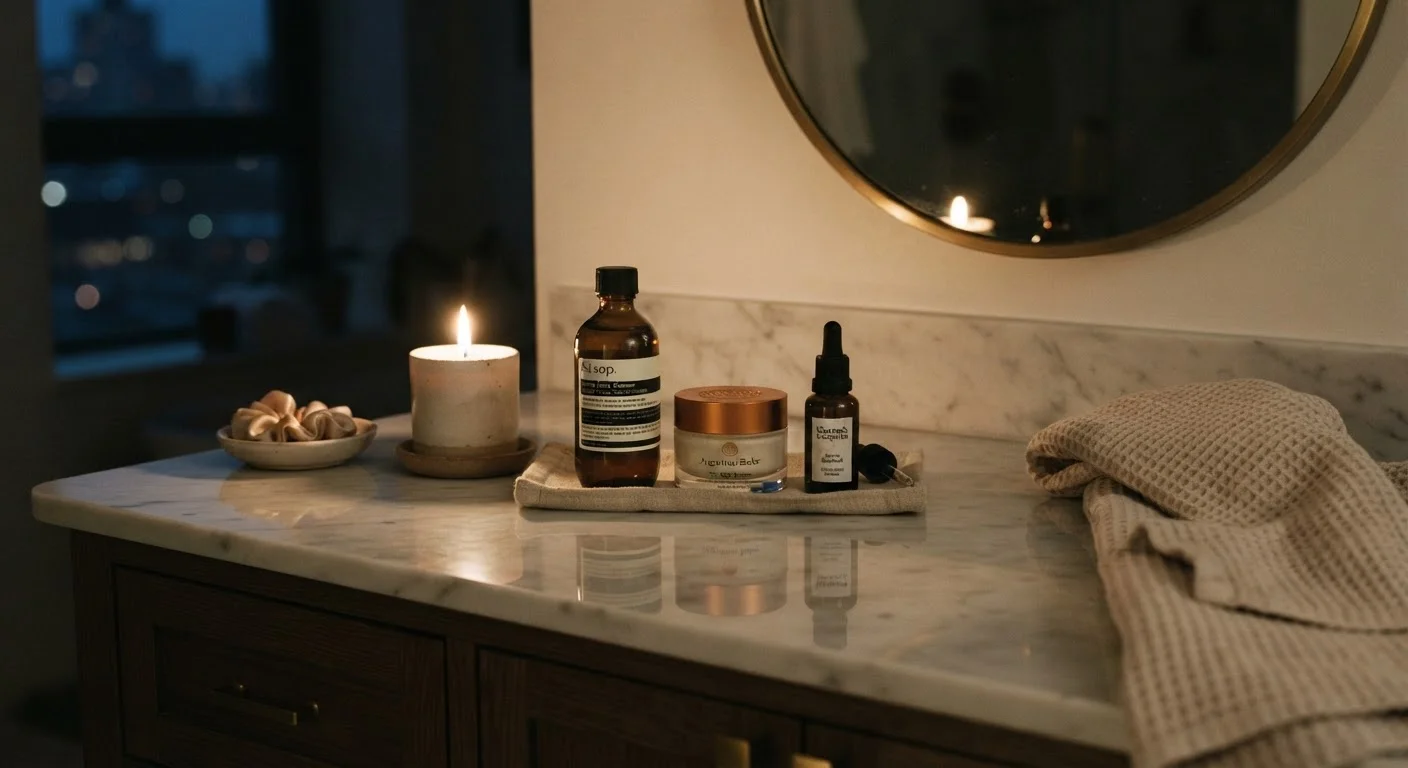
Photo credit: Infolagoon.com | Blogs To Rely On
In this article
Skin behaves differently while you sleep. Here's why a dedicated evening routine can make a real difference—and what to keep simple.
Key Takeaways
- Skin naturally repairs itself during sleep, making nighttime an ideal window for active skincare ingredients.
- A basic evening routine needs only three to four steps to be effective.
- Skipping makeup removal and moisturizer at night can quietly compound skin issues over time.
- Heavier, richer formulas are generally better tolerated at night than during the day.
- Consistency matters more than the number of products you use.
Skin absorbs active ingredients more efficiently overnight
The skin's increased permeability during sleep means retinoids, peptides, and hydrating ingredients can penetrate more deeply. This makes nighttime the preferred application window for many dermatologist-recommended treatments.
No UV exposure means fewer ingredient restrictions
Certain ingredients — notably retinol — degrade in sunlight or increase photosensitivity. Applying them at night sidesteps those concerns entirely without requiring extra SPF management.
Supports the skin's natural repair and renewal cycle
Cell turnover peaks during sleep, so cleansing away buildup and applying nourishing ingredients means you're working with — not against — the skin's own timing.
Heavier formulas are more comfortable and practical at night
Rich oils, thicker creams, and occlusive balms that would feel heavy under makeup work beautifully overnight, providing sustained hydration without any wearability trade-off.
Cleanses away the full day's accumulation
Sunscreen, makeup, sweat, and pollution particles all accumulate on skin throughout the day. Removing them before bed prevents prolonged exposure that can contribute to congestion and dullness.
Adds time to an already full evening
Even a three-step routine requires intentional time at the end of the day. For people with demanding schedules or young children, this small ask can feel like a real barrier.
Product costs can accumulate quickly
Adding a dedicated night moisturizer or treatment serum means more products to buy and replace. Costs can multiply fast if the routine isn't kept deliberately minimal.
Risk of over-treating and irritating skin
More steps don't automatically mean better results. Layering too many active ingredients — especially at night when absorption is higher — can cause redness, peeling, or sensitivity, particularly for those new to actives.
Product transfer onto pillowcases and bedding
Rich creams and oils don't always stay put. Transfer onto pillowcases is common and can require more frequent laundering, especially for those prone to breakouts.
Why Nighttime Is Different for Your Skin
Your skin doesn't just sit idle while you sleep. Research in dermatology has established that the skin's cell turnover rate — the process of shedding old cells and generating new ones — accelerates during sleep. Blood flow to the skin also increases at night, and the skin's barrier is more permeable, meaning it both loses moisture more readily and absorbs topical ingredients more efficiently.
This matters practically: the same active ingredient applied at night may penetrate more effectively than its morning counterpart. It also means that leaving a full face of makeup on overnight isn't a neutral act — it can interfere with that renewal cycle. For a closer look at how those late-night mascara shortcuts add up, see everyday makeup habits that quietly harm your skin.
None of this requires an elaborate shelf of products. Understanding the biology simply helps you make smarter choices about the few steps you do take.
The Real Advantages of an Evening Routine
A consistent nighttime routine offers benefits that a morning routine alone can't fully replicate.
Skin absorbs active ingredients more efficiently overnight
The skin's increased permeability during sleep means retinoids, peptides, and hydrating ingredients can penetrate more deeply. This makes nighttime the preferred application window for many dermatologist-recommended treatments.
No UV exposure means fewer ingredient restrictions
Certain ingredients — notably retinol — degrade in sunlight or increase photosensitivity. Applying them at night sidesteps those concerns entirely without requiring extra SPF management.
Supports the skin's natural repair and renewal cycle
Cell turnover peaks during sleep, so cleansing away buildup and applying nourishing ingredients means you're working with — not against — the skin's own timing.
Heavier formulas are more comfortable and practical at night
Rich oils, thicker creams, and occlusive balms that would feel heavy under makeup work beautifully overnight, providing sustained hydration without any wearability trade-off.
Cleanses away the full day's accumulation
Sunscreen, makeup, sweat, and pollution particles all accumulate on skin throughout the day. Removing them before bed prevents prolonged exposure that can contribute to congestion and dullness.
For guidance on how to stack these products without canceling each other out, the skincare layering order, explained is a practical place to start.
The Honest Drawbacks
A nighttime routine isn't without its friction points — and it's worth being clear-eyed about them before committing.
Adds time to an already full evening
Even a three-step routine requires intentional time at the end of the day. For people with demanding schedules or young children, this small ask can feel like a real barrier.
Product costs can accumulate quickly
Adding a dedicated night moisturizer or treatment serum means more products to buy and replace. Costs can multiply fast if the routine isn't kept deliberately minimal.
Risk of over-treating and irritating skin
More steps don't automatically mean better results. Layering too many active ingredients — especially at night when absorption is higher — can cause redness, peeling, or sensitivity, particularly for those new to actives.
Product transfer onto pillowcases and bedding
Rich creams and oils don't always stay put. Transfer onto pillowcases is common and can require more frequent laundering, especially for those prone to breakouts.
New to Actives? Start Slowly
Ingredients like retinol, AHAs, and BHAs are often used at night — but they're potent, especially for first-time users. Starting with low concentrations a few nights per week gives skin time to adjust and helps you identify any reactions early. If you have sensitive skin, a diagnosed condition, or are pregnant, talk to a dermatologist before introducing new active ingredients.
What a Simple Evening Routine Actually Looks Like
You don't need ten steps. A functional nighttime routine for most skin types involves three moves:
- Cleanse: Remove the day's sunscreen, makeup, and environmental buildup. A gentle, non-stripping cleanser works for the majority of skin types.
- Treat (optional): If you're addressing a specific concern — uneven tone, texture, or breakouts — this is where a targeted serum or treatment fits. Not everyone needs this step every night.
- Moisturize: Night creams and heavier moisturizers are generally richer than daytime formulas and work well here. They support the skin barrier while you sleep.
If you're just getting started and want a full framework, the skin care routine checklist for beginners walks through both morning and evening fundamentals without overwhelming you with products.
~28 days
Typical skin cell turnover cycle
Dermatologists generally describe the full skin renewal cycle as averaging around 28 days in younger adults, slowing with age — which is why consistent routines take weeks to show results.
3–4 steps
Steps in a functional basic routine
Dermatologists frequently cite cleanse, treat, and moisturize as the core framework, noting that additional steps provide diminishing returns for most non-clinical skin concerns.
For comparison, see how an evening approach pairs with — and differs from — building a morning skincare routine from scratch.
This article is for general informational purposes only and is not a substitute for advice from a qualified dermatologist or healthcare professional. If you have a skin condition or concern, consult a licensed professional before beginning any new skincare regimen.

Author
Style & Beauty Editorial Team
Style & Beauty Editorial Team is the collective byline for our editorial team and contributor network. Articles published under this byline or an editorial pen name are researched, written, and reviewed according to our editorial standards for clarity, consistency, and independence before publication.
View all articles →