
Reading Pet Food Labels: What the Ingredients List Actually Tells You
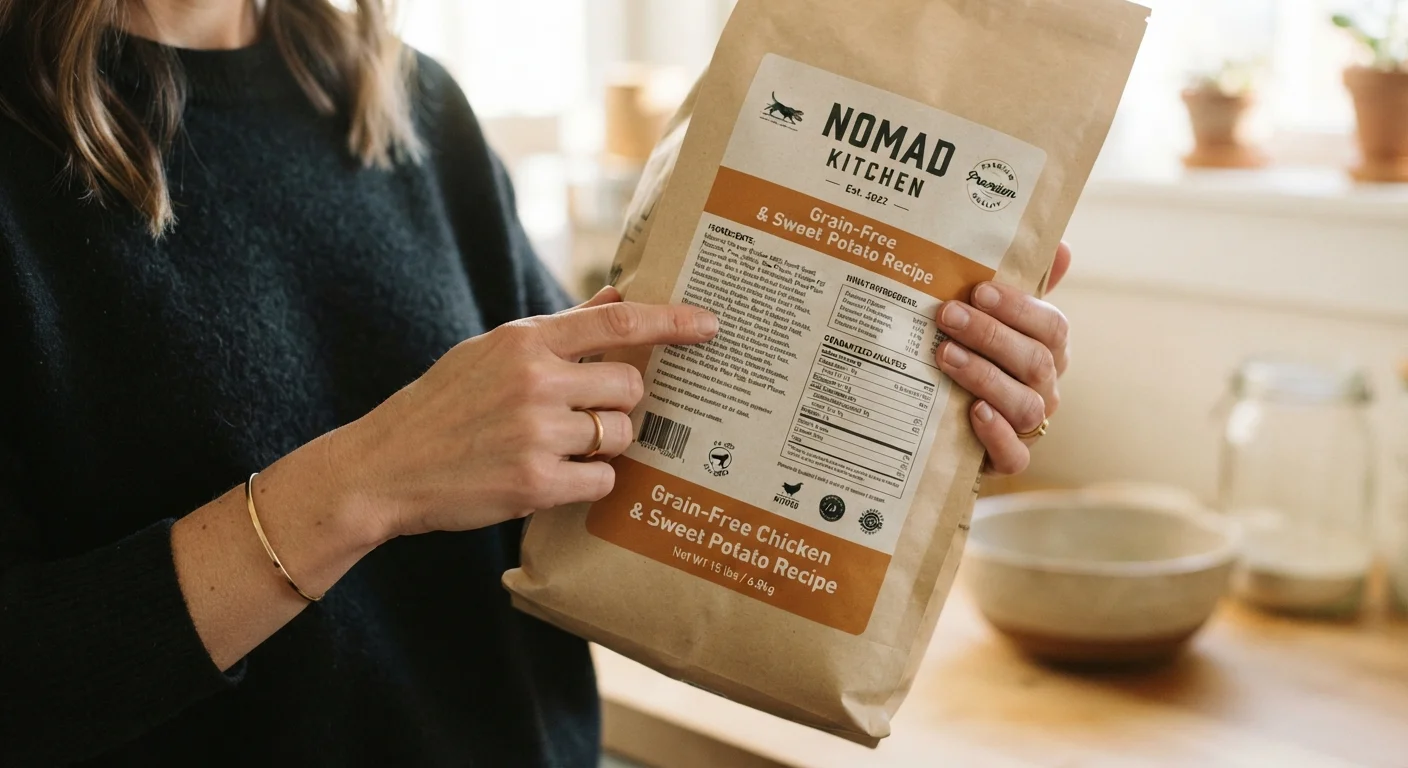
Photo credit: Infolagoon.com | Blogs To Rely On
In this article
Pet food packaging can be confusing. Learn what ingredient order, guaranteed analysis, and AAFCO statements really mean.
Key Takeaways
- Ingredients are listed by pre-cooking weight, not by nutritional value delivered to your pet.
- The AAFCO nutritional adequacy statement tells you whether a food is complete and balanced for a specific life stage.
- Guaranteed analysis figures use different moisture assumptions than human nutrition labels, making direct comparisons tricky.
- Marketing terms like 'natural' and 'holistic' have limited or no regulatory definition on pet food packaging.
- A named animal protein (e.g., 'chicken') appearing first doesn't automatically mean the food is protein-dominant after processing.
- Consulting a veterinarian is the most reliable way to assess whether a specific food suits your individual pet.
Why Ingredient Order Can Mislead You
The ingredient list on a pet food bag follows one clear rule: ingredients are listed by their weight before processing, heaviest first. This sounds straightforward, but it creates a well-known loophole called ingredient splitting. A manufacturer can divide a single ingredient — say, peas — into multiple sub-forms (whole peas, pea protein, pea flour) so that each sub-form appears lower on the list, even though their combined weight might exceed the named meat protein.
Similarly, a whole meat like 'chicken' listed first contains around 70–80% moisture. Once the food is cooked and water is removed, that chicken's actual dry-matter contribution shrinks considerably. Some formulas list a meal version (e.g., 'chicken meal') earlier instead — meal is already dehydrated, so its weight on the label reflects a more concentrated protein source.
This doesn't mean a food is bad simply because a vegetable or grain appears second or third. Context matters. The complete nutritional picture comes from reading the ingredient list alongside the guaranteed analysis panel, not in isolation. For a useful parallel in another category, the same decoding mindset applies when reading a skincare ingredient label.
Pet Food Labels Are Regulated at the State Level
While AAFCO sets the model definitions and nutritional standards used across the country, pet food labeling is technically enforced by each state's department of agriculture. This means requirements can vary slightly by state. The FDA also has oversight authority for safety-related issues such as contamination or adulteration.
The Guaranteed Analysis: What Those Percentages Mean
Every commercial pet food sold in the U.S. must display a guaranteed analysis listing minimum crude protein, minimum crude fat, maximum crude fiber, and maximum moisture. Some brands voluntarily include additional nutrients such as omega fatty acids or calcium.
One important detail: these figures are reported on an as-fed basis, meaning they include the product's moisture content. A canned food at 78% moisture and a dry kibble at 10% moisture will look dramatically different on paper even if their dry-matter nutrient profiles are similar. To compare them fairly, you'd convert both to a dry-matter basis by dividing the nutrient percentage by the percentage of dry matter (100 minus moisture). This is a step most labels don't walk you through, but it matters when evaluating wet versus dry food options for your pet.
95%
Minimum meat required for a 'Chicken for Dogs' product name
Under AAFCO's '95% rule,' a product named after a single ingredient must contain at least 95% of that ingredient on a dry-matter basis, excluding water and condiments.
3%
Minimum required for 'with [ingredient]' naming
AAFCO's '3% rule' means a label saying 'with beef' only guarantees beef makes up at least 3% of the product's content.
25%
Minimum for 'dinner,' 'entrée,' or 'formula' product names
AAFCO's 'dinner rule' applies when a named ingredient is part of a descriptor like 'beef dinner' — it must comprise at least 25% of the product.
The AAFCO Statement: The Label's Most Meaningful Line
Near the guaranteed analysis, you'll typically find a short paragraph beginning with something like: " is formulated to meet the nutritional levels established by the AAFCO Dog Food Nutrient Profiles for adult maintenance." This is the AAFCO nutritional adequacy statement, and it's arguably the single most important thing on the label.
It appears in two forms. A formulation claim means the recipe was calculated to meet AAFCO nutrient profiles. A feeding trial claim means the food was actually fed to animals under AAFCO protocols and the animals maintained health throughout. Feeding trial claims represent a higher bar of evidence.
Pay attention to the life stage specified. A food labeled for 'growth and reproduction' or 'all life stages' meets more demanding nutrient minimums than one labeled for 'adult maintenance' only. Puppies, kittens, and pregnant or nursing animals generally require the former. Many persistent myths about pet nutrition revolve around misreading these statements — our article on common pet food myths covers several in detail.
Ask Your Vet Before Switching Foods
Label literacy is a useful starting point, but individual pets have different health needs, life stages, and medical histories. Before making a significant change to your pet's diet based on label reading alone, consult your veterinarian or a board-certified veterinary nutritionist. They can help you interpret what a specific formulation means for your individual animal.
Marketing Claims vs. Regulatory Meaning
Pet food packaging is covered in terms designed to appeal to owners: natural, holistic, human-grade, premium, ancestral. Their regulatory weight varies considerably.
- Natural: AAFCO defines this as ingredients derived from plant, animal, or mined sources without chemical alteration. It says nothing about nutritional quality or safety.
- Holistic, premium, ultra: These terms have no AAFCO or FDA definition for pet food. They are purely marketing language.
- Human-grade: Legally meaningful only if every ingredient and the manufacturing facility meet USDA standards for human food. Most products using this phrase do not meet that standard.
- With chicken: Under AAFCO rules, a product named 'Dog Food with Chicken' only needs to contain 3% chicken. Compare that to 'Chicken Dog Food,' which requires 95% chicken on a dry-matter basis.
This kind of label literacy isn't unique to pet food. The same skepticism toward vague marketing language is worth applying when evaluating 'healthy' food marketing claims on human products, too.
“The ingredient list tells you what's in the bag, but the guaranteed analysis and the AAFCO statement tell you whether it actually nourishes your pet. Owners should read all three sections together.”
— Lisa Freeman, Board-certified veterinary nutritionist and pet food research contributor
Frequently Asked Questions

Author
Pets & Animals Editorial Team
Pets & Animals Editorial Team is the collective byline for our editorial team and contributor network. Articles published under this byline or an editorial pen name are researched, written, and reviewed according to our editorial standards for clarity, consistency, and independence before publication.
View all articles →