
Wet Food vs. Dry Food: How to Think About Your Pet's Diet
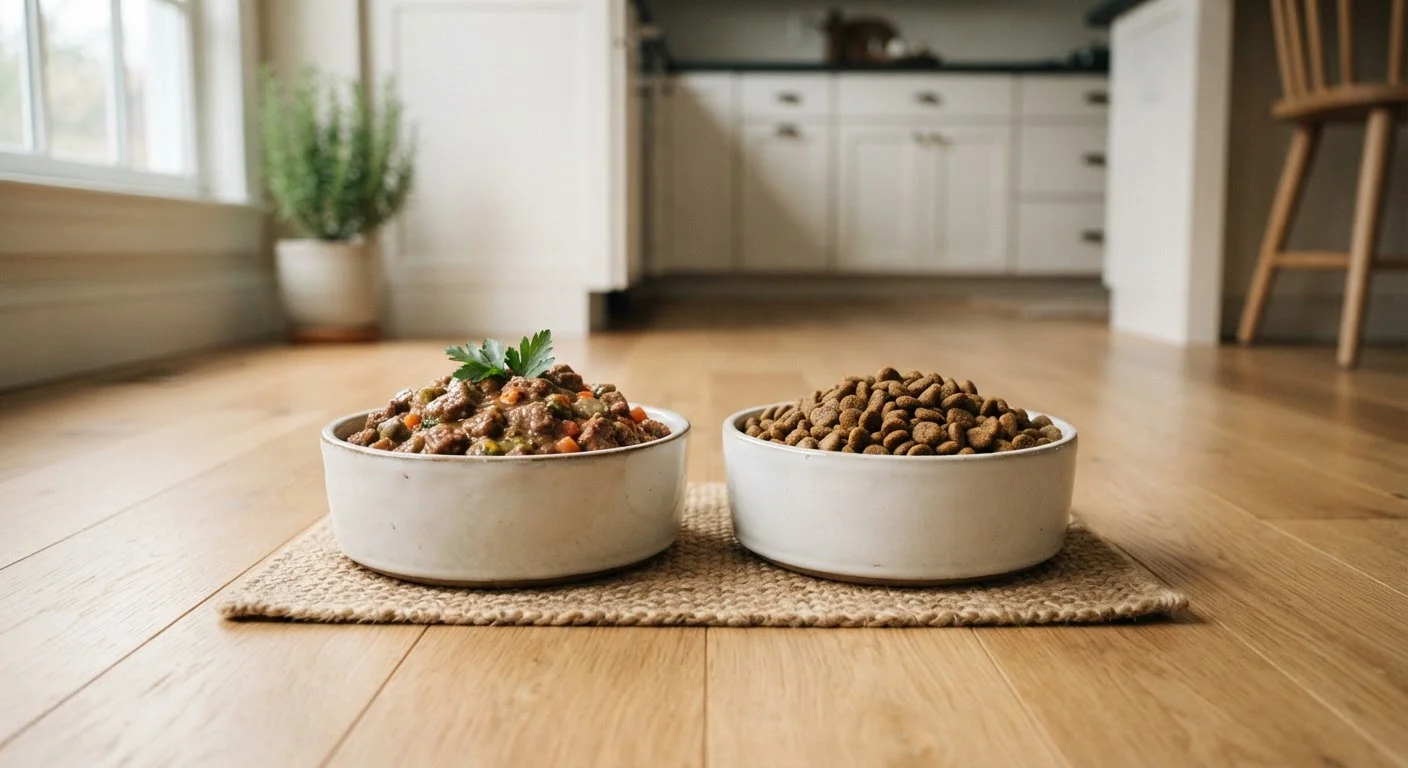
Photo credit: Infolagoon.com | Blogs To Rely On
In this article
Kibble and canned food each have real trade-offs. Here's how nutrition, hydration, and dental health factor into the choice.
Key Takeaways
- Wet food contains roughly 70–80% moisture, making it valuable for pets with low water intake.
- Dry kibble is generally more calorie-dense and cost-effective per serving than wet food.
- Neither format is universally superior — the best choice depends on your pet's health, age, and preferences.
- Some pets thrive on a combination of both formats, sometimes called mixed feeding.
- Always consult your veterinarian before making significant changes to your pet's diet.
What Separates These Two Formats
At the most basic level, dry food and wet food differ in water content — and that single variable cascades into differences in calorie density, shelf life, palatability, and cost. Understanding what's actually inside each format helps cut through a lot of common confusion.
Dry kibble is typically manufactured through a process called extrusion, where ingredients are cooked under heat and pressure and formed into bite-sized pieces. The result is a shelf-stable product with around 6–10% moisture. It's energy-dense, meaning pets get more calories per cup, and it's straightforward to measure and store.
Wet food is cooked and sealed in cans or pouches while still moist. Moisture content generally runs between 70% and 80%, which dramatically changes its texture, smell, and caloric profile per gram. For a thorough understanding of what those ingredient lists and guaranteed-analysis panels are actually telling you, see our guide to reading pet food labels.
| Criterion | Dry Food (Kibble) | Wet Food (Canned) |
|---|---|---|
| Moisture Content | ~6–10% | ~70–80% |
| Caloric Density | Higher calories per gram | Lower calories per gram |
| Shelf Life (unopened) | 12–18 months typical | 2–5 years typical |
| Shelf Life (after opening) | Weeks in airtight container | 1–3 days refrigerated |
| Cost Per Serving | Generally lower | Generally higher |
| Palatability | Moderate | Typically higher |
| Dental Texture Benefit | Modest mechanical abrasion | Minimal to none |
| Hydration Support | Low | High |
Hydration, Nutrition, and Caloric Density
Hydration is one of the most practically significant differences between these two formats — particularly for cats. Cats evolved in arid environments and have a naturally low thirst drive; many don't compensate well when fed an exclusively dry diet. Wet food can meaningfully contribute to daily fluid intake, which matters for kidney function and urinary tract health. Dogs are generally better at self-regulating water intake, but wet food can still benefit dogs who are prone to dehydration, especially in hot climates.
From a nutritional standpoint, both formats can be complete and balanced when they carry an AAFCO (Association of American Feed Control Officials) statement on the label. The nutrient profiles aren't inherently superior in either format — what matters is whether the specific product meets your pet's life-stage requirements. Caloric density is worth tracking carefully: because wet food is mostly water, a pet eating only wet food will need a higher volume of food to meet the same calorie target as a kibble-fed animal. This also affects portion guidance. Our article on how portion size affects long-term health explains why feeding guidelines are always a starting point, not a fixed rule.
~70–80%
Moisture content in wet pet food
Compared to roughly 6–10% in dry kibble, making wet food a significant secondary hydration source for many pets.
~60%
Of cats fed dry-only diets that under-drink
Veterinary nutrition literature consistently notes that cats on exclusive dry diets tend to consume less total fluid than those eating wet food.
3–4x
Volume of wet food needed to match kibble calories
Because of its high water content, pets require a significantly larger volume of wet food to meet the same caloric targets as dry food.
Dental Health Considerations
A persistent belief among pet owners is that dry kibble significantly cleans teeth. The reality is more nuanced. While the mechanical abrasion from chewing kibble can offer modest plaque-reduction benefits compared to wet food, research suggests kibble alone is not a reliable dental hygiene strategy. Many dogs and cats swallow kibble largely whole, limiting any scrubbing effect.
Wet food, by contrast, offers no mechanical cleaning benefit at all, and its texture can leave more residue on tooth surfaces. However, neither format replaces brushing, dental chews, or professional veterinary cleanings. To understand how significant oral health is to your pet's overall wellbeing, our overview of dental health in pets covers what neglect can lead to and what preventive approaches exist.
When a Veterinary Diet Changes the Equation
For pets managing specific health conditions — such as kidney disease, urinary crystals, or food sensitivities — the wet-versus-dry question may be answered by therapeutic dietary needs rather than personal preference. Prescription and therapeutic diets exist in both formats. If your vet has recommended a special diet, see our comparison of prescription diets versus over-the-counter pet foods for context on what those recommendations typically involve.
Practical Trade-Offs and Mixed Feeding
Cost and convenience consistently factor into real-world feeding decisions. Dry food generally costs less per calorie and can be left in a bowl without spoiling quickly — useful for free-feeding arrangements or busy schedules. Wet food costs more per serving, and any uneaten portion needs refrigeration within a few hours to prevent spoilage.
Many pet owners use a mixed feeding approach — wet food for one meal and dry kibble for another — to capture benefits from both formats. This can improve palatability and hydration without dramatically increasing cost. There's no universal formula; the right balance depends on your pet's size, health status, and preferences. Life stage also matters significantly. A senior cat with reduced kidney function has different needs than a young, active dog. Our article on how age changes what your pet needs outlines how nutritional priorities shift across life stages.
Building consistent feeding schedules — whichever format you choose — also contributes to your pet's sense of security. See our guidance on building a daily routine for you and your pet for practical scheduling strategies.
This article is for general informational purposes only and does not constitute veterinary or nutritional advice. Always consult a licensed veterinarian before making significant changes to your pet's diet, especially for animals with existing health conditions.

Author
Pets & Animals Editorial Team
Pets & Animals Editorial Team is the collective byline for our editorial team and contributor network. Articles published under this byline or an editorial pen name are researched, written, and reviewed according to our editorial standards for clarity, consistency, and independence before publication.
View all articles →