
Vertical Storage vs. Horizontal Storage: Which Works Best for Small Spaces?
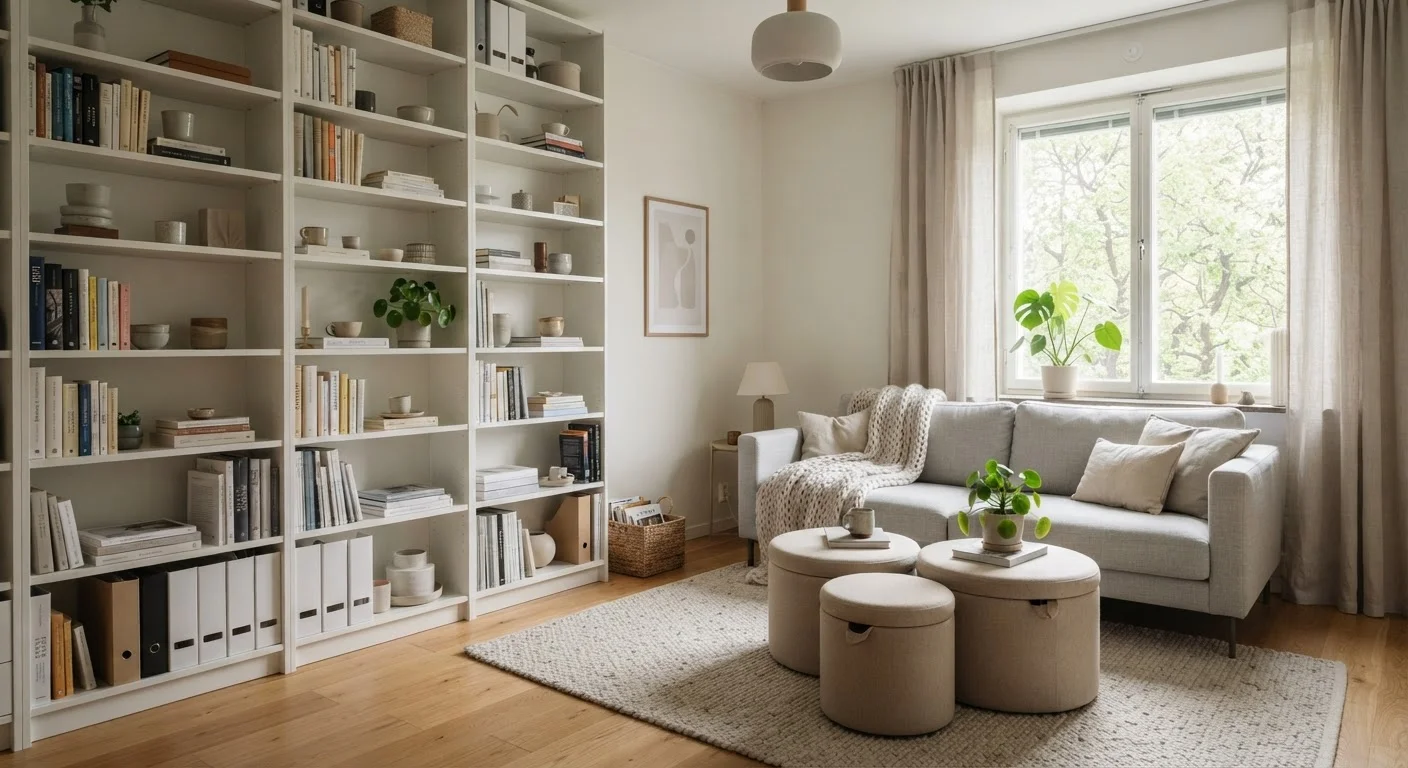
Photo credit: Infolagoon.com | Blogs To Rely On
In this article
Choosing between vertical and horizontal storage changes how a room feels and functions. Here's how each approach plays out in real homes.
Key Takeaways
- Vertical storage frees up floor space by using wall height — ideal for small rooms with limited square footage.
- Horizontal storage keeps items accessible and lowers a room's visual center of gravity, adding stability.
- Combining both approaches strategically often produces better results than committing to one exclusively.
- Anchor tall storage units to walls for safety — this is especially important in homes with children.
- The best storage orientation depends on your room dimensions, household habits, and how you use the space daily.
Why Storage Orientation Matters More Than You Think
In a small space, every decision about where things go has a ripple effect on how the entire room feels. Storage orientation — whether you build up or spread out — directly shapes how much usable floor space you have, how easy it is to find things, and whether a room reads as calm or chaotic.
Vertical storage uses wall height to stack and organize items above the floor plane. Think tall bookcases, wall-mounted pegboards, over-door organizers, and floor-to-ceiling shelving units. Horizontal storage, by contrast, spreads along the floor: low dressers, benches with interior storage, coffee tables with drawers, and under-bed containers. Both approaches work — but they solve different problems. A durable organizing system starts with understanding which orientation fits your actual space.
The Case for Vertical Storage
The primary advantage of vertical storage is simple: it leaves the floor alone. In a 300-square-foot apartment or a narrow bedroom, every square foot of open floor contributes to the perception of spaciousness. A tall shelving unit occupying 2 square feet of floor space can hold what a 10-square-foot horizontal arrangement might otherwise require.
Vertical storage also does something useful to visual perception. Drawing the eye upward — toward a column of shelves or a tall wardrobe — creates an impression of height that makes rooms feel less boxed-in. Designers often use this principle deliberately in small spaces.
| Criterion | Vertical Storage | Horizontal Storage |
|---|---|---|
| Floor space used | Minimal | Moderate to significant |
| Visual effect | Draws eye upward, adds perceived height | Grounds the room, feels stable |
| Accessibility | Upper items require step stool | All items within easy reach |
| Safety considerations | Must anchor tall units to wall studs | Lower tipping risk, child-friendly |
| Best room types | Studios, small bedrooms, narrow rooms | Shared spaces, family rooms, bedrooms |
| Flexibility over time | Highly reconfigurable with modular systems | Limited by furniture footprint |
The trade-offs are real, though. Items stored high require a step stool to access safely, which can be inconvenient for daily-use items. Tall units must be anchored to wall studs to prevent tipping — this is a non-negotiable safety measure, especially in homes with children. And in rooms with low or textured ceilings, floor-to-ceiling solutions may not be practical at all. For small kitchen applications, see how vertical thinking applies to kitchen organization.
The Case for Horizontal Storage
Horizontal storage has a quieter kind of practicality. Low-profile furniture — a storage bench at the foot of a bed, a media console, a low dresser — keeps a room's visual weight grounded and makes navigation feel intuitive. Everything is within arm's reach without climbing or searching high shelves.
This approach also doubles up on function more naturally. An ottoman with interior storage, a bed frame with built-in drawers, or a window seat with a hinged lid all add storage without adding a distinct piece of furniture to the room. That efficiency matters in spaces where every item has to earn its place.
Under-Bed Storage: A Hidden Horizontal Win
Under-bed storage is one of the most underused horizontal options in small homes. Bed frames with built-in drawers or low-profile rolling bins can hold seasonal clothing, extra bedding, or shoes without claiming any visible floor or wall space. Measure your bed's clearance height before purchasing containers — clearances vary widely between frame styles, and even a few inches make a difference in what fits.
The downside: horizontal storage consumes floor space. In a studio apartment or a small bedroom, sprawling low furniture can make the room feel cramped and harder to move through. It can also invite visual clutter if surfaces are left exposed — a challenge explored in detail in our piece on invisible storage versus open shelving.
How to Mix Both Approaches Strategically
In most real homes, the answer isn't vertical or horizontal — it's a deliberate combination of both. A practical framework: use vertical storage for items you access infrequently (seasonal items, reference books, spare linens) and horizontal storage for daily-use items that need to be grabbed quickly and returned easily.
Zoning also helps. In a living room, a low media console handles daily electronics while a tall bookcase on an adjacent wall holds books, display items, and backup storage. In a bedroom, under-bed drawers take care of off-season clothing while a wall-mounted shelf above the headboard handles books and small accessories.
If you share your space with others, keep in mind that different users have different habits — a system that works for one person may frustrate another. Prioritize horizontal, clearly labeled zones for shared items, and reserve higher vertical space for personal or infrequently accessed belongings. And before adding any new storage unit to the mix, it's worth asking whether you need more containers at all — more storage can sometimes deepen a clutter problem rather than solve it.

Author
Home & Living Editorial Team
Home & Living Editorial Team is the collective byline for our editorial team and contributor network. Articles published under this byline or an editorial pen name are researched, written, and reviewed according to our editorial standards for clarity, consistency, and independence before publication.
View all articles →