
Why Buying More Storage Containers Often Makes Clutter Worse
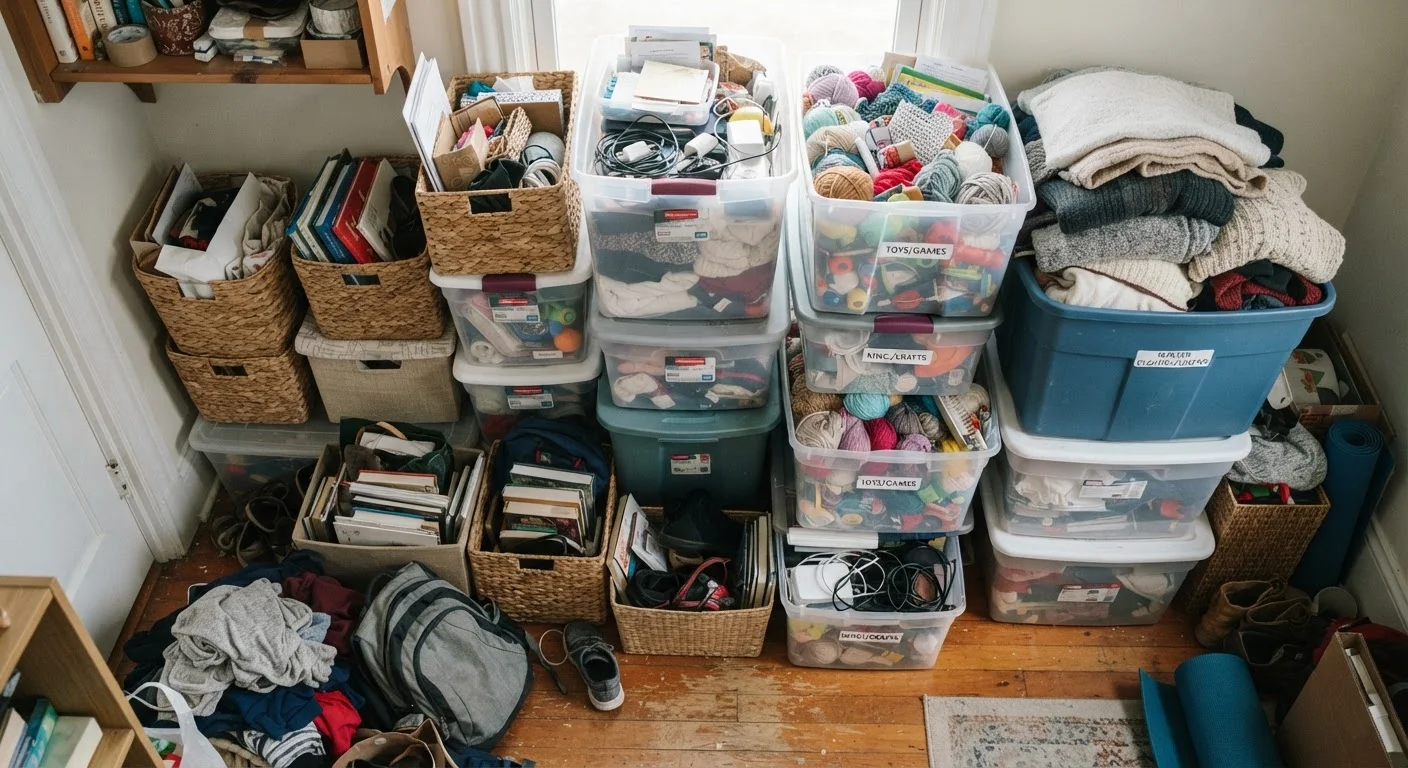
Photo credit: Infolagoon.com | Blogs To Rely On
In this article
More bins and baskets sound like the solution — but they can quietly deepen a clutter problem. Here's why, and what to do instead.
Key Takeaways
- Buying storage containers before decluttering often just relocates clutter rather than eliminating it.
- Opaque bins can hide items so effectively that you forget what you own and rebuy things.
- The real fix is reducing what you keep, not increasing where you keep it.
- Containers work best when sized and placed after a thorough declutter, not before.
- Mismatched or excessive containers can make organizing harder to maintain long-term.
Why the Container Aisle Isn't the Starting Point
Walk into any home goods store and you'll find an entire aisle dedicated to the promise of order: stackable bins, woven baskets, drawer dividers, labeled canisters. They look reassuring. Buying a set feels like taking control. But for most cluttered homes, adding more containers is the wrong first step — and it often makes things measurably worse.
The core problem is simple: containers manage volume, but they don't reduce it. If you own too much, a new bin just gives the excess somewhere to hide. The clutter doesn't go away; it gets boxed up, stacked in a closet, and forgotten — until you open that closet six months later and find you need more bins.
Shopping for Bins Can Feel Like Progress
Purchasing organizers creates a satisfying sense of action without requiring the harder decisions about what to keep and what to let go. This can delay genuine decluttering for months or years. If you find yourself reaching for the storage aisle before you've sorted anything, pause and declutter first.
This pattern is worth understanding not as a personal failure, but as a design flaw in how organizing is commonly taught. Sorting and purging are the hard, time-consuming part. Shopping is easy. So the shopping step tends to happen first — and the sorting step gets indefinitely postponed.
Common Mistakes That Turn Storage Into More Clutter
The mistakes below aren't unusual — they show up in almost every home at some point. Understanding why they happen makes them easier to avoid.
Buying containers before decluttering what you already own.
Why it happens: It feels productive to plan storage solutions, and shopping is easier than sorting. Most people underestimate how much they'll actually discard once they start.
Using opaque bins that hide contents from view.
Why it happens: Opaque containers look tidier on shelves, so they're widely sold and marketed as the stylish choice. The visual calm they create feels like organization.
Buying containers in the wrong size for the items or the space.
Why it happens: People often shop for containers by eye or buy in bulk when they're on sale, without measuring the shelf, drawer, or cabinet where the container will live.
Treating storage as a substitute for regular decluttering habits.
Why it happens: Once items are in a bin, they feel handled. Out of sight, out of mind — until the bins overflow and the cycle repeats with another storage purchase.
Misunderstanding the emotional appeal of organizing products.
Why it happens: Well-designed bins and baskets trigger a genuine sense of calm and control — but that feeling belongs to the act of buying, not to the actual state of your home.
Containers Are a Tool, Not a Solution
Storage containers only work once you've decided what's worth keeping. Using them before that decision is made turns them into an expensive way to shuffle items from one location to another. Address the volume of your belongings first — then shop for storage to fit what remains.
For homes with multiple residents, these patterns can compound quickly. Different habits around tidying and storing make it even harder to maintain a shared system when the containers themselves aren't well-suited to the space or the people using them. Our guide on organizing shared spaces addresses this directly.
What to Do Instead: Declutter First, Then Contain
A more effective sequence flips the usual order. Before any container is purchased, sort through the category or space in question. Pull everything out. Handle each item once and make a keep-or-release decision. Only once the pile of keepers is final should you think about how to store it.
At that point, containers do exactly what they're designed for: they organize a defined set of items in a defined space. The difference is that you're fitting storage to belongings, not stuffing belongings into whatever container happened to be on sale.
25%
Of two-car garages that can't fit a car
The U.S. Department of Energy has estimated that roughly one in four two-car garages is too full of stored items to park vehicles inside.
10 billion+
Square feet of self-storage space in the U.S.
The Self Storage Association has reported that the United States has more self-storage space per capita than any other country, suggesting Americans consistently acquire more than their homes can comfortably hold.
It's also worth thinking carefully about visibility. Open shelving or clear bins work well in functional spaces like pantries, workshops, and linen closets — anywhere you need to quickly locate and access items. Our overview of invisible storage versus open shelving lays out the honest trade-offs of each approach. For trickier categories like sentimental keepsakes, sentimental clutter frameworks can help you decide what's actually worth containing in the first place.
The goal isn't a home full of matching bins. It's a home where everything you keep has a place — and everything in that place is something you actually use.

Author
Home & Living Editorial Team
Home & Living Editorial Team is the collective byline for our editorial team and contributor network. Articles published under this byline or an editorial pen name are researched, written, and reviewed according to our editorial standards for clarity, consistency, and independence before publication.
View all articles →