
Shared Spaces, Different Habits: Organizing a Home with Multiple People
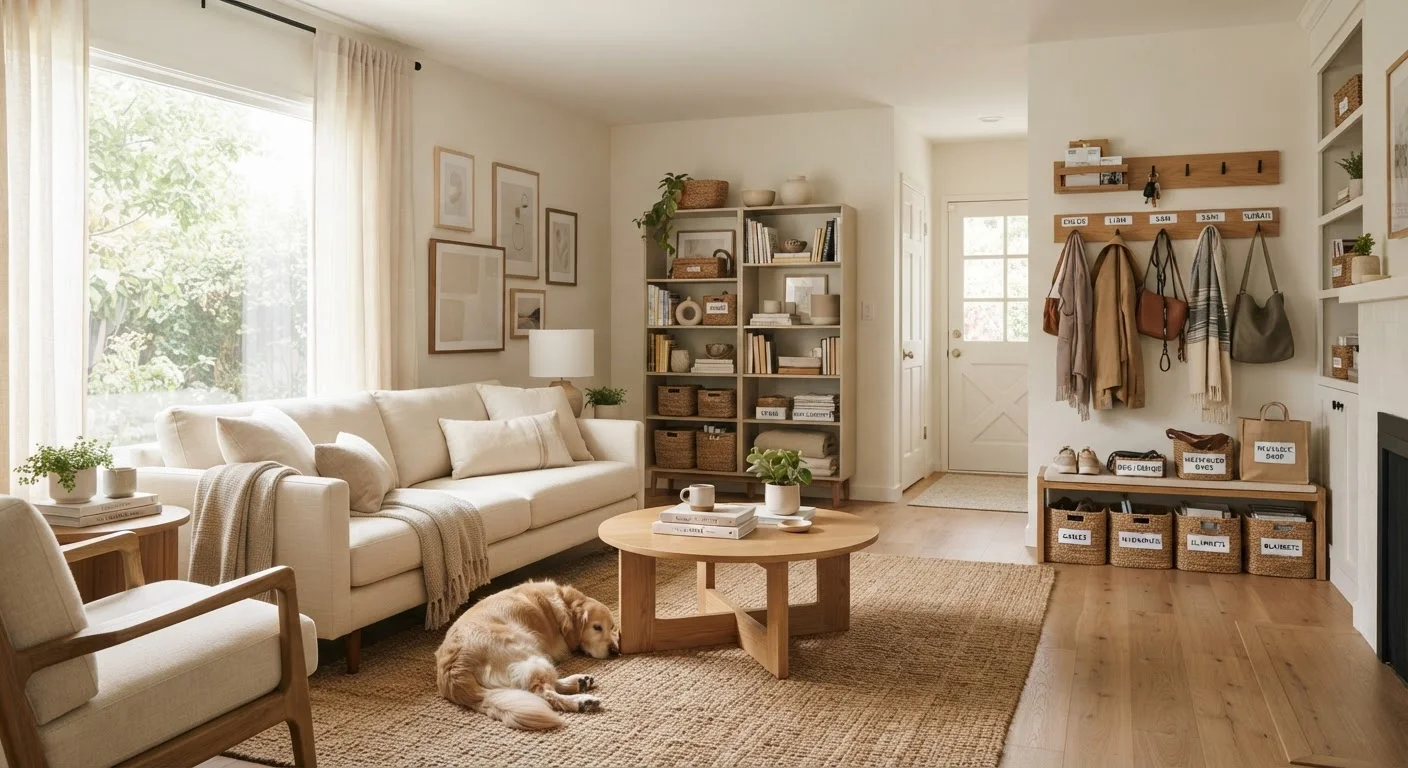
Photo credit: Infolagoon.com | Blogs To Rely On
In this article
When roommates, partners, or kids have different tidiness standards, the right systems can prevent constant conflict and mess.
Key Takeaways
- Shared homes work best when systems are simple enough for everyone to follow without reminders.
- Defining zones — not rules — gives each person autonomy while keeping common areas functional.
- A brief household conversation upfront prevents most day-to-day friction around tidiness.
- Flexible storage that accommodates different habits reduces the need for constant enforcement.
- Maintenance matters more than the initial setup — schedule short resets to keep systems alive.
Why Shared Homes Resist Standard Organization Advice
Most home organization guides are written for a single person with full control over every decision. Shared households don't work that way. When two or more people with different tidiness thresholds, work schedules, and storage preferences occupy the same space, even the most well-intentioned system can break down within days.
The core challenge isn't clutter — it's coordination. A system that one person finds intuitive may feel arbitrary or burdensome to another. And when maintaining the system feels like extra effort that only benefits someone else, people quietly stop following it.
Research on household dynamics consistently points to fairness and shared ownership as the biggest predictors of whether domestic systems stick. That means the most effective approach isn't finding the perfect organizational method — it's finding one that everyone can actually live with. For a deeper look at how physical disorder affects mood and motivation in shared spaces, see The Psychology Behind Why Clutter Feels So Overwhelming.
Agreement Comes Before Organization
No storage system will hold up if the people living with it never agreed to it. Before buying a single bin or rearranging a shelf, have a direct conversation about what each person needs from shared spaces. Systems built on silent assumptions tend to collapse within weeks.
Setting Up Systems That Work for Everyone
The steps below are designed to be done collaboratively — ideally with all household members present for at least the first two. You don't need to reorganize the entire home at once. Start with the one or two shared zones that cause the most daily friction, build a working system there, then expand.
What you will need
Open-top bins or baskets
Low-effort catch-all storage that multiple people can use without instructions.
Label maker or masking tape and marker
Clearly marking where things belong reduces ambiguity for all household members.
Wall hooks or over-door organizers
Provide quick drop-off spots near entryways and high-traffic areas.
Shared household calendar (paper or digital)
Tracks chores, resets, and shared responsibilities so nothing relies on memory.
Map the friction points together
Before reorganizing anything, identify the specific spots that cause the most tension — the counter that's always cluttered, the bathroom shelf that overflows, the entryway that collects everything. Ask each household member to name their top two complaints. You're not assigning blame; you're diagnosing the system.
Write these down. Patterns will emerge quickly, and they'll tell you exactly where to focus your effort first.
Define shared zones and personal zones
Not everything in a shared home needs to be communal. Clearly distinguishing between shared zones (kitchen counters, bathroom sink area, living room surfaces) and personal zones (bedroom shelves, a designated drawer or cabinet) gives people a place to be themselves without disrupting common areas.
In shared zones, establish simple, consistent rules: surfaces stay clear except for daily-use items; anything that lives there has a designated spot. In personal zones, let individuals organize however works for them.
Assign a home to every shared item
Clutter accumulates where items don't have a clear place to live. Walk through each shared zone and assign a specific location for every category of item — mail, keys, chargers, cleaning supplies, snacks. If something doesn't have a designated spot, either create one or question whether it belongs in that zone at all.
For a room-by-room approach to this process, see Decluttering Your Home From Scratch, which walks through how to build these foundations methodically.
Choose systems that match the lowest-effort user
A system is only as good as its least engaged participant. If one person will never open a labeled binder but will drop things in an open basket, design around the basket. Friction-free beats perfectly organized every time in a multi-person home.
This means favoring open storage over lidded containers in common areas, keeping categories broad rather than granular, and placing storage at the point of use. The systems that hold up over time are almost always the simplest ones.
Schedule a short weekly reset
Even well-designed systems drift. Build in a 10–15 minute weekly reset where everyone returns items to their designated spots, clears shared surfaces, and flags anything that needs a longer fix. Consistency matters more than thoroughness — a brief, regular reset prevents the buildup that makes tidying feel overwhelming.
Consider linking the reset to an existing weekly routine so it doesn't require extra scheduling effort.
Avoid Over-Engineering the System
Highly detailed systems with many labeled categories and strict rules are harder for multiple people to maintain consistently. If a system requires explaining every time a new item enters the home, it's too complicated. As explained in this guide on storage containers and clutter, adding more structure doesn't always reduce mess — simplicity is what sustains shared systems long-term.
Lower the Barrier to Putting Things Away
The easier it is to return something to its place, the more likely people are to do it. Opt for open bins over lidded boxes in high-traffic areas, and place storage close to where items are actually used. A hook by the door beats a closet across the room every time.
Once your shared zones are running smoothly, you may find it useful to apply similar thinking to more specific areas — the kitchen counter and storage guide and the closet organization methods guide both address common household conflict zones in detail.

Author
Home & Living Editorial Team
Home & Living Editorial Team is the collective byline for our editorial team and contributor network. Articles published under this byline or an editorial pen name are researched, written, and reviewed according to our editorial standards for clarity, consistency, and independence before publication.
View all articles →