
The Trade-Offs of Invisible Storage vs. Open Shelving
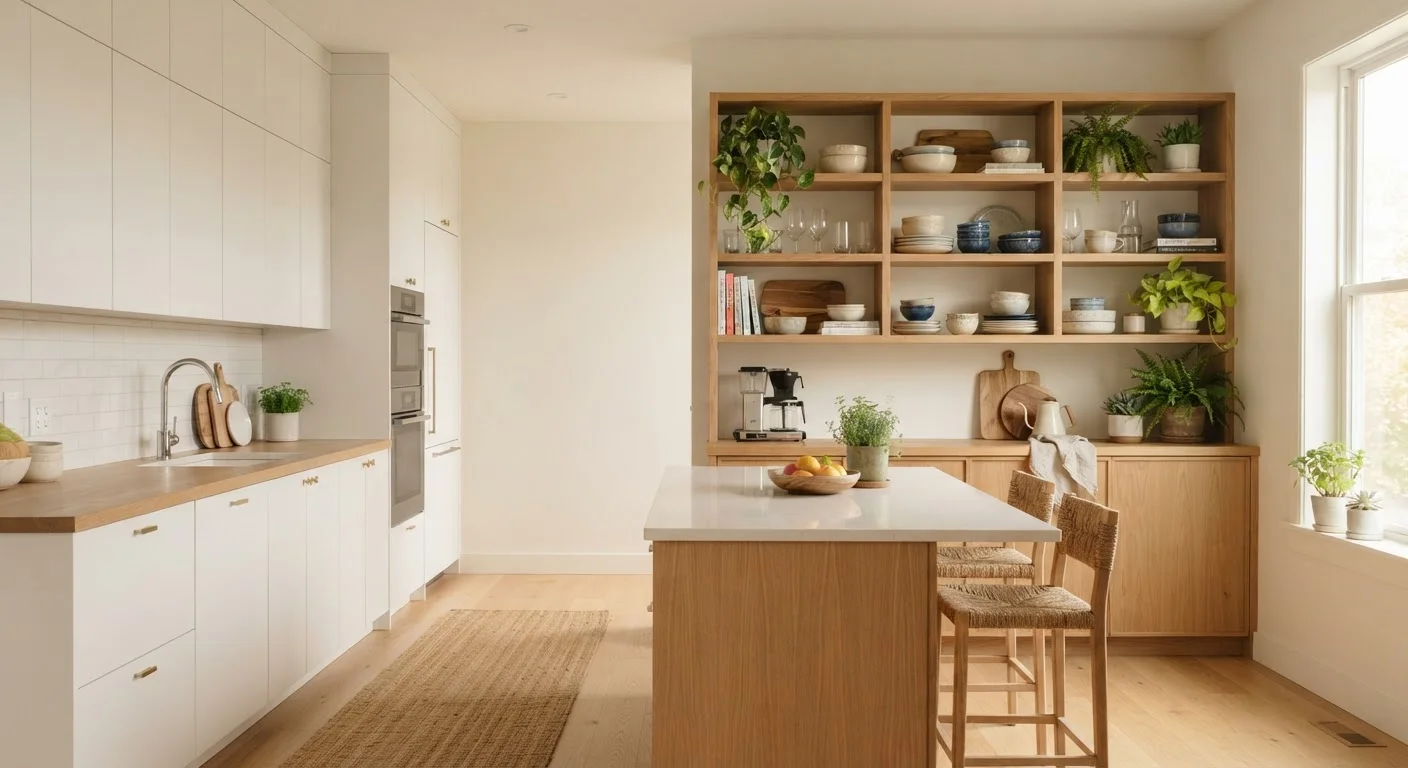
Photo credit: Infolagoon.com | Blogs To Rely On
In this article
Hidden cabinets keep rooms calm but can hide what you need. Open shelving shows everything but requires discipline. Here's the honest breakdown.
Key Takeaways
- Invisible storage creates visual calm but can lead to forgotten items and disorganized interiors.
- Open shelving makes everything visible at a glance but demands consistent tidiness to avoid looking cluttered.
- The right choice depends on your household habits, the room's purpose, and how much maintenance you'll realistically commit to.
- Many homes benefit from a hybrid approach — closed storage for back stock, open shelving for frequently used items.
Creates consistent visual calm regardless of contents
Closed storage keeps rooms looking tidy even when the interior is less organized, which reduces the mental load of seeing disorder throughout the day.
Protects items from dust and light exposure
Items stored behind doors accumulate significantly less dust and are shielded from UV light, which can fade fabrics, paper, and finishes over time.
Flexible interior organization without visible consequences
You can reorganize, rearrange, or temporarily let the interior get messy without it affecting the appearance of the room — a meaningful advantage in busy households.
Works well for mismatched or unattractive items
Not everything worth keeping is worth displaying. Closed storage is ideal for cleaning supplies, spare batteries, off-season linens, and other practical items that don't add visual value.
Items become forgotten without labeling systems
Out of sight frequently becomes out of mind. Without clear labeling or consistent zones inside cabinets, it's easy to lose track of what's stored where — leading to duplicates and wasted space.
Dust accumulates faster on exposed surfaces
Open shelves require more frequent cleaning than closed cabinets, since every surface and displayed item is exposed to airborne dust — a particular consideration in high-traffic or cooking areas.
Visual clutter appears immediately and prominently
A single misplaced stack of papers or an out-of-place object on an open shelf is instantly visible, making the system highly sensitive to inconsistent upkeep by all household members.
Requires curated, visually consistent items
Open shelving looks intentional only when what's displayed is cohesive in appearance. Mismatched containers, worn packaging, and utility items undermine the look quickly.
What We Mean by Invisible Storage
Invisible storage refers to any system that conceals its contents — cabinets with solid doors, drawers, built-in closets, and lidded bins. The defining quality is that the room appears tidy regardless of what's inside. In kitchens, this means upper and lower cabinets. In living rooms, it means media consoles, ottomans with storage, or built-in cabinetry. The appeal is straightforward: visual calm on demand.
Open shelving, by contrast, keeps everything in plain view. Wall-mounted shelves, floating ledges, and freestanding bookcases expose whatever is placed on them. The logic here is visibility — you can see what you own at a glance, which can reduce the time spent searching for items and the likelihood of buying duplicates.
These two approaches aren't just aesthetic choices. They shape daily habits, how quickly you can find things, and how much maintenance a room actually requires. For a deeper look at how storage direction also affects a space, see our guide on vertical vs. horizontal storage.
The Case for Invisible Storage
Creates consistent visual calm regardless of contents
Closed storage keeps rooms looking tidy even when the interior is less organized, which reduces the mental load of seeing disorder throughout the day.
Protects items from dust and light exposure
Items stored behind doors accumulate significantly less dust and are shielded from UV light, which can fade fabrics, paper, and finishes over time.
Flexible interior organization without visible consequences
You can reorganize, rearrange, or temporarily let the interior get messy without it affecting the appearance of the room — a meaningful advantage in busy households.
Works well for mismatched or unattractive items
Not everything worth keeping is worth displaying. Closed storage is ideal for cleaning supplies, spare batteries, off-season linens, and other practical items that don't add visual value.
Closed storage genuinely earns its place in rooms where visual rest matters — bedrooms, living areas, and home offices where calm supports focus or relaxation. It's also forgiving: a messy drawer or overstuffed cabinet behind a closed door doesn't affect the feel of the room. For households with children, pets, or high turnover of items, that forgiveness is meaningful.
The main challenge is what happens inside. Without a clear organizational system — labeling, consistent zones, regular reviews — closed storage becomes a black hole. Items get pushed to the back and forgotten. You end up buying things you already own because you couldn't find them. This is why invisible storage works best when it's paired with intentional organization habits, not just a door to shut things behind. If your storage is currently absorbing more than it's organizing, our piece on why buying more storage containers often makes clutter worse is worth reading first.
The Case for Open Shelving
Items become forgotten without labeling systems
Out of sight frequently becomes out of mind. Without clear labeling or consistent zones inside cabinets, it's easy to lose track of what's stored where — leading to duplicates and wasted space.
Dust accumulates faster on exposed surfaces
Open shelves require more frequent cleaning than closed cabinets, since every surface and displayed item is exposed to airborne dust — a particular consideration in high-traffic or cooking areas.
Visual clutter appears immediately and prominently
A single misplaced stack of papers or an out-of-place object on an open shelf is instantly visible, making the system highly sensitive to inconsistent upkeep by all household members.
Requires curated, visually consistent items
Open shelving looks intentional only when what's displayed is cohesive in appearance. Mismatched containers, worn packaging, and utility items undermine the look quickly.
Open shelving is at its best in spaces where what's stored is genuinely worth looking at — a collection of cookbooks, a curated set of everyday dishes, plants, or objects you use regularly. The functional advantage is real: when everything is visible, retrieval is fast and restocking is obvious. You don't need to open anything to know what you're running low on.
The honest downside is dust and discipline. Open shelves collect dust significantly faster than closed cabinets. More importantly, they amplify disorder — a few misplaced items or a stack of mail on an open shelf looks like clutter immediately, whereas the same mess behind a cabinet door is invisible. In shared homes, this can become a point of friction. See organizing a home with multiple people for practical ways to set shared standards.
Open Shelving in Kitchens: A Practical Note
Open kitchen shelving has grown in popularity as an aesthetic choice, but grease and steam from cooking cause surface buildup more quickly than in other rooms. If you're considering open shelving near a stovetop or range, plan for more frequent cleaning of both the shelves and the items displayed on them. Enclosed upper cabinets near cooking areas typically require less upkeep over time.
How to Decide What Works for Your Home
70%
Homeowners who report losing items in closed storage
A commonly cited figure in home organization literature suggests the majority of people have experienced frequently losing track of items stored in opaque containers or behind closed cabinet doors.
2–3×
More frequent dusting required for open shelves
Home maintenance guidelines generally recommend dusting open shelves two to three times more often than wiping down closed cabinet exteriors, due to direct dust exposure.
Start by being honest about two things: how often you'll maintain the system, and how much visual noise bothers you. If you find yourself regularly overwhelmed by the appearance of a room, closed storage will give you more control. If you frequently lose track of what you own and waste time searching, open shelving or at least partially visible storage may serve you better.
A practical hybrid approach works well in most homes: use closed cabinets or drawers for back stock, irregular items, and anything that isn't visually consistent; reserve open shelving for daily-use items and objects that hold their appearance. In kitchens, this often means open shelving for glasses and everyday plates, closed storage for pantry overflow. In living rooms, it might mean open shelving for books and closed storage for cables, remotes, and off-season items.
Before committing to any new storage setup, it's worth auditing what you currently own — our closet audit guide walks through a structured process for identifying what's actually worth keeping and what's simply taking up space.

Author
Home & Living Editorial Team
Home & Living Editorial Team is the collective byline for our editorial team and contributor network. Articles published under this byline or an editorial pen name are researched, written, and reviewed according to our editorial standards for clarity, consistency, and independence before publication.
View all articles →