
Junk Drawer to Functional Drawer: Organizing Small, Mixed-Use Spaces
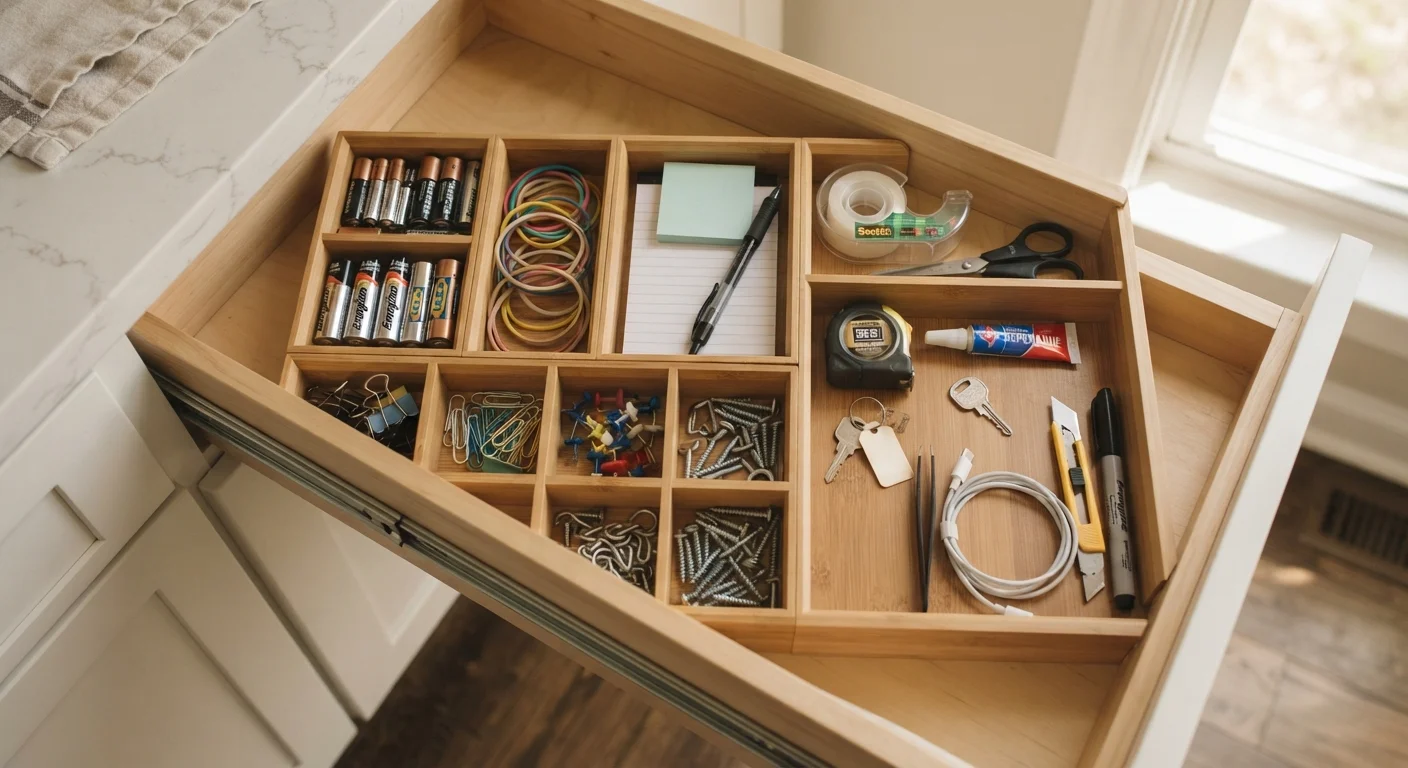
Photo credit: Infolagoon.com | Blogs To Rely On
In this article
The junk drawer doesn't have to be a lost cause. These steps show how to sort, categorize, and maintain a genuinely useful miscellaneous space.
Key Takeaways
- Empty and wipe the drawer completely before sorting anything back in.
- Group items by function, not just proximity — each category should earn its place.
- Use physical dividers to prevent categories from merging back together over time.
- Rehome or discard items that belong in a different drawer, room, or trash bin.
- A brief monthly reset keeps the drawer functional without a full overhaul.
Why Junk Drawers Fail (And What to Do Instead)
Most junk drawers aren't disorganized by accident — they're disorganized by design. Without a clear purpose or boundaries, a drawer becomes the default destination for anything that doesn't have a home elsewhere. The fix isn't willpower; it's structure.
The goal of this project isn't to eliminate a miscellaneous drawer — it's to make it genuinely useful. A well-organized catch-all space can hold batteries, tape, takeout menus, and a spare key without becoming a black hole. The difference lies in having deliberate categories and a physical system that holds them in place.
This approach works for kitchen junk drawers, home office utility drawers, entryway catch-alls, and any other small mixed-use space. For broader organizational thinking that supports this kind of project, see our guide to organizational systems that hold up over time.
What you will need
Step-by-Step: Transforming the Drawer
Work through these steps in one sitting if possible. The full process rarely takes more than 45 minutes, and finishing in one session prevents the half-sorted drawer from sitting for days.
Empty the drawer completely
Pull everything out and place it on a flat surface — a table or countertop works well. Don't sort as you go; just get it all out. Once empty, wipe down the drawer interior with a damp cloth and let it dry before putting anything back.
Sort everything into categories
Group items by what they do, not by what they look like. Common useful categories include: writing tools, fasteners and adhesives, batteries, small tools, paper and notepads, and reference items like menus or manuals. Create a discard pile for broken, expired, or duplicated items.
Be honest about what actually belongs in this drawer. Items that belong in another room — medications, charging cables, craft supplies — should be set aside to rehome, not returned.
Discard, rehome, or return
Go through your discard pile decisively. Dead batteries go in designated battery-recycling bins (many hardware and electronics stores accept them). Broken items that can't be repaired should be thrown out. Items belonging in other rooms get physically moved — not left nearby to drift back.
Measure the drawer and choose dividers
Measure the interior width, depth, and height of the drawer before buying or repurposing any organizer. Common solutions include adjustable bamboo or plastic drawer dividers, small boxes or trays, and repurposed containers like mint tins or shallow food storage lids.
The divider doesn't need to be purpose-built — it just needs to physically prevent categories from mixing. Firm walls matter more than aesthetics.
Return only categorized items
Place each category into its designated section. Put the most frequently accessed items — pens, scissors, tape — closest to the front. Less-used items like spare batteries or instruction manuals can go toward the back.
Leave a small amount of empty space in each section. A drawer packed to capacity is a drawer that will become disorganized again quickly.
Less Is More in a Small Drawer
Resist the urge to fill every section completely. Leaving a little room in each zone gives items a clear landing spot and makes it far easier for other household members to return things correctly. A slightly under-filled drawer stays organized much longer than one packed to the edges.
If your household shares this drawer, loop in the other people who use it before you reorganize. A system that one person designs in isolation often doesn't stick for everyone. For more on navigating shared spaces, see organizing a home with multiple people.
Keeping It Functional Over Time
The hard part isn't the initial sort — it's preventing the drawer from reverting to chaos within a few weeks. A few habits make a real difference.
- Enforce category limits. If a section is full, that's a signal to use or discard before adding more — not to expand the pile.
- Do a 2-minute reset monthly. Pull out anything that's drifted from its zone and return or rehome it. This is much easier than a full overhaul.
- Apply the same logic elsewhere. The zoning principle works just as well for organizing a small kitchen or tackling larger mixed-use spaces like a functional garage.
Avoid Turning It Into a Tool Drawer
It's tempting to keep a growing collection of small tools in a kitchen junk drawer, but tools multiply quickly and need a more dedicated space. A single multi-bit screwdriver is reasonable; a full collection of hardware belongs in a toolbox or garage storage. Letting tools accumulate in the drawer is one of the fastest ways to undo an otherwise clean system.
Once your miscellaneous drawer has a system, the items that don't fit in it will need permanent homes elsewhere. That's actually a useful signal — it means other spaces in your home may need the same treatment. Our closet organization guide is a good next step if overflow items are clothing or accessories.

Author
Home & Living Editorial Team
Home & Living Editorial Team is the collective byline for our editorial team and contributor network. Articles published under this byline or an editorial pen name are researched, written, and reviewed according to our editorial standards for clarity, consistency, and independence before publication.
View all articles →