
Keeping a Garage Functional: Storage Strategies for Tools, Sports Gear, and Seasonal Items
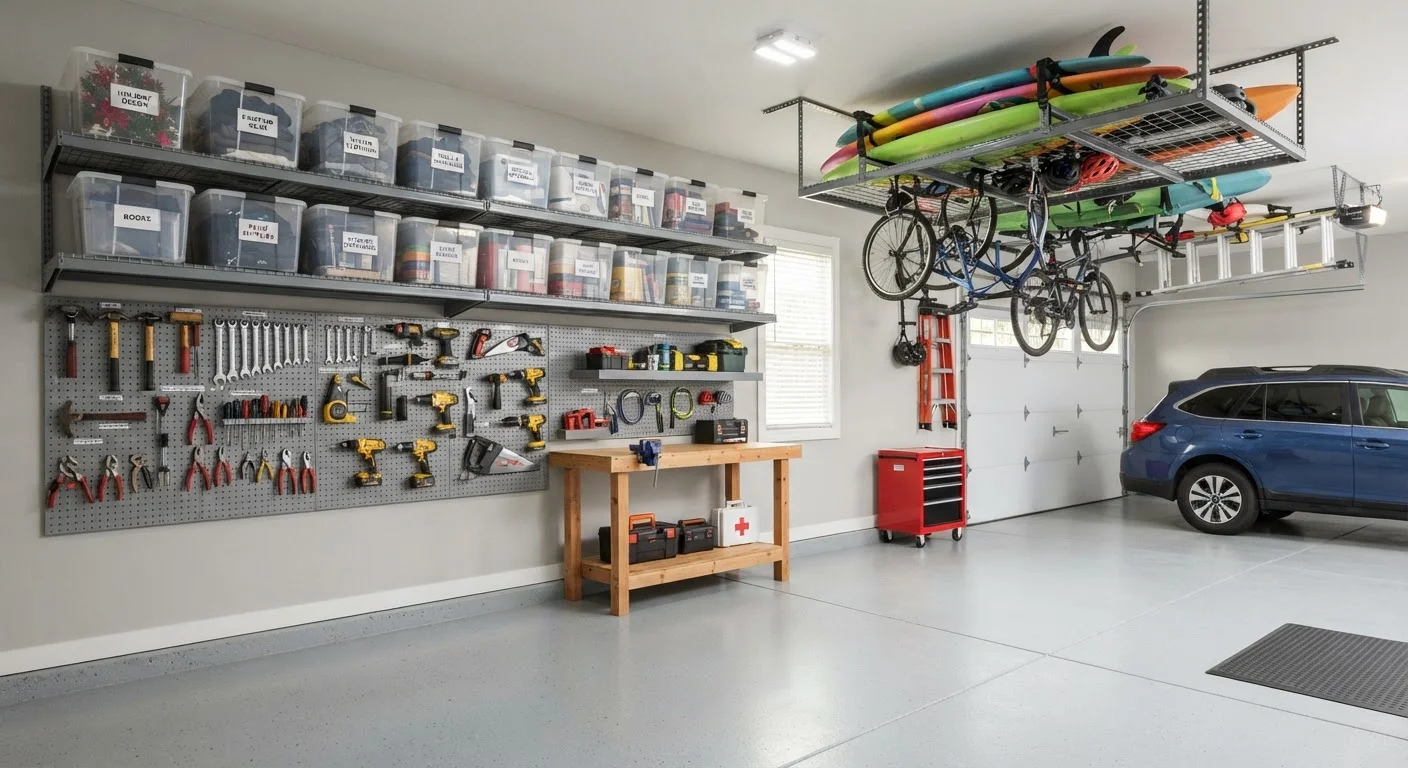
Photo credit: Infolagoon.com | Blogs To Rely On
In this article
Garages become dumping grounds fast. These zoning and storage strategies help you keep the space usable year-round without major renovations.
Key Takeaways
- Dividing your garage into dedicated zones prevents items from migrating into each other's spaces.
- Vertical wall space and overhead ceiling storage are often the most underused square footage in a garage.
- Seasonal items should be rotated in and out on a schedule, not stored indefinitely without review.
- Consistent labeling and a 'one in, one out' rule dramatically reduce future clutter buildup.
- A functional garage doesn't require a full renovation — even small adjustments compound quickly.
Why Garages Become Disorganized
The garage is one of the few spaces in a home where there's no social pressure to keep things tidy. Unlike a living room or kitchen, guests rarely see it — so it becomes the default landing spot for anything without a clear home elsewhere. Lawn equipment, holiday decorations, outgrown sports gear, and half-finished projects accumulate in layers until parking a car becomes secondary to navigating a maze.
The root problem isn't laziness — it's the absence of a system. Without defined spots for categories of items, everything competes for the same floor space. Understanding this helps redirect the goal: instead of trying to keep a garage "clean," the aim is to make it structured enough that cleaning itself takes minutes rather than hours.
Empty the Garage Before Organizing It
Before assigning zones or buying shelving, pull everything out and sort it into keep, donate, and discard piles. This one step often reveals that 20–30% of what's in the garage doesn't need to be there at all. It's far easier to design a system around what remains than to organize around everything accumulated.
Start with Zones, Not Bins
Before buying any storage hardware, map your garage floor plan and assign zones. A zone is simply a designated area for a category — tools near the workbench, sports gear near the entry door, seasonal items along the back wall. This physical separation is the backbone of any lasting system.
Common garage zones include:
- Active use zone: Items accessed at least monthly — frequently used hand tools, gardening gloves, pet leashes, everyday sports gear.
- Project zone: A dedicated workbench or table with enough clearance to actually work.
- Vehicle zone: Clear floor space around cars with nothing that will creep into the path over time.
- Seasonal storage zone: Typically back walls or overhead, for items rotated quarterly or annually.
If your household includes multiple people with different storage habits, shared systems become especially important. See our guide on organizing a home with multiple people for strategies to build systems everyone will actually follow.
25%
Homeowners who can't park in their garage
A survey by the U.S. Department of Energy found that roughly 25% of homeowners with two-car garages cannot fit even one car inside due to stored items.
~40%
Usable wall space typically left empty
Home organization experts frequently note that the vertical wall and ceiling space in an average garage is underutilized, representing significant untapped storage capacity.
Tool Storage That Works Daily
The most effective tool storage puts frequently used items in plain sight. Pegboards mounted at eye level are a practical solution — they allow tools to hang individually, visible and accessible without digging. Outline each tool's position with a marker so returning items to their spot becomes automatic.
For drawer or cabinet storage, organize by task rather than tool type. Group everything you need for plumbing repairs in one drawer, painting supplies in another. This reduces search time when you're mid-project.
Mount your pegboard or tool wall at a height that puts your most-used tools directly at hand level without reaching up or crouching — typically 48 to 60 inches from the floor for most adults.
The less effort it takes to return a tool to its spot, the more consistently the system gets maintained. Ergonomic placement removes friction from the habit loop.
Use different colored labels or bin colors to distinguish tool categories at a glance — for example, blue bins for electrical supplies, red for plumbing, green for garden hardware.
Color coding reduces the cognitive load of searching and makes it easier for multiple household members to use and maintain the same system without confusion.
Heavy items — power tools, large hardware bins — belong on low shelves close to the floor. This prevents tipping and reduces back strain. Reserve upper cabinet space for lighter items used less often.
Sports Gear and Recreational Equipment
Sports equipment is among the most space-inefficient gear in a garage because of its irregular shapes. Bikes, skis, balls, helmets, and rackets don't stack neatly. The solution is purpose-fitted storage: wall-mounted bike hooks free up floor space entirely, and ball bins or mesh bags keep round items corralled without requiring a bin for each one.
Assign gear by person or by sport, not by size. When a child can find and return their own equipment independently, the system maintains itself. Label shelves or hooks clearly — even with photos for younger children.
Flammable Materials Require Proper Storage
Gasoline, propane, paint thinner, and similar flammable materials should never be stored in sealed containers near heat sources or in direct sunlight inside a garage. Store them in approved, clearly labeled containers in a well-ventilated area away from ignition sources. Check your local fire code — many municipalities have specific regulations about the types and quantities of flammable materials permitted in residential garages.
For equipment tied to seasonal activities like skiing or kayaking, consider whether items are better stored in the garage or in a dedicated off-site unit. Seasonal decluttering by quarter helps you audit recreational gear before each season begins, so you're not storing equipment that's been outgrown or broken.
Managing Seasonal Items
Holiday decorations, off-season garden tools, and weather-dependent equipment are best stored in clearly labeled, stackable bins on overhead shelving or back-wall racks. The critical rule: never store a seasonal item without first labeling the bin and noting roughly when it will next be needed.
Overhead ceiling storage — using ceiling-mounted platforms or pulley systems — is often overlooked. It works well for items like sleds, seasonal cushion sets, or camping gear that are used only a few times a year. Keep the weight limits of your ceiling mounts in mind and follow manufacturer guidelines closely.
Moisture and Temperature Considerations
Garages experience wider temperature and humidity swings than interior spaces. Avoid storing items sensitive to heat or moisture — such as certain paints, adhesives, or electronics — without appropriate containers or climate controls. Metal tools stored in damp garages can corrode; silica gel packs inside closed cabinets can help mitigate this in humid climates.
Build a simple rotation calendar: as seasons change, pull seasonal bins to an accessible area one week before you'll need them, then return off-season items promptly rather than letting them linger on the floor.
Maintaining the System Over Time
Even a well-organized garage drifts back toward clutter without maintenance habits. Two practices make the biggest difference:
- One in, one out: When a new tool, piece of gear, or storage item enters the garage, an old one leaves — donated, discarded, or relocated.
- Quarterly reviews: A 20-minute walkthrough each season catches items that have migrated out of their zones or are no longer needed.
The same systematic thinking that keeps a garage manageable applies across the whole home. If you're working on multiple spaces at once, our season-by-season decluttering guide can help you coordinate those efforts without burning out.
For smaller, equally chaotic spaces elsewhere in your home, the same zone-based thinking applies — the junk drawer guide walks through the same categorize-and-assign approach for mixed-use spaces. A functional garage isn't a one-time project — it's a habit reinforced by a structure that makes returning things easier than leaving them out.

Author
Home & Living Editorial Team
Home & Living Editorial Team is the collective byline for our editorial team and contributor network. Articles published under this byline or an editorial pen name are researched, written, and reviewed according to our editorial standards for clarity, consistency, and independence before publication.
View all articles →