
Understanding Your Car's Belts and Hoses Before They Fail
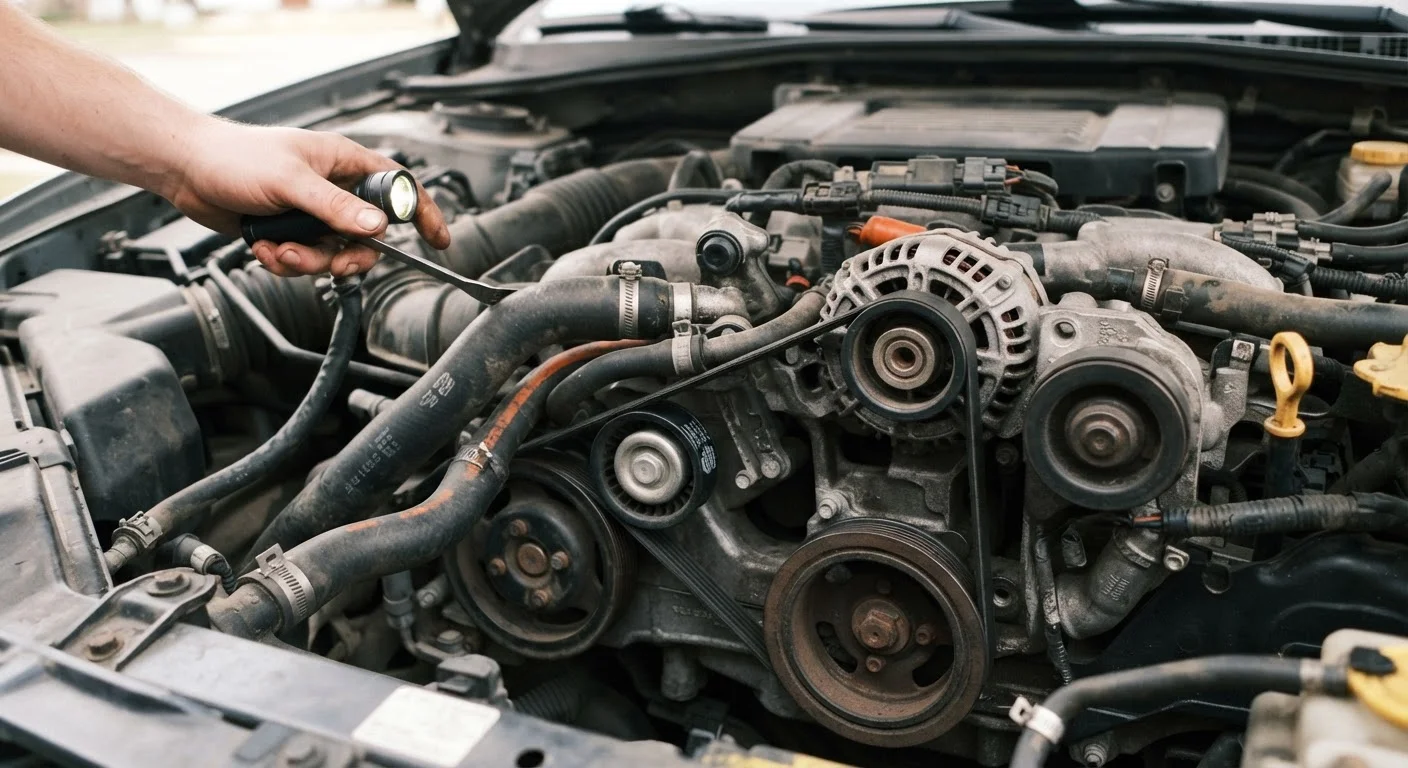
Photo credit: Infolagoon.com | Blogs To Rely On
In this article
Timing belts, serpentine belts, and coolant hoses don't fail with much warning. Here's what to look for and how often to inspect them.
Why Belts and Hoses Deserve Your Attention
Most drivers don't think about their belts and hoses until something goes wrong - and by then, the situation is rarely cheap or convenient. A snapped timing belt can destroy an engine in seconds. A burst coolant hose can leave you stranded on the highway with an overheating engine. Unlike a warning light or an unusual noise, these components often fail without obvious early signals.
The good news: rubber degrades on a predictable timeline, and a basic visual inspection can catch most problems before they become emergencies. Understanding what each component does - and what wear actually looks like - puts you in a much stronger position at the shop and on the road.
This article is general guidance. For specific intervals and inspection recommendations for your vehicle, always consult your owner's manual or a qualified mechanic.
| Timing Belt Replacement Interval | Typically 60,000-100,000 miles (Varies by manufacturer; check owner's manual) |
| Serpentine Belt Replacement Interval | Typically 60,000-100,000 miles (Visual inspection recommended at every oil change) |
| Coolant Hose Lifespan | Often 4-10 years depending on conditions (Heat, pressure, and coolant chemistry affect degradation rate) |
| Interference Engine Risk | Timing belt failure can destroy the engine instantly (Applies to many common passenger vehicles) |
| Inspection Frequency | Serpentine belt and hoses: every oil change or twice yearly (Timing belt inspection requires mechanic access) |
The Three Components You Need to Know
Timing Belt
The timing belt coordinates the rotation of the crankshaft and camshaft, keeping the engine's valves and pistons moving in sync. In engines classified as interference engines - where valves and pistons share overlapping paths - a broken timing belt can cause immediate, catastrophic engine damage. Many manufacturers recommend replacement somewhere between 60,000 and 100,000 miles, but intervals vary significantly by vehicle. Check your owner's manual for your specific schedule.
Signs of wear include cracking, fraying along the edges, or glazing on the belt's surface. However, timing belts often fail without visible warning, which is why mileage-based replacement is the standard approach. See our full maintenance schedule guide to understand where timing belt service fits into your vehicle's broader service plan.
Serpentine Belt
The serpentine belt drives multiple accessories at once - the alternator, power steering pump, air conditioning compressor, and water pump in many vehicles. A single continuous loop, it runs across several pulleys and is generally more visible and easier to inspect than the timing belt.
Look for: cracks across the ribs on the belt's underside, fraying at the edges, glazing or shiny spots, and squealing noises during startup or acceleration. Most serpentine belts are replaced every 60,000 to 100,000 miles, though some last longer.
Coolant Hoses
Coolant hoses carry coolant between the engine and radiator, maintaining operating temperature. They're subjected to constant heat, pressure, and chemical exposure - conditions that degrade rubber over time. Squeeze a cold hose: it should feel firm but pliable, not rock-hard, mushy, or spongy. Look for cracks, swelling near clamps, soft spots, and any signs of leaking coolant (often a sticky, sweet-smelling residue). Pair hose checks with regular coolant level inspections for a more complete picture.
Timing Belt
A toothed rubber belt that synchronizes the crankshaft and camshaft rotation in an internal combustion engine. In interference engines, failure can cause immediate, severe engine damage.
Serpentine Belt
A single continuous belt that drives multiple engine accessories - including the alternator, power steering pump, and air conditioning compressor - via a series of pulleys.
Interference Engine
An engine design in which the pistons and valves occupy overlapping space at different times. If timing is lost due to belt failure, they can collide, causing catastrophic damage.
Coolant Hose
Rubber hoses that circulate coolant between the engine and radiator to regulate engine temperature. They degrade over time from heat, pressure, and chemical exposure.
Belt Glazing
A shiny, hardened appearance on a belt's surface caused by heat and slippage. Glazed belts are less effective and more likely to fail without additional warning.
When to Inspect and When to Replace
A visual inspection of your serpentine belt and coolant hoses takes less than five minutes and should happen at every oil change - or at least twice a year. The timing belt is less accessible and typically requires a mechanic to evaluate properly.
When in doubt about condition, replacement is almost always the financially sensible call. The cost of a new belt or hose is a fraction of what a tow, an engine repair, or a roadside emergency can run. Drivers of high-mileage vehicles should treat these components with particular attention - rubber that's been through extreme heat cycles degrades faster than calendar age alone suggests.
Deferring these repairs is one of the clearest examples of how small neglect compounds into major expense. A $150 belt replacement today can prevent a $3,000 engine repair tomorrow.
This article is for general informational purposes only. Always consult a qualified mechanic for inspections and repairs specific to your vehicle. Specific service intervals vary by make, model, and driving conditions - refer to your owner's manual as your primary source.

Author
Autos & Transport Editorial Team
Autos & Transport Editorial Team is the collective byline for our editorial team and contributor network. Articles published under this byline or an editorial pen name are researched, written, and reviewed according to our editorial standards for clarity, consistency, and independence before publication.
View all articles →