
Gas, Hybrid, and Electric: A Practical Breakdown for Everyday Drivers
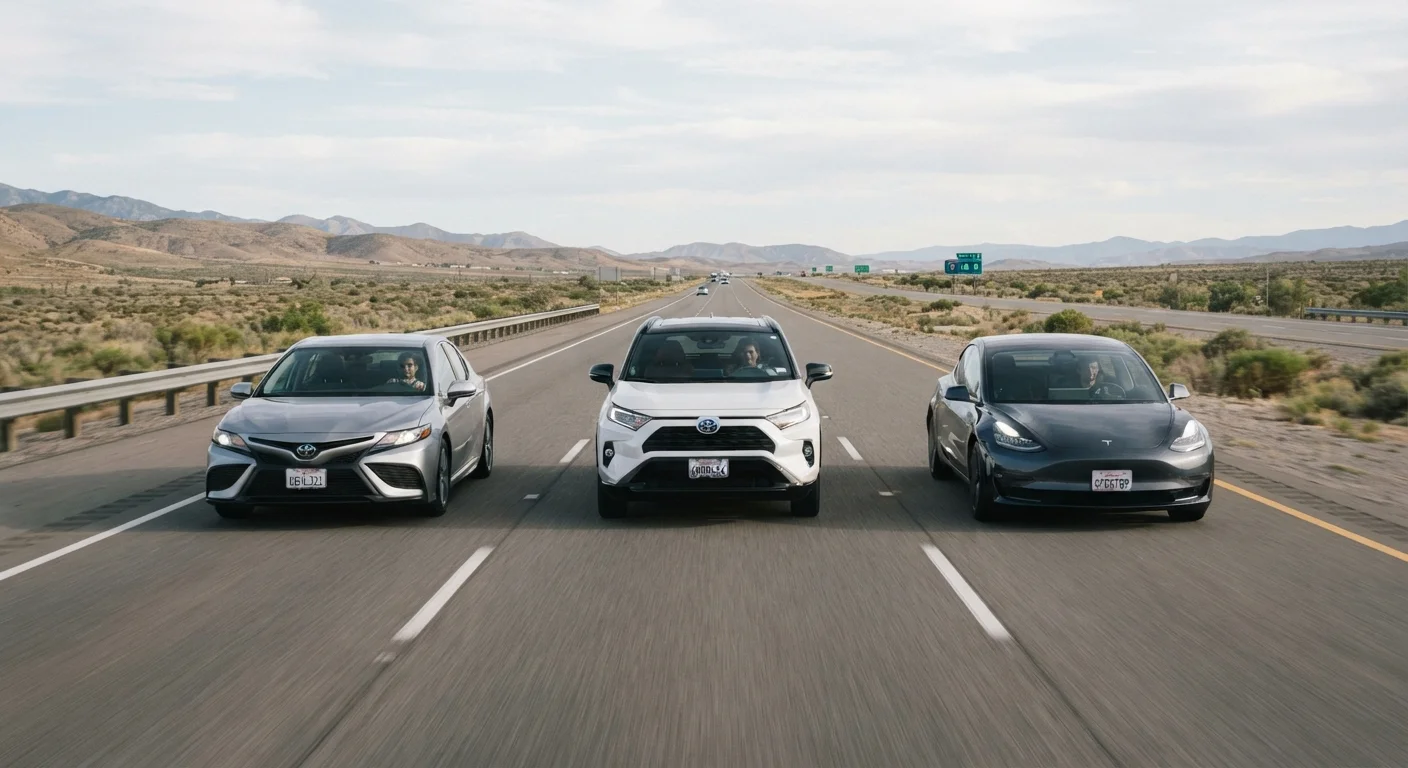
Photo credit: Infolagoon.com | Blogs To Rely On
In this article
Choosing a powertrain affects your fuel costs, maintenance, and daily routine. Here's a clear look at how each type works in practice.
Key Takeaways
- Gas vehicles remain the most flexible option for long-distance driving and rural areas with limited infrastructure.
- Hybrids reduce fuel costs without requiring any change to your charging habits or routine.
- Electric vehicles have the lowest per-mile energy cost but depend heavily on your home charging setup and local infrastructure.
- Maintenance costs differ significantly across all three powertrain types - factor this in beyond the sticker price.
- Your daily mileage, commute type, and home setup are the most important variables when choosing a powertrain.
How Each Powertrain Actually Works
Understanding the mechanical basics helps you make a practical decision - not just a trendy one.
Gasoline (ICE) vehicles run entirely on an internal combustion engine fueled by petrol. The engine powers the drivetrain directly, and the only energy storage is the fuel in your tank. You refuel in minutes at virtually any gas station in the country.
Hybrid vehicles (HEV) pair a gas engine with an electric motor and a small battery pack. The battery charges automatically through regenerative braking and the engine itself - you never plug it in. The electric motor assists during acceleration and low-speed driving, reducing how hard the gas engine works and cutting fuel consumption noticeably in city driving.
Plug-in hybrids (PHEV) use a larger battery that you charge externally, giving them a limited all-electric range (typically 20-50 miles depending on the model) before the gas engine takes over. They offer a middle path for drivers who want electric capability without fully committing.
Battery electric vehicles (BEV) run entirely on electricity stored in a large onboard battery. There is no combustion engine. Charging happens at home via a standard outlet or dedicated charger, or at public fast-charging stations. Range varies widely by model - from under 200 miles to over 350 miles per charge on current vehicles.
Day-to-Day Cost Differences
Upfront price is just the beginning. The real cost comparison plays out over years of ownership.
| Gas (ICE) | Hybrid (HEV) | Plug-in Hybrid (PHEV) | Electric (BEV) | |
|---|---|---|---|---|
| Typical upfront cost | Lower to moderate | Moderate | Moderate to higher | Higher (varies widely) |
| Fuel/energy cost per mile | Highest | Lower than gas | Low (electric range) / moderate | Lowest |
| Routine maintenance | Most frequent | Similar to gas | Similar to gas | Less frequent, fewer items |
| Refueling/recharging time | ~5 minutes | ~5 minutes | ~5 min gas / 2-4 hrs charge | 30 min fast / 6-10 hrs home |
| Infrastructure dependence | Gas stations everywhere | Gas stations everywhere | Gas + charging access | Charging required |
| Best range scenario | 400+ miles typical | 400+ miles typical | 400+ miles with gas backup | 200-350+ miles per charge |
| Home setup needed | None | None | Optional (improves value) | Strongly recommended |
Fuel and energy costs are where EVs and hybrids often pull ahead. Electricity generally costs less per mile than gasoline, though this depends on local utility rates. Hybrids deliver strong fuel economy - particularly in stop-and-go traffic - without any infrastructure changes on your end.
Maintenance is another area where powertrain type matters. Gas vehicles require regular oil changes, transmission service, and more wear items overall. Hybrids share most of that upkeep but may have longer brake life due to regenerative braking. EVs have fewer moving parts, no oil changes, and generally lower routine maintenance costs - though battery replacement (if ever needed outside warranty) can be expensive.
For a deeper look at how motor oil choices affect gas and hybrid engines, see our guide on conventional vs. synthetic motor oil.
Range, Charging, and Refueling Realities
For most daily commuters, an EV's range is rarely the limiting factor - the average American commute is under 30 miles round-trip. The more practical question is how and where you'll recharge.
Check Your Home Charging Options First
Before deciding on an EV or PHEV, assess whether your home setup can support a Level 2 charger (240-volt outlet). Renters, apartment dwellers, and those without dedicated parking may find public charging alone impractical for daily use. This single factor often determines whether an EV genuinely works for your lifestyle.
Drivers who own their home and have access to a garage or dedicated parking spot are well-positioned to charge overnight. Level 2 home chargers (240-volt) can fully replenish most EVs in 6-10 hours. Public fast chargers are expanding rapidly, but coverage remains uneven - particularly in rural and lower-density areas.
Gas vehicles still have a decisive advantage in range flexibility. You can drive 400+ miles and refuel in under five minutes anywhere in the country. Hybrids mirror that experience entirely, with the added benefit of better mileage.
If your driving patterns include frequent long road trips, remote destinations, or you live in an area with sparse charging infrastructure, a gas or hybrid vehicle will fit more naturally into your routine. If your daily driving is predictable and home charging is feasible, an EV's limitations become largely theoretical. For a fuller picture of what daily driving actually costs in time and money, our article on commuting by car every day breaks it down honestly.
Choosing Based on Your Actual Situation
The right powertrain comes down to three practical questions: How far do you drive daily? Can you charge at home? How predictable are your routes?
If you answer "not far," "yes," and "very" - an EV is worth serious consideration. If any of those answers lean the other way, a hybrid or plug-in hybrid may offer a better balance of savings and flexibility without the infrastructure dependency.
Powertrain choice is also just one part of the vehicle-buying decision. The body style, whether you buy new or used, and how you finance the purchase all shape your total cost of ownership. See our breakdown of sedans, SUVs, trucks, and minivans to match a vehicle category to your lifestyle, and our comparison of new, used, and certified pre-owned vehicles to understand what each purchase path actually involves.
If you're buying your first vehicle, our guide on vehicle ownership for first-timers walks through budgeting, financing, and insurance before you sign anything. And once you've chosen, keeping your vehicle running well is covered across our car maintenance hub.
This article is for general informational purposes only and does not constitute financial or purchasing advice. Vehicle costs, incentives, and infrastructure vary by location and change over time. Consult a qualified professional and verify current information before making a purchase decision.

Author
Autos & Transport Editorial Team
Autos & Transport Editorial Team is the collective byline for our editorial team and contributor network. Articles published under this byline or an editorial pen name are researched, written, and reviewed according to our editorial standards for clarity, consistency, and independence before publication.
View all articles →