
Indoor vs. Outdoor Cats: Understanding the Real Differences in Care
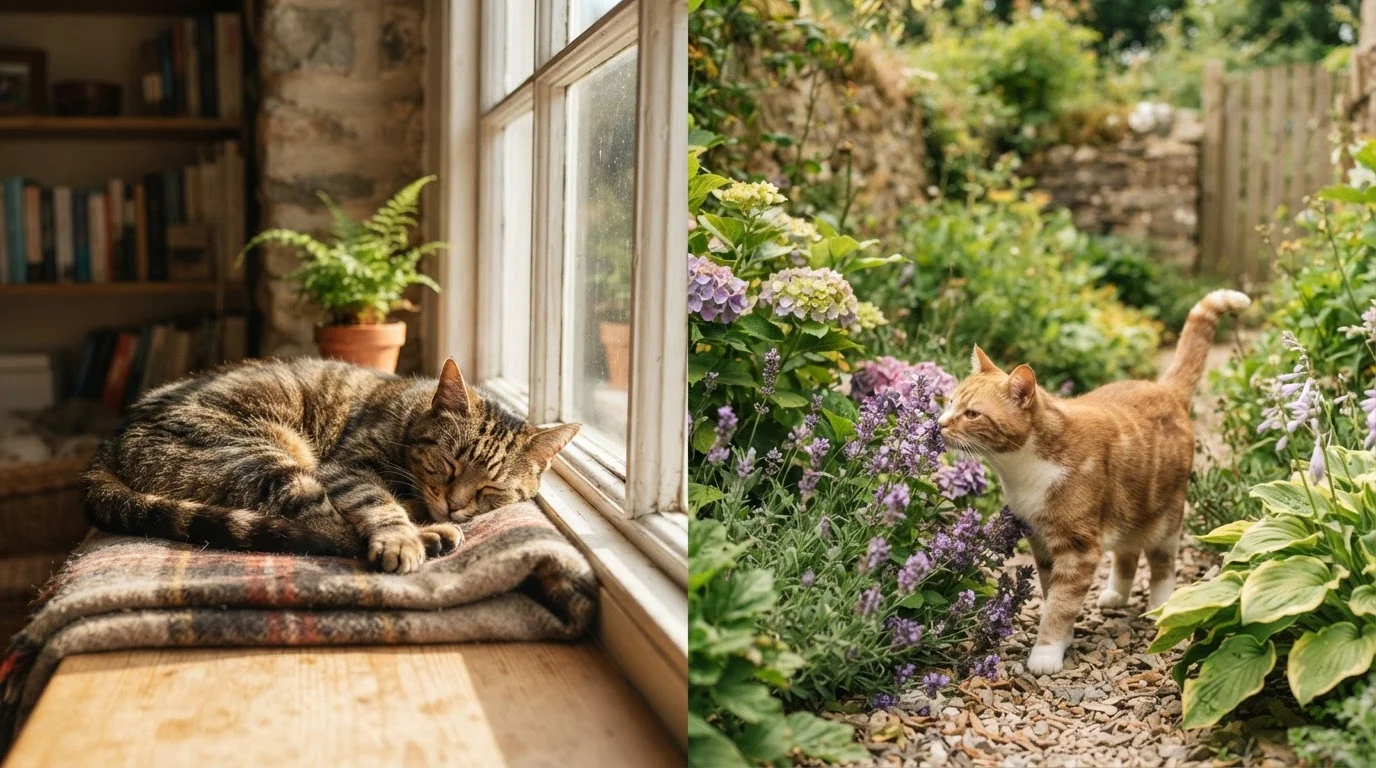
Photo credit: Infolagoon.com | Blogs To Rely On
In this article
Lifestyle shapes a cat's health needs, risks, and enrichment requirements. Here's what each environment actually means for care.
Key Takeaways
- Indoor cats live longer on average but need deliberate enrichment to stay mentally and physically healthy.
- Outdoor cats face higher risks from predators, traffic, disease, and parasites that require proactive veterinary prevention.
- Vaccination and parasite prevention schedules differ meaningfully between the two lifestyles.
- Neither lifestyle is inherently right — the best choice depends on the cat's personality, your location, and your resources.
- Many cats thrive with a supervised middle-ground approach, such as enclosed catios or leash walking.
How Lifestyle Shapes a Cat's Core Health Profile
The indoor-versus-outdoor question isn't just about geography — it determines which health threats your cat is routinely exposed to and what a responsible prevention plan looks like. Both lifestyles carry genuine trade-offs, and understanding them helps owners make proactive, informed choices rather than reactive ones.
Indoor cats are largely shielded from infectious disease spread by other animals, injuries from wildlife or vehicles, and ingestion of toxins in the environment. However, that protection comes with a different set of risks: reduced physical activity, caloric surplus, and understimulation. Obesity is more common in indoor cats, and related conditions — including diabetes and joint problems — follow. Owners must compensate through structured play, environmental complexity, and careful attention to diet. Our guide to wet and dry food trade-offs explores how nutrition choices intersect with a cat's activity level and hydration needs.
Outdoor cats, by contrast, get natural exercise and stimulation but face a significantly broader threat landscape. Encounters with other cats spread diseases like feline leukemia virus (FeLV) and feline immunodeficiency virus (FIV). Parasites — fleas, ticks, intestinal worms — are far more prevalent. The risks aren't abstract: studies from wildlife biology and veterinary research consistently show outdoor and indoor-outdoor cats have shorter average lifespans than exclusively indoor cats, though the difference varies by environment and individual care.
| Criterion | Indoor Cats | Outdoor Cats |
|---|---|---|
| Average lifespan | 12–18 years (typical range) | 2–5 years shorter on average |
| Infectious disease risk | Low (limited animal contact) | High (FeLV, FIV, URI exposure) |
| Parasite exposure | Low to moderate | High (fleas, ticks, worms) |
| Obesity risk | Higher (less movement) | Lower (natural activity) |
| Enrichment responsibility | Owner-managed, deliberate | Largely self-directed |
| Injury risk | Low | High (traffic, wildlife, falls) |
| Vaccination needs | Core vaccines essential | Core plus additional non-core |
| Owner visibility of health issues | High (cat always present) | Lower (unsupervised hours) |
Veterinary Care: Where the Protocols Diverge
Vaccination and parasite prevention are the two areas where the indoor-outdoor distinction most directly changes what your veterinarian will recommend.
For indoor cats, core vaccines — rabies and feline panleukopenia, herpesvirus, and calicivirus (FVRCP) — remain essential even with no outdoor access, since exposure can occur through open windows, new animals entering the home, or accidental escapes. Some non-core vaccines, like FeLV, are typically prioritized for outdoor and indoor-outdoor cats given higher transmission risk.
Outdoor cats generally require broader and more frequent parasite prevention — monthly flea and tick treatments, regular deworming, and heartworm preventatives in applicable regions. Indoor cats may still benefit from flea prevention depending on the household, but the urgency differs. Discuss your cat's specific risk profile with your veterinarian rather than applying a one-size protocol.
Dental disease affects both populations, but grooming habits vary. Outdoor cats may develop more coat-related issues from environmental exposure. Regular grooming routines serve a dual purpose: maintaining coat health and giving owners an opportunity to detect early signs of injury, parasites, or lumps — especially important in cats that spend unsupervised time outside.
10–15 years
Typical indoor cat lifespan
Veterinary and humane society sources commonly cite indoor cats living significantly longer than their outdoor counterparts due to reduced hazard exposure.
~25%
Estimated cat obesity prevalence
Veterinary nutrition surveys suggest roughly one in four cats in the U.S. is overweight or obese, with indoor cats at elevated risk due to reduced activity.
2–3×
Higher parasite burden outdoors
Cats with outdoor access are estimated to carry significantly heavier parasite loads than indoor-only cats, according to veterinary parasitology literature.
Enrichment and Behavioral Needs by Lifestyle
A cat's environment directly shapes its behavioral health. Outdoor cats self-regulate much of their own enrichment through hunting, territory patrol, and social interactions with other animals. Owners have less control — and less visibility — over what happens during those hours outside.
Indoor cats depend entirely on their owners to meet behavioral needs. Without adequate stimulation, they may develop repetitive behaviors, inappropriate elimination, or inter-cat aggression in multi-cat households. The solution is deliberate enrichment: vertical space (cat trees, shelves), interactive feeding (puzzle feeders, scheduled play), sensory variety (window perches, rotating toys), and consistent social interaction with humans.
Litter box behavior is almost exclusively an indoor concern, but outdoor cats that transition inside often struggle with it. Stress is a significant driver of litter avoidance — another reason that abrupt lifestyle changes warrant patience and a structured adjustment period.
As cats age, their needs shift regardless of lifestyle. Indoor cats may become increasingly sedentary; outdoor cats may lose the reflexes and agility that kept them safer when younger. Our overview of senior pet health changes is a useful reference for adapting care as your cat enters its later years.
The Catio: A Practical Middle Ground
Enclosed outdoor structures — commonly called catios — allow cats to experience fresh air, natural sounds, and sunlight without unsupervised roaming. They range from window-box enclosures to full garden runs. For owners weighing enrichment against safety, a catio can address both concerns simultaneously. Harness training is another option, though it requires gradual acclimation and suits some cats more than others.
This article is for general informational purposes only and does not constitute veterinary advice. Always consult a licensed veterinarian for guidance specific to your cat's health, environment, and individual needs.

Author
Pets & Animals Editorial Team
Pets & Animals Editorial Team is the collective byline for our editorial team and contributor network. Articles published under this byline or an editorial pen name are researched, written, and reviewed according to our editorial standards for clarity, consistency, and independence before publication.
View all articles →