
Litter Training a Cat: What Works, What Doesn't, and Why
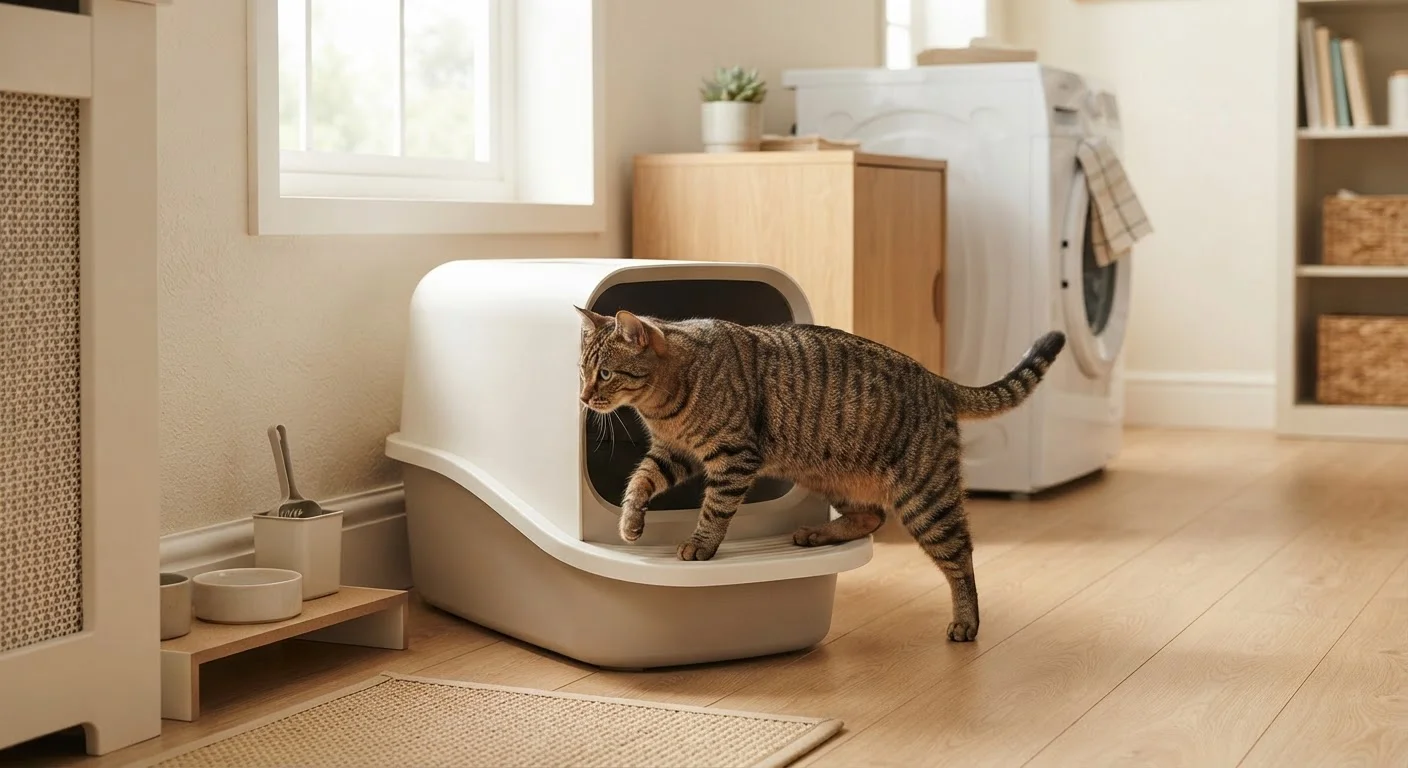
Photo credit: Infolagoon.com | Blogs To Rely On
In this article
Most cats take to litter boxes naturally, but problems do arise. Learn the conditions that support success and what drives avoidance behavior.
Key Takeaways
- Cats are instinctively drawn to soft substrates for elimination, making litter training largely self-directed.
- Box size, litter type, cleanliness, and placement are the four variables most linked to training success or failure.
- Avoidance behavior is almost always a signal of discomfort, not defiance — diagnosing the cause is essential.
- Punishment never works for litter box problems and typically makes avoidance worse.
- Kittens and adult cats generally adapt well; senior cats may need modified setups due to mobility changes.
Why Cats Usually Train Themselves
Unlike dogs, cats don't need a formal training protocol to use a litter box. Their instinct to bury waste in loose substrate is hardwired — a behavior rooted in scent-masking that persists even in fully domestic animals. Most kittens, having observed their mother, will investigate and use a litter box within the first day or two of introduction.
That said, instinct only goes so far. If the box doesn't meet a cat's standards — for cleanliness, depth, texture, or privacy — they'll find somewhere that does. Understanding this distinction separates owners who succeed quickly from those who spend weeks troubleshooting. For a broader look at how cats differ from dogs in training context, see how cats and dogs learn differently.
The Variables That Determine Success
Four environmental factors account for the overwhelming majority of litter box outcomes: box size, litter substrate, cleanliness, and location. Getting each of these right isn't complicated, but all four must be addressed simultaneously — a perfect location with a dirty box still fails.
Location deserves particular attention. Cats avoid boxes placed near food and water, in high-traffic or noisy areas, or in spots where they feel cornered. A quiet, low-traffic area with at least one accessible exit is a reliable baseline. For multi-cat households, the general guideline among veterinary behaviorists is one box per cat, plus one extra — a principle that reduces competition and territorial stress.
What Doesn't Work — and Why
Punishment is the most counterproductive response to litter box avoidance. Rubbing a cat's nose in an accident, scolding them, or placing them forcibly in the box after the fact does not create an association between the box and appropriate behavior. It creates an association between you and fear — and often accelerates avoidance. This is well-documented in animal behavior research and consistently reinforced by veterinary behaviorists.
Scented litters and strong chemical cleaners also frequently backfire. Cats have a scent-processing capacity estimated to be roughly 14 times more acute than humans', and many commercially available litters with strong perfumes are aversive to them even when owners find them pleasant. Unscented, clumping clay or natural substrates tend to be more consistently accepted.
Covered boxes seem like an obvious privacy solution, but many cats dislike them — odors concentrate inside, and the enclosed space may feel threatening. When a cat starts avoiding a covered box, removing the lid is often the fastest fix. For deeper context on training approaches that actually hold up, this introduction to pet training covers the behavioral principles at play.
When Avoidance Signals a Medical Problem
If a cat that was previously reliable begins eliminating outside the box, a veterinary evaluation should be the first step — not a training intervention. Urinary tract infections, kidney disease, arthritis, and diabetes can all manifest as litter box changes. Senior cats in particular may be struggling with joint pain that makes box entry painful, especially if the sides are high.
Behavioral causes do exist — stress from a new pet, a household move, or schedule changes can trigger avoidance — but medical causes are common enough that ruling them out first is standard veterinary guidance. Never assume a house-soiling problem is purely behavioral without a professional assessment. The pet health hub covers related conditions in more depth. Keeping your cat's overall care consistent, including regular grooming routines, also supports early detection of health changes.
“House soiling is one of the most common behavioral problems in cats, but it's often a symptom — of a medical issue, an environmental stressor, or an inadequate setup — rather than a behavioral failure on the cat's part.”
— American Association of Feline Practitioners, Veterinary professional organization focused on feline medicine
This article is for general informational purposes only and does not constitute veterinary or medical advice. If your cat is experiencing persistent litter box problems, consult a licensed veterinarian.

Author
Pets & Animals Editorial Team
Pets & Animals Editorial Team is the collective byline for our editorial team and contributor network. Articles published under this byline or an editorial pen name are researched, written, and reviewed according to our editorial standards for clarity, consistency, and independence before publication.
View all articles →