
Carpooling vs. Driving Solo: What the Real Tradeoffs Look Like
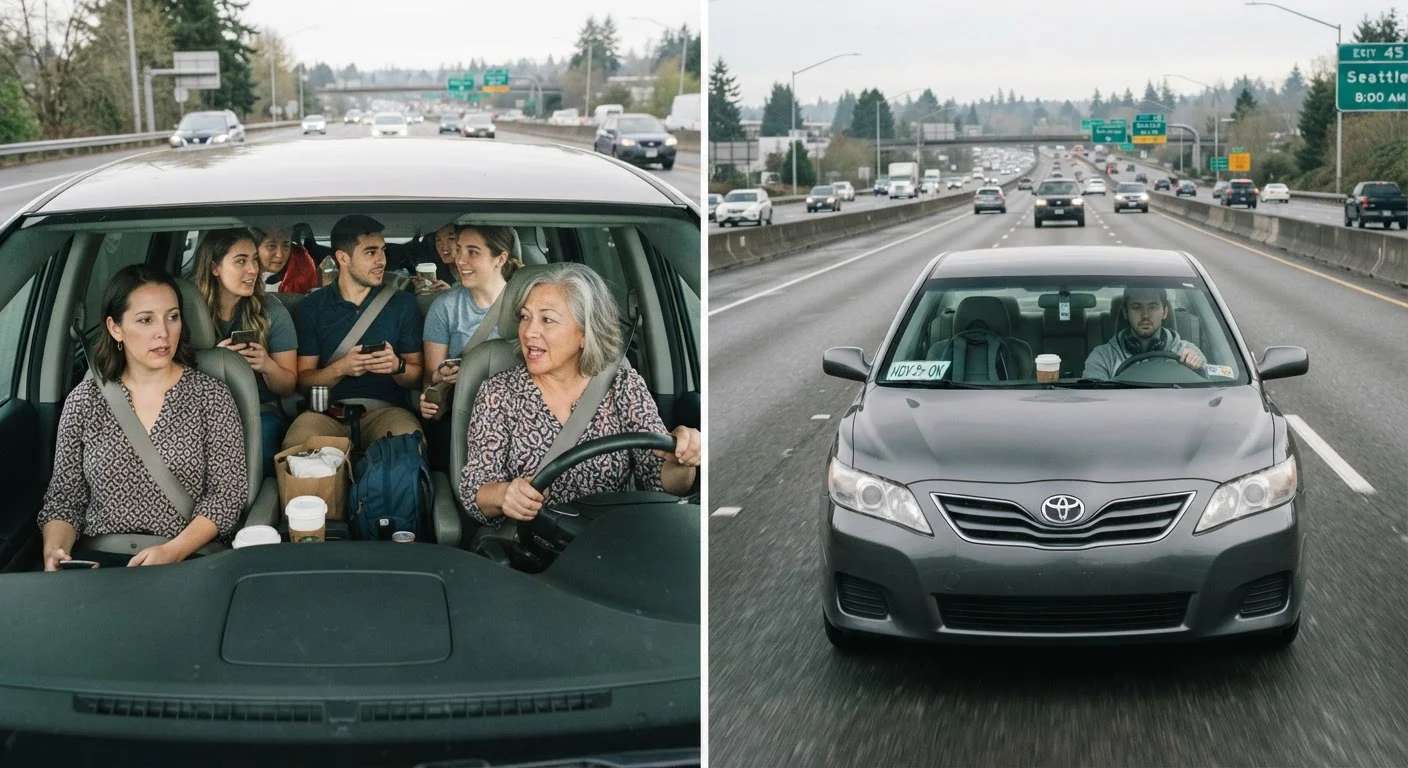
Photo credit: Infolagoon.com | Blogs To Rely On
In this article
Cost, convenience, flexibility, and stress — here's an honest comparison of carpooling and solo commuting to help you decide what fits your routine.
Key Takeaways
- Carpooling can meaningfully reduce fuel, parking, and wear-and-tear costs when done consistently.
- Solo driving offers flexibility that is genuinely hard to match, especially for unpredictable schedules.
- The stress equation cuts both ways - carpooling reduces driving load but adds coordination overhead.
- Neither option is universally better; your work schedule and commute distance shape which fits.
- Hybrid approaches - carpooling some days, driving solo others - are a practical middle ground.
The Cost Breakdown: Where the Real Savings Show Up
Money is usually the first reason commuters consider carpooling - and the math is straightforward. The IRS standard mileage rate, used as a general proxy for the full cost of driving (fuel, depreciation, maintenance, and insurance), has hovered around 65-67 cents per mile in recent years. On a 30-mile round-trip commute, that's roughly $16-$20 per day before parking.
Split between two people, those costs drop by half. Between three, they drop by two-thirds. Over a 250-day work year, the difference can run into thousands of dollars. Parking costs in urban areas amplify this further - a downtown parking spot can run $150-$400 per month in many U.S. cities, and that cost can be shared or eliminated entirely in a carpool arrangement.
Solo drivers absorb every dollar of that themselves. For the full picture of what commuting costs beyond the obvious line items, see what your commute time is actually costing you.
| Criterion | Carpooling | Driving Solo |
|---|---|---|
| Fuel cost | Split between riders | Paid entirely by driver |
| Parking cost | Shared or reduced | Full cost to driver |
| Schedule flexibility | Limited by group | Fully self-determined |
| Driving fatigue | Reduced when rotating | Full load every day |
| Coordination effort | Ongoing, moderate | None required |
| Vehicle wear | Spread across fewer days | Accumulates daily |
| Privacy and comfort | Shared environment | Complete personal control |
| Environmental impact | Lower per-person emissions | Higher per-person emissions |
Flexibility and Schedule Control: The Solo Driver's Edge
Cost savings only matter if the arrangement actually works for your life. This is where solo driving holds a significant, often underappreciated advantage. Carpooling depends on mutual schedules - if one person needs to leave early or stay late, the whole arrangement is disrupted.
For workers with salaried roles that come with flexible or irregular hours, or anyone who frequently runs errands on the way home, a carpool imposes real friction. Even a reliable carpool group will occasionally face conflicts - a sick child, an unexpected meeting, a detour - and those moments can create resentment or simply unravel the arrangement over time.
Solo drivers face none of that coordination overhead. They leave when they're ready, stop where they want, and adjust routes in real time. If your schedule changes seasonally or project-to-project, that autonomy has concrete value. For a deeper look at how daily car commuting plays out long-term, commuting by car every day is worth reading alongside this comparison.
~$12,000
Average annual cost of vehicle ownership
AAA's annual Your Driving Costs study estimates average new vehicle ownership costs including fuel, maintenance, depreciation, and insurance.
45%
Solo drivers among U.S. commuters
U.S. Census Bureau American Community Survey data consistently shows the vast majority of American workers commute alone by car, with carpooling representing a small but measurable share.
27 min
Average one-way U.S. commute time
The U.S. Census Bureau has reported the average one-way commute time for American workers at approximately 27 minutes in recent survey years.
Stress, Fatigue, and the Human Factor
Driving is cognitively demanding. Research on commuter well-being generally finds that longer driving times correlate with higher reported stress and lower satisfaction - and that the act of driving itself, rather than simply being in transit, is a primary driver of that burden. Carpooling, when it involves rotating who drives, spreads that burden across the group. On your non-driving days, you can rest, read, or decompress.
That said, carpooling introduces its own social friction. Personalities, music preferences, temperature settings, conversation styles - small things become daily irritants when you're sharing a confined space. A carpool built on strong existing relationships tends to be more durable than one formed purely out of logistics.
Solo commuters carry the full driving load every day, but they control the environment completely. For those who use the commute as a mental transition - a buffer between work and home - that solitude has real psychological value. Building a smarter daily commute routine covers how to get more from your commute regardless of which mode you choose.
Employer Commuter Benefits May Apply
Some employers offer commuter benefit programs that allow pre-tax dollars to be used for vanpool or qualified ridesharing arrangements. These programs are governed by IRS rules and vary by employer. If your workplace offers this benefit, it can change the financial calculus for carpooling - check with your HR department for the specifics of your plan.
Making a Practical Decision
Neither option is categorically better. The right choice depends on your specific commute distance, schedule predictability, and what you find most draining about the drive. A useful starting point: track your actual commuting costs for a month using your real mileage and parking spend, then compare that to what a shared arrangement would look like. If the savings are meaningful and you have a stable schedule, carpooling is worth a trial period - most people know within a few weeks whether the coordination overhead is workable.
Hybrid approaches are also underused. Carpooling three days a week while driving solo on days when you have early meetings or late commitments captures most of the financial benefit without full schedule dependency. For context on how commute timing affects the daily experience, rush hour vs. off-peak commuting is directly relevant regardless of whether you're sharing the ride or going it alone.
If commuting costs are prompting a broader look at your monthly budget, budgeting basics is a practical place to start organizing the full picture.

Author
Autos & Transport Editorial Team
Autos & Transport Editorial Team is the collective byline for our editorial team and contributor network. Articles published under this byline or an editorial pen name are researched, written, and reviewed according to our editorial standards for clarity, consistency, and independence before publication.
View all articles →