
Sedans, SUVs, Trucks, and Minivans: Matching Vehicle Type to Your Life
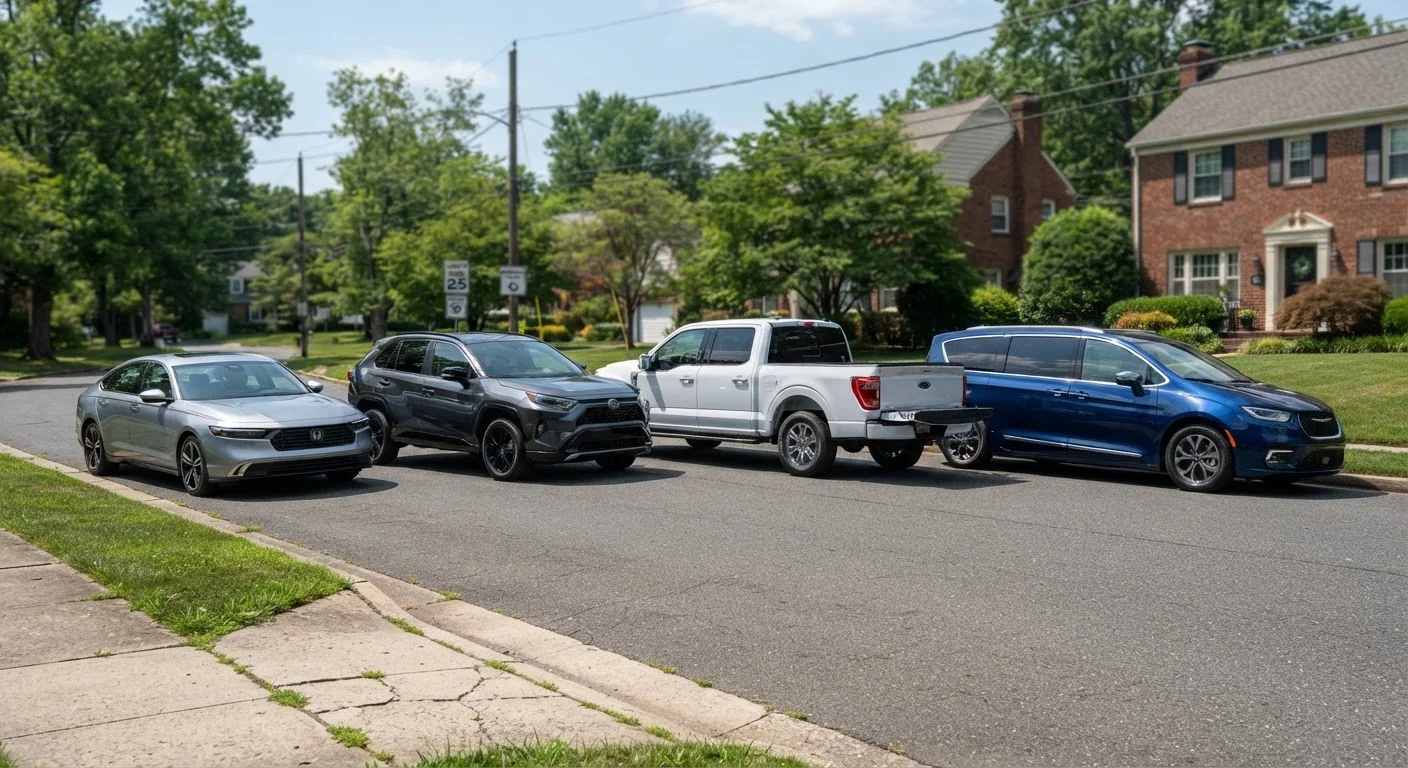
Photo credit: Infolagoon.com | Blogs To Rely On
In this article
Not every body style fits every lifestyle. Here's how the most common vehicle categories differ in practicality and cost.
Key Takeaways
- Sedans offer the lowest ownership costs and best fuel efficiency for solo commuters and small families.
- SUVs balance cargo space, passenger capacity, and road presence, but carry higher fuel and purchase costs.
- Trucks excel at towing and hauling but are typically the most expensive to fuel and insure.
- Minivans provide the most usable family space per dollar spent, though they carry a perceived image barrier for some buyers.
- Your daily driving patterns, household size, and total budget should drive the body-style decision - not trends.
Why Body Style Matters Beyond Personal Taste
When people shop for a vehicle, they often start with what looks good or what their neighbors drive. But body style has real financial and practical consequences - it affects fuel costs, insurance rates, parking ease, cargo utility, and resale value. Understanding the structural differences between sedans, SUVs, trucks, and minivans helps you avoid buying more - or less - vehicle than you need.
This article is general educational information to help you think through your priorities. For personalized financial guidance on a vehicle purchase, consult a licensed professional. See our first-timer's vehicle ownership guide for a broader look at the buying process.
Breaking Down the Four Main Body Styles
Sedans are traditional three-box cars with a separate trunk. They seat four to five passengers comfortably, offer a lower ride height that makes entry and exit easy, and typically return better fuel economy than taller vehicles due to reduced aerodynamic drag. Ownership costs - insurance, fuel, and maintenance - tend to run lower than other categories.
SUVs (Sport Utility Vehicles) ride higher, offer more cargo room, and often include available all-wheel drive. They range from compact crossovers to full-size body-on-frame SUVs. The trade-off is a heavier curb weight that reduces fuel efficiency and a higher purchase price. Many families gravitate toward SUVs for the combination of passenger room and perceived safety of a taller stance.
Pickup trucks are purpose-built workhorses. An open cargo bed makes them unmatched for hauling materials, and properly equipped trucks can tow trailers, boats, or campers that other body styles simply cannot handle. However, trucks are generally the most expensive to fuel, and their size can make urban parking a challenge.
Minivans are frequently underestimated. A sliding rear door and flat floor offer genuinely more usable interior space than most three-row SUVs, at a lower price point. They sacrifice off-road capability and towing capacity, but for family transport within a budget, the math often favors a minivan over a comparably equipped SUV.
| Sedan | SUV | Truck | Minivan | |
|---|---|---|---|---|
| Typical passenger capacity | 4-5 | 5-8 | 3-6 | 7-8 |
| Cargo/hauling ability | Low (trunk only) | Moderate to high | Very high (open bed) | High (flat floor) |
| Fuel efficiency | Best | Moderate | Lowest | Moderate |
| Towing capacity | Minimal | Low to moderate | High | Low |
| All-wheel drive availability | Limited | Widely available | Available (4WD) | Rare |
| Typical purchase price range | Lower | Moderate to high | Moderate to very high | Moderate |
| Urban parking ease | Easiest | Moderate | Difficult | Moderate |
| Family practicality | Basic | Good | Moderate | Excellent |
The Hidden Costs Worth Calculating First
Purchase price is only the starting point. Fuel costs vary significantly: a full-size truck averaging 16-18 MPG will cost meaningfully more to operate annually than a midsize sedan averaging 30-35 MPG, depending on how many miles you drive and local fuel prices. Insurance premiums also differ by vehicle type - trucks and larger SUVs often carry higher premiums than sedans.
Parking and garage fit matter in dense areas. Many full-size trucks and large SUVs exceed standard parking space dimensions or residential garage clearances. Tires on trucks and larger SUVs are also more expensive to replace than sedan tires.
Run the Annual Fuel Cost Math
Estimate your annual miles, divide by the vehicle's EPA combined MPG estimate, then multiply by your local fuel price. Do this for each body style you're considering. The difference between a 20 MPG truck and a 32 MPG sedan can add up to $1,000 or more per year depending on fuel prices and mileage - a real factor in your total ownership budget.
Before committing to a body style, sketch out your real weekly driving: miles per day, number of passengers, any cargo or towing you actually do. That honest inventory often narrows the field quickly. You can also explore how financing vs. leasing changes the monthly cost picture depending on which body style you choose.
Matching Lifestyle to Vehicle Category
A useful framework is to match body style to your most frequent use case - not your occasional one. If you haul lumber twice a year, a truck bed isn't worth the daily fuel premium; a trailer rental or cargo carrier may serve you better on a sedan or SUV. Conversely, if you regularly tow a boat or work trailer, a sedan simply isn't adequate.
Families with three or more children will find the minivan's slide-and-stow seating and wide door openings genuinely reduce daily friction compared to climbing over folded third-row SUV seats. Buyers focused on all-weather commuting in snowy regions may value available AWD found in many SUVs and crossovers - though front-wheel-drive sedans with winter tires also perform well in most conditions.
For buyers weighing powertrain alongside body style, our gas, hybrid, and electric breakdown covers how fuel type interacts with your driving patterns. And if you're still deciding between new and used, see our comparison of new, used, and certified pre-owned vehicles to understand what condition trade-offs look like across each body style category.

Author
Autos & Transport Editorial Team
Autos & Transport Editorial Team is the collective byline for our editorial team and contributor network. Articles published under this byline or an editorial pen name are researched, written, and reviewed according to our editorial standards for clarity, consistency, and independence before publication.
View all articles →