
The Hair Typing System: What the Numbers and Letters Actually Mean
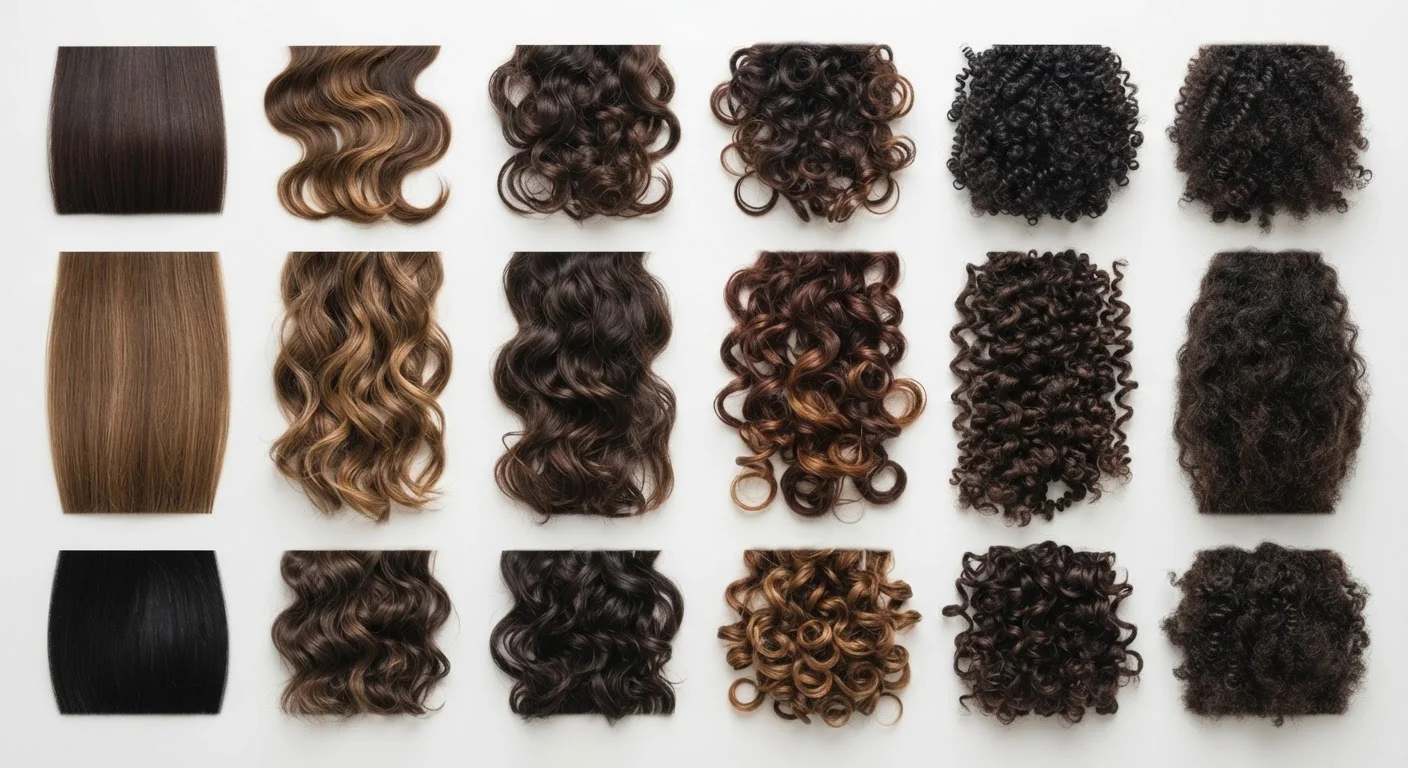
Photo credit: Infolagoon.com | Blogs To Rely On
In this article
A quick reference to the 1–4 hair typing system with subtypes A, B, and C — what each means and how it guides product choices.
Where the Hair Typing System Comes From
The hair typing system most people reference today was popularized in the 1990s and uses a scale of 1 through 4 to categorize hair by its natural curl or wave pattern. Each number is further divided into subtypes A, B, and C, moving from the loosest to the tightest expression of that curl family. The system was designed to give people a shared vocabulary — a way to describe their hair texture so that product guidance, styling advice, and routine-building could feel less guesswork.
It's worth noting upfront: hair typing is a starting point, not a verdict. Porosity, density, and strand thickness all shape how your hair behaves, and many people have more than one type on the same head. Think of the number-letter code as a rough map, not a rulebook.
| Number of main hair types | 4 (straight, wavy, curly, coily) |
| Subtypes per number | A, B, and C — loosest to tightest |
| Total classifications | 12 (Types 1A through 4C) |
| Common 4C shrinkage | Up to 70–75% of actual length |
| System origin | Popularized in the 1990s |
Breaking Down Each Type: 1 Through 4
Type 1 — Straight
Straight hair lies flat from root to tip with no natural curl or wave. 1A is very fine and silky, 1B has medium thickness with slight body, and 1C is coarser with a bit of a bend. Straight hair tends to get oily faster because sebum travels down the shaft without a curl to slow it. Lightweight, volumizing products generally work well here.
Type 2 — Wavy
Wavy hair forms a loose S-shape and falls somewhere between straight and curly. 2A waves are barely there — easy to straighten or enhance. 2B has more defined S-waves closer to the mid-lengths. 2C features waves that start near the root and can border on curly. This type is often prone to frizz and responds well to lightweight curl-defining products that don't weigh it down.
Type 3 — Curly
Curly hair forms defined, springy loops. 3A curls are large and loose — about the circumference of a piece of sidewalk chalk. 3B curls are tighter, roughly the width of a marker. 3C is packed, corkscrewing curls that can border on coily. Moisture retention matters more as you move up this scale, and building a routine around your curl pattern becomes especially important.
Type 4 — Coily
Coily hair has a tight, densely packed pattern. 4A has a defined S or O coil that is visible when stretched. 4B bends in sharp Z-angles with less visible curl definition. 4C is the tightest pattern — minimal definition without product, with the greatest shrinkage (often 70% or more of actual length). Type 4 hair is the most fragile and benefits from protective styles and rich, sealing moisturizers.
Hair type
A classification of hair based on its natural curl or wave pattern, typically described using the 1–4 scale with A, B, and C subtypes. It is one factor — alongside porosity, density, and thickness — that guides care decisions.
Porosity
The hair's ability to absorb and retain moisture, determined by the condition of the outer cuticle layer. High-porosity hair absorbs quickly but loses moisture fast; low-porosity hair resists moisture entry but holds it well once absorbed.
Shrinkage
The difference between a curl's stretched length and its natural resting length. Tighter curl patterns — especially 4B and 4C — can shrink to less than half their actual length when dry.
Co-washing
Short for conditioner-only washing. A cleansing method that skips traditional shampoo in favor of a conditioning product, often used to preserve moisture in tightly coiled hair types.
Humectant
An ingredient that draws moisture from the environment (or deeper layers of the hair shaft) to the surface of the hair strand. Common examples include glycerin and aloe vera.
Using Your Hair Type to Guide Product Choices
Hair type is one of several factors that shapes which products will work for you. Here's a practical framework:
- Types 1 and 2: Lean toward lightweight formulas — mousse, light mist conditioners, and volumizing sprays. Heavy butters and oils tend to flatten the pattern or leave residue.
- Type 3: Creams and gels that define without stiffness are common favorites. Deep conditioning treatments help maintain elasticity as curl diameter tightens.
- Type 4: Heavier humectants, shea-based creams, and sealing oils help lock in moisture that this hair type loses quickly. Co-washing (conditioner-only washing) is popular among many 4B and 4C naturals.
When scanning ingredient lists, knowing your type helps you identify whether a formula was designed for your texture. Our guide on how to read a hair care label can help you decode what's actually in the bottle.
Your Hair Type Can Change Over Time
Hormonal shifts, aging, chemical treatments, and even significant health changes can alter your natural curl pattern. If your hair is behaving differently than it used to, your type may have shifted — and that's completely normal. Re-evaluating your routine periodically is a good habit, not a setback.
Beyond product selection, factors like genetics, hormone levels, and nutrition influence your hair's overall health and growth — a dimension that goes well beyond curl pattern. For a broader view, see everything that affects hair growth.

Author
Style & Beauty Editorial Team
Style & Beauty Editorial Team is the collective byline for our editorial team and contributor network. Articles published under this byline or an editorial pen name are researched, written, and reviewed according to our editorial standards for clarity, consistency, and independence before publication.
View all articles →