
How to Read Your Home's Electrical Panel Safely
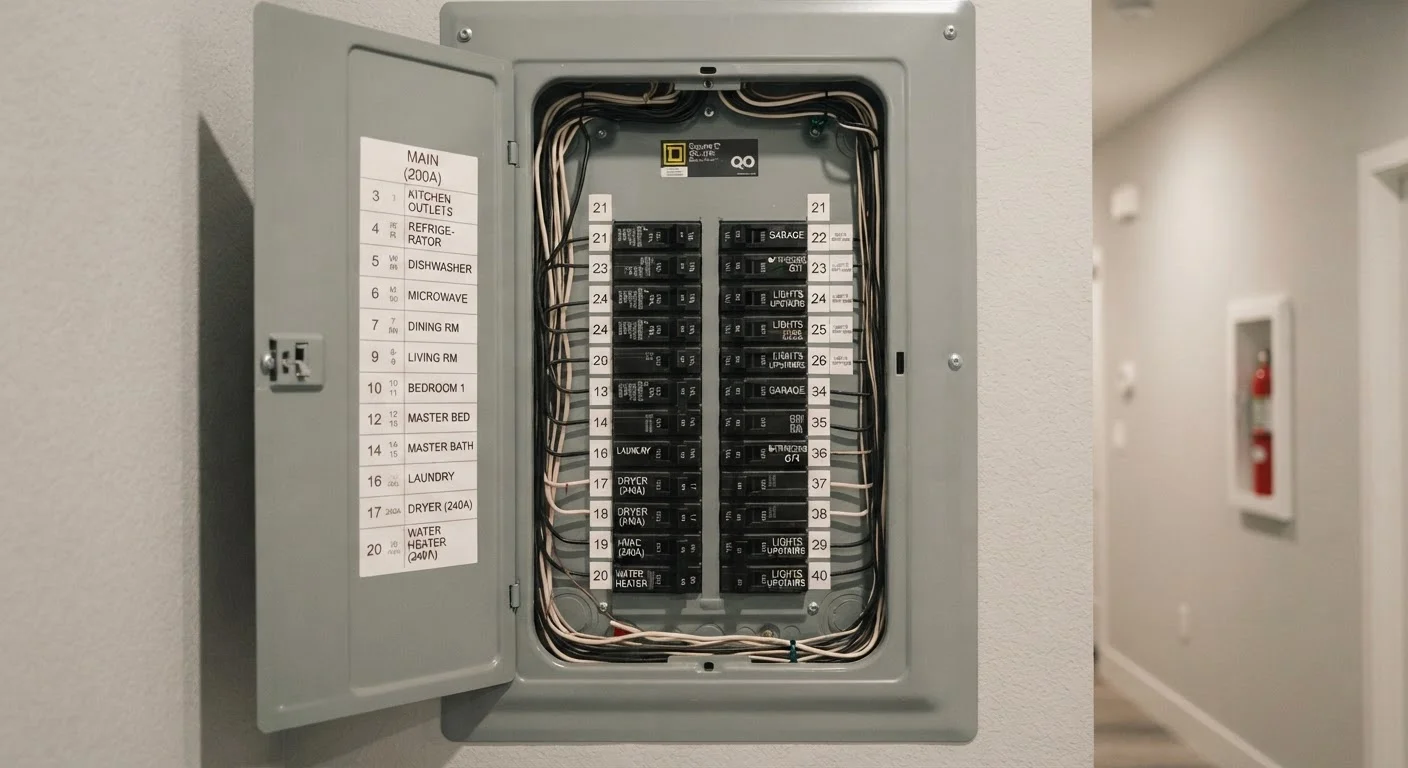
Photo credit: Infolagoon.com | Blogs To Rely On
In this article
Your breaker box holds important information about your home's electrical system. Learn what the labels mean and when to call a licensed electrician.
Key Takeaways
- Your electrical panel controls every circuit in your home and is safe to visually inspect.
- Breaker labels identify which circuits power which areas — keeping them accurate matters.
- Tripped breakers can often be reset, but recurring trips signal an issue for a professional.
- Certain conditions — burning smell, visible damage, or unlabeled breakers — require a licensed electrician.
- Never touch wiring or remove the panel cover; visual inspection is the safe limit for homeowners.
What Your Electrical Panel Is and Why It Matters
Your home's electrical panel — also called the breaker box or load center — is the central hub that receives electricity from your utility provider and distributes it to individual circuits throughout your home. Each circuit is protected by its own breaker, which automatically shuts off if the circuit is overloaded or experiences a fault.
Reading your panel is not an intimidating task. It's a basic maintenance skill, similar to checking your tire pressure or reading a home inspection report. For a deeper look at what professional inspectors flag about electrical systems, see our guide on reading a home inspection report without the jargon.
What separates a safe visual inspection from dangerous work is simple: you are reading and observing — you are not touching any wiring, removing internal covers, or making connections. That boundary is firm.
Do Not Remove the Panel Cover
The metal cover of your electrical panel can be safely opened to view the breakers, but the inner dead-front cover — the plate concealing the wiring — must never be removed by anyone other than a licensed electrician. Live bus bars behind that cover carry lethal voltage even when all breakers are switched off. If you are unsure which cover is which, stop and call a professional.
Before You Begin: What You Need
A panel inspection requires almost no equipment, but having the right items on hand makes the process smoother and safer.
Flashlight or headlamp
Illuminates the panel interior so you can clearly read labels and inspect breaker positions.
Panel directory card or notebook
Used to record or update the list of circuits and their corresponding breaker numbers.
Non-contact voltage tester
Allows you to verify whether an outlet or switch is live without touching wires — useful outside the panel only.
What you will need
Wear dry shoes and avoid standing on damp flooring. Keep one hand in your pocket or behind your back while looking — a habit used by electricians to reduce the risk of accidental contact completing a circuit through the body, however unlikely during a visual inspection.
Step-by-Step: Reading Your Panel
Locate your electrical panel
Most panels are mounted on an interior wall in a utility room, basement, garage, or hallway. In older homes, the panel may be in a less obvious spot such as a closet. The panel is a gray or beige metal box, typically recessed into the wall. Make sure the area in front of it is clear — the National Electrical Code requires a minimum of 36 inches of clear working space in front of any electrical panel.
Open the outer panel door
The outer door swings open on a hinge or lifts free — no tools are needed. This reveals the breaker switches and the directory card. Do not attempt to remove the inner metal cover (called the dead-front or trim panel) that sits flush behind the breakers. That cover protects the live wiring inside.
Identify the main breaker
At the top of the panel, you will typically find the main breaker — a large double-pole switch rated in amps (commonly 100A, 150A, or 200A for most homes). This single breaker controls power to every circuit in the panel. Its amperage rating indicates the total electrical service capacity of your home. Note this number, as it can be relevant when planning renovations or adding appliances.
Read the circuit directory
Inside the panel door, there should be a label or card listing each breaker number alongside the circuit it controls (e.g., "Kitchen outlets," "Master bedroom," "Washer"). Check each listed breaker number against the physical breaker to confirm they match. Note any breakers that are unlabeled or whose descriptions are vague or incorrect.
Check breaker positions — on, off, or tripped
Each breaker switch has three positions: ON (fully to one side), OFF (fully to the other side), and TRIPPED (usually a middle position, sometimes indicated by a red or orange indicator window). A tripped breaker means the circuit drew more current than it was rated for and automatically shut off to prevent overheating. To reset it, push the switch firmly to OFF, then back to ON. If it trips again immediately or repeatedly, do not keep resetting it — this points to an underlying issue such as a faulty appliance or overloaded circuit that an electrician should evaluate.
Note any concerns and decide next steps
After your visual inspection, review your notes. Minor items — such as outdated labels or one unexplained tripped breaker — may be straightforward to address. More serious findings, including double-tapped breakers (two wires on one breaker terminal), visible corrosion, or a panel brand known for safety recalls, warrant a call to a licensed electrician. Document what you observed so you can describe it clearly when you call.
Label As You Go
If you discover unlabeled breakers during your inspection, use a helper and a lamp plugged into different outlets to map each circuit one at a time. Write the results on the directory card inside the panel door with a permanent marker. An accurate map saves time during outages and helps electricians work more safely.
When to Call a Licensed Electrician
Reading your panel is well within homeowner territory. Anything beyond observation is not. The following situations call for a licensed professional:
- Unlabeled or unclear circuits that you cannot safely map yourself
- Double-tapped breakers — two separate wires connected to a single breaker terminal (a code violation in most jurisdictions)
- Aluminum wiring on branch circuits in older homes, which requires specific connectors and handling
- Panels flagged in safety bulletins — some older panel brands have documented reliability issues; a home inspection report may note these
- Any tripped breaker that won't stay reset
- Signs of heat, burning, or moisture anywhere near the panel
When to Stop and Call an Electrician Immediately
If you notice a burning or melting smell near the panel, scorch marks on any breaker or cover, buzzing or crackling sounds, or breakers that feel warm to the touch, do not attempt to inspect further. Leave the area and contact a licensed electrician. These signs may indicate active arcing or overheating that poses a fire risk.
Not sure whether a finding is DIY-appropriate or contractor territory? Our article on DIY maintenance vs. licensed contractor offers a practical framework for making that call. You may also want to review common home electrical safety myths before drawing your own conclusions about what is safe to handle.
Permits and inspections are typically required for panel replacements and service upgrades. Always verify your local requirements with your municipality or a licensed electrician before any work begins.
This article provides general home maintenance information for educational purposes only. It is not a substitute for advice from a licensed electrician. Electrical work involves serious safety risks; always consult a qualified professional for any work beyond basic visual inspection.

Author
Home & Living Editorial Team
Home & Living Editorial Team is the collective byline for our editorial team and contributor network. Articles published under this byline or an editorial pen name are researched, written, and reviewed according to our editorial standards for clarity, consistency, and independence before publication.
View all articles →