
Gutters and Downspouts: What They Do and What Happens When They're Neglected
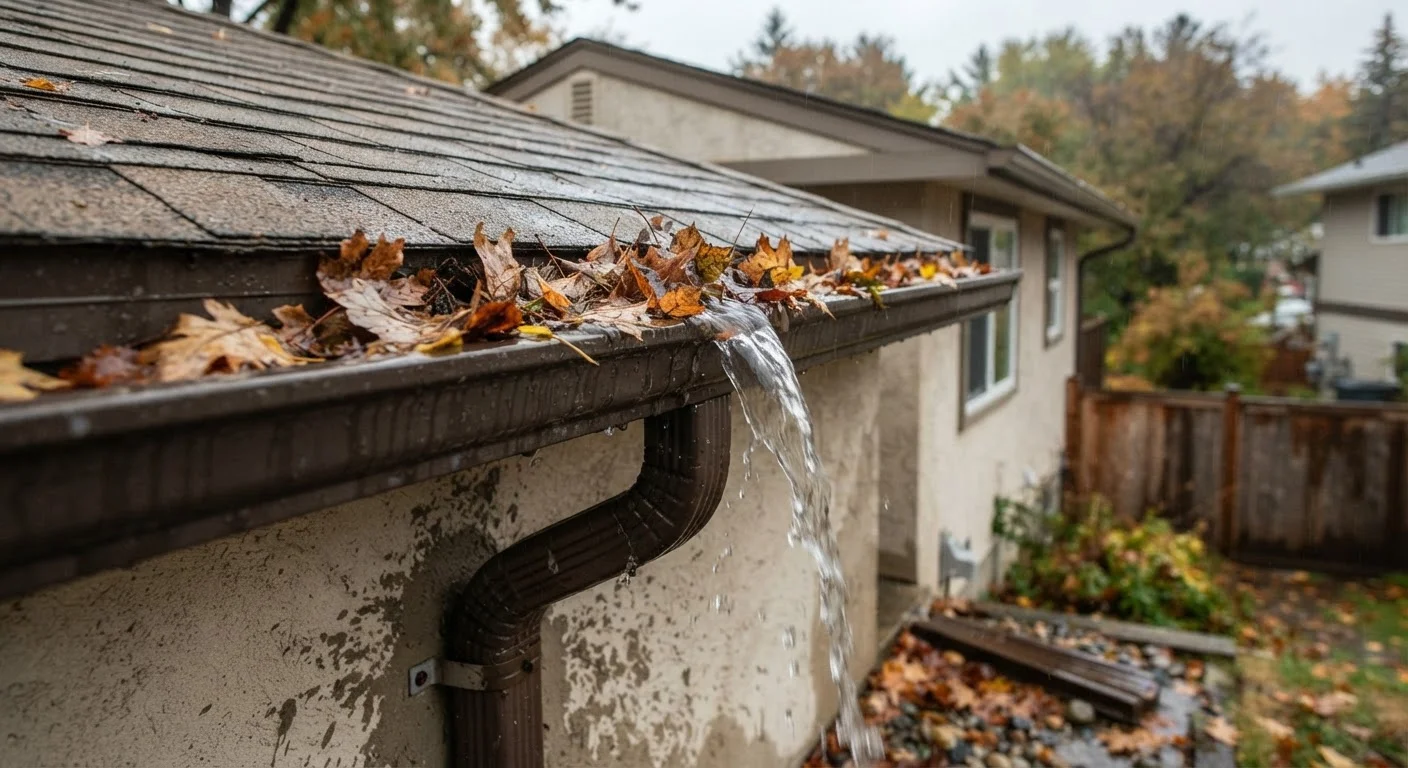
Photo credit: Infolagoon.com | Blogs To Rely On
In this article
Blocked gutters cause more damage than most homeowners realize. Understand how the system works and what routine care actually involves.
Key Takeaways
- Gutters and downspouts work together to redirect roof runoff away from your foundation.
- Clogged gutters can cause water damage to fascia boards, soffits, siding, and basements.
- Most homes benefit from gutter cleaning at least twice a year — typically in spring and fall.
- Downspout extensions should discharge water at least four to six feet from the foundation.
- Early maintenance costs far less than repairing water-damaged foundations or rotted wood.
How the System Actually Works
When rain hits your roof, it doesn't stay there — it flows downhill with gravity. Without a gutter system, that water cascades off the roofline in a curtain, landing directly against your home's siding, soil, and foundation. Over time, that concentrated impact and saturation causes erosion, rot, and seepage.
Gutters catch that moving water at the roofline and funnel it into a controlled path. The channel runs along the fascia board (the flat board just behind the gutter) at a gentle angle toward a downspout opening. The downspout then carries the water vertically to ground level, where a splash block, extension, or underground drain moves it safely away from the house.
This system is straightforward in design, but it only works when all components are clear, properly pitched, and securely fastened. A single gap — a separated joint, a crushed downspout elbow, or a section packed with leaves — breaks the chain and sends water where it shouldn't go.
Slope Matters More Than It Looks
A gutter that appears level to the eye may actually be pitched incorrectly — either too flat to drain or sloping the wrong direction. After a rainstorm, walk around and observe whether water stands in any section of the channel. Persistent pooling means the slope needs adjustment, which usually involves repositioning the gutter hangers.
What Neglect Actually Costs You
Homeowners often underestimate how quickly a clogged gutter escalates into a serious repair. When water backs up in the channel, it has nowhere to go but over the sides or backward under the roofline. Here's what that means in practice:
- Fascia and soffit rot: The wood components directly behind and beneath the gutter absorb standing water and begin to deteriorate, often invisibly until the damage is substantial.
- Foundation pressure: Water that pours over the gutter and saturates the soil directly against the foundation creates hydrostatic pressure that can lead to cracks or basement leaks. See our guide to basement waterproofing methods for context on how water intrusion gets addressed at that stage.
- Landscape erosion: Overflow creates channeling in garden beds and lawns, washing away topsoil and mulch with each storm.
- Ice dams in winter: Debris-filled gutters trap snowmelt, which refreezes at night and forces ice up under roofing shingles — a major source of interior water damage.
As with most home systems, the pattern is consistent: deferred maintenance compounds into far larger bills than routine upkeep would have cost.
~$10,000
Average cost of foundation water damage repair
Foundation repair costs vary widely, but estimates from home repair sources commonly range from several thousand dollars into five figures depending on severity and method.
2x per year
Minimum recommended gutter cleaning frequency
Home maintenance guidance consistently recommends cleaning gutters at least twice annually — spring and fall — with additional cleanings for heavily wooded properties.
4–6 feet
Minimum downspout discharge distance from foundation
Building and drainage guidelines generally recommend directing downspout water at least four to six feet from the home's foundation to prevent soil saturation and seepage.
Routine Maintenance: What It Involves
Keeping gutters functional doesn't require specialized tools or advanced skills for single-story homes. The core tasks include:
- Clearing debris: Remove leaves, seeds, shingle grit, and any organic buildup from the channel. A gloved hand, a gutter scoop, or a leaf blower attachment all work. Work away from the downspout opening so debris doesn't get pushed in.
- Flushing with water: Run a garden hose through the gutter from the far end toward the downspout. This confirms the slope is correct and the downspout is clear. Water should exit freely at the base.
- Checking for sag or separation: Look for sections that have pulled away from the fascia or dip visibly in the middle — both indicate that hangers (the brackets holding the gutter up) need tightening or replacement.
- Inspecting downspout discharge: Confirm that the water exits at least four to six feet from the foundation. Splash blocks, flexible extensions, or buried drainage pipes all accomplish this.
For a broader view of when these tasks fit into the year, a seasonal maintenance calendar can help you schedule them alongside other upkeep priorities. Before winter in particular, this is a task worth completing — see what to check before winter hits your home for a full pre-season checklist.
After Flushing, Watch the Seams
When you run water through the gutter with a hose, walk alongside and watch for drips at the joints between gutter sections. Leaking seams are easy to seal with gutter caulk while the system is exposed and dry — catching them early prevents the drip from slowly rotting the fascia board behind it.
When to Call a Professional
Not every gutter task is a DIY job. Work on multi-story homes involves ladder heights where fall risk increases meaningfully — a professional gutter service is a reasonable investment in that context. You should also consider calling someone when:
- You notice significant wood rot on fascia or soffit boards, which may need carpentry repair before new gutters can be secured properly.
- Sections are pulling completely away from the roofline, suggesting fastener or structural fascia issues.
- Water is consistently appearing in your basement after rain and you suspect the downspout discharge is insufficient.
- You're considering replacing gutters entirely — sizing, material selection, and correct slope installation affect long-term performance.
Gutters sit at the intersection of roofing, siding, and foundation systems, so problems that seem minor on the surface can sometimes reflect — or cause — issues elsewhere. When in doubt, having a professional inspect the full system costs far less than diagnosing water damage after it's found its way inside. This connects to a broader truth about home upkeep: skipping small repairs rarely stays cheap.
Frequently Asked Questions

Author
Home & Living Editorial Team
Home & Living Editorial Team is the collective byline for our editorial team and contributor network. Articles published under this byline or an editorial pen name are researched, written, and reviewed according to our editorial standards for clarity, consistency, and independence before publication.
View all articles →