
Building a Balanced Plate: The Concepts Behind Portion Guidance
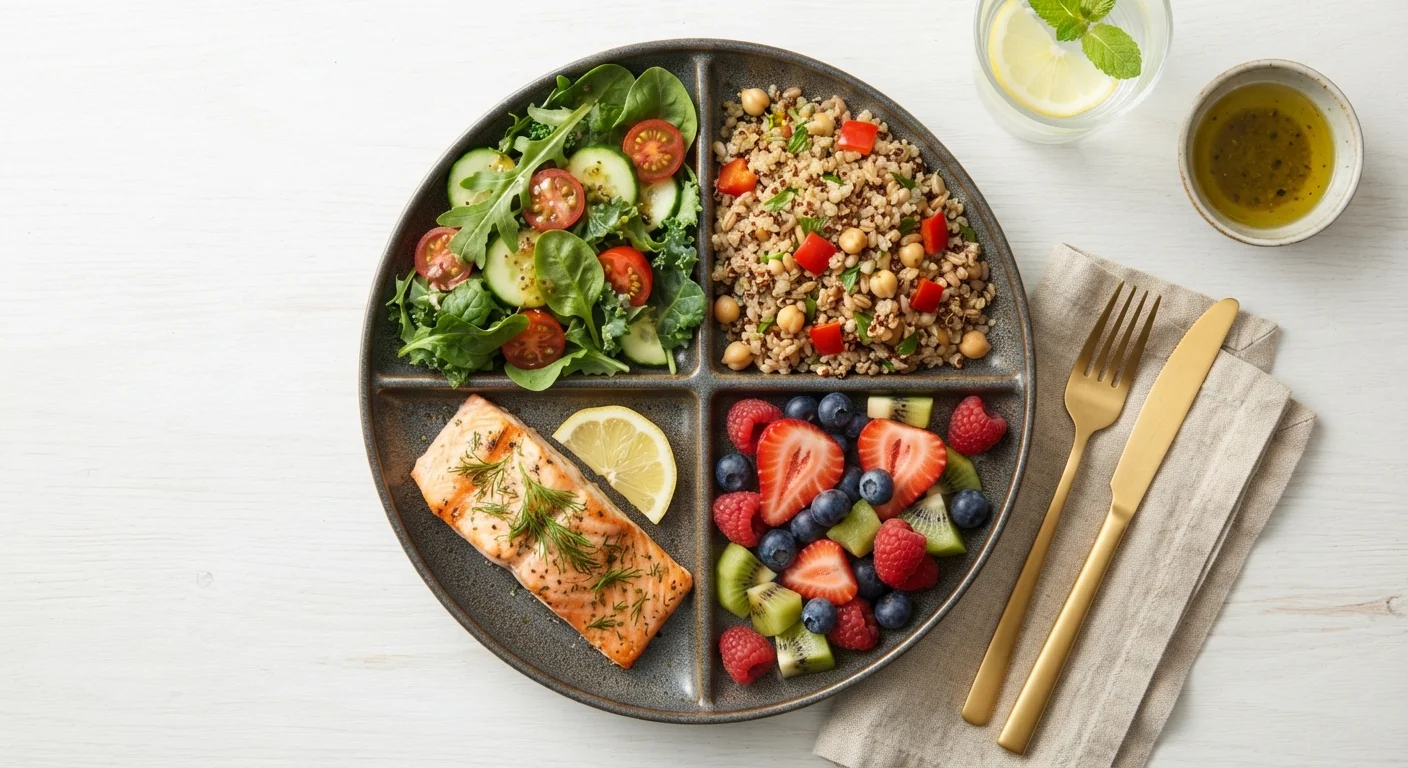
Photo credit: Infolagoon.com | Blogs To Rely On
In this article
Understand the principles behind visual portioning tools like MyPlate, and how proportional eating translates to daily meals.
Key Takeaways
- MyPlate recommends filling half your plate with fruits and vegetables at each meal.
- Grains and protein each occupy roughly one quarter of a balanced plate.
- Visual portioning removes the need to count calories or weigh every ingredient.
- Dairy or calcium-rich alternatives complement the plate as a side serving.
- Portion guidance is a flexible framework, not a rigid prescription - individual needs vary.
Why Visual Portioning Matters
For most Americans, translating nutrition science into a real meal can feel overwhelming. Food pyramids, macronutrient ratios, and calorie targets each carry their own learning curve. Visual portioning tools cut through that complexity by anchoring food choices to something everyone already owns: a plate.
The U.S. Department of Agriculture's MyPlate framework, introduced in 2011, is the federal government's primary consumer nutrition guide. It replaced the Food Guide Pyramid with a simpler, more intuitive image - a dinner plate divided into four proportional sections, accompanied by a small circle representing dairy. The goal is to make balanced eating recognizable at a glance rather than calculable by formula.
Understanding the logic behind MyPlate helps you apply it flexibly, whether you're building a home-cooked dinner or navigating a restaurant menu. If you want to go deeper on what food labels say about specific foods you're choosing, see how to read a Nutrition Facts label for a practical breakdown.
Use Your Hand as a Portable Measuring Tool
You don't need a food scale to estimate portions. A cupped hand approximates a half-cup serving of grains or vegetables. Your palm (without fingers) is roughly a 3-ounce protein portion. These estimates aren't precise, but they make portion awareness practical in any setting.
The Core Proportions Explained
MyPlate's proportions are designed to reflect broad dietary guidance for generally healthy adults. Here's what each section represents:
- Vegetables (largest portion, ~30%): Non-starchy vegetables - leafy greens, broccoli, peppers, carrots - are nutrient-dense and relatively low in calories. Variety across colors generally means a wider range of vitamins and minerals.
- Fruits (~20%): Fresh, frozen, or canned fruit (without added sugars) contributes fiber, vitamins, and natural sweetness. Whole fruit is generally preferable to juice, which lacks fiber.
- Grains (~25%): MyPlate encourages making at least half your grains whole grains - oats, brown rice, whole wheat bread - for their fiber content and sustained energy.
- Protein (~25%): This section includes lean meats, poultry, seafood, eggs, beans, peas, nuts, and seeds. Plant-based proteins like legumes count here, which supports flexibility for different eating patterns.
- Dairy (side serving): Low-fat or fat-free milk, yogurt, or cheese is suggested as a calcium source. Fortified soy beverages are recognized as an equivalent alternative.
These proportions are starting points, not absolutes. Caloric needs vary by age, sex, physical activity, and health status. For a broader approach to sustaining these habits over time, meal planning principles that hold up week to week offers practical guidance.
One Framework Doesn't Fit Every Situation
MyPlate reflects general guidance for healthy adults and is not designed for individuals with specific medical conditions, food allergies, or special dietary needs. If you're managing a health condition or following a medically recommended diet, work with a registered dietitian to adapt any portioning approach to your circumstances.
How to Apply the Framework Step by Step
Translating the plate model from concept to practice is straightforward once you understand the intent behind each proportion. The steps below walk through a single meal as a starting point.
Start with the plate itself
Use a standard 9-inch dinner plate as your visual reference. Oversized plates can encourage larger portions simply by making normal servings look small. If you typically eat from a larger plate, a simple swap can shift your baseline without any counting.
Fill half the plate with produce
Divide the plate visually in half. The entire left side should be fruits and vegetables combined - with vegetables taking the larger share. Aim for color variety: a mix of leafy greens, a bright vegetable like tomatoes or peppers, or roasted root vegetables all count.
Allocate one quarter to grains
Fill the upper-right quarter with a grain-based food. Whole grain options - brown rice, quinoa, whole wheat pasta, or a slice of whole grain bread - provide more fiber than their refined counterparts. Check the ingredient list: look for a whole grain listed as the first ingredient.
Fill the remaining quarter with protein
The lower-right quarter is your protein portion. This can be lean meat, poultry, or fish - roughly 3 ounces cooked (about the size of a deck of cards) - or a plant-based equivalent such as a half-cup of beans or lentils, two eggs, or a small handful of nuts or seeds.
Add a dairy or calcium-rich side
A small glass of low-fat milk, a serving of yogurt, or a slice of cheese alongside the meal rounds out the framework. If you don't consume dairy, a fortified plant-based milk - soy milk is the most nutritionally comparable - serves a similar role for calcium and vitamin D.
Adjust proportions to your context
The plate model is a flexible guide. A very active individual may need larger grain or protein portions; someone managing blood sugar may shift the vegetable proportion higher. Use the visual framework as a starting point and revisit it with a healthcare provider or registered dietitian if you have specific health goals or conditions.
As you build confidence applying this framework, consider how plant-forward choices can shift your plate's composition. Plant-based eating for omnivores explains how to shift gradually without overhauling your routine. Combining balanced portioning with regular physical activity also supports overall wellness - fitness and exercise resources can complement the nutrition habits you're building here.
This article is for general informational and educational purposes only and is not a substitute for personalized medical or dietary advice. Individual nutrition needs differ based on age, health status, and other factors. Consult a registered dietitian or qualified healthcare professional for guidance specific to your situation.

Author
Health & Wellness Editorial Team
Health & Wellness Editorial Team is the collective byline for our editorial team and contributor network. Articles published under this byline or an editorial pen name are researched, written, and reviewed according to our editorial standards for clarity, consistency, and independence before publication.
View all articles →