
Reading a Nutrition Facts Label Without the Confusion
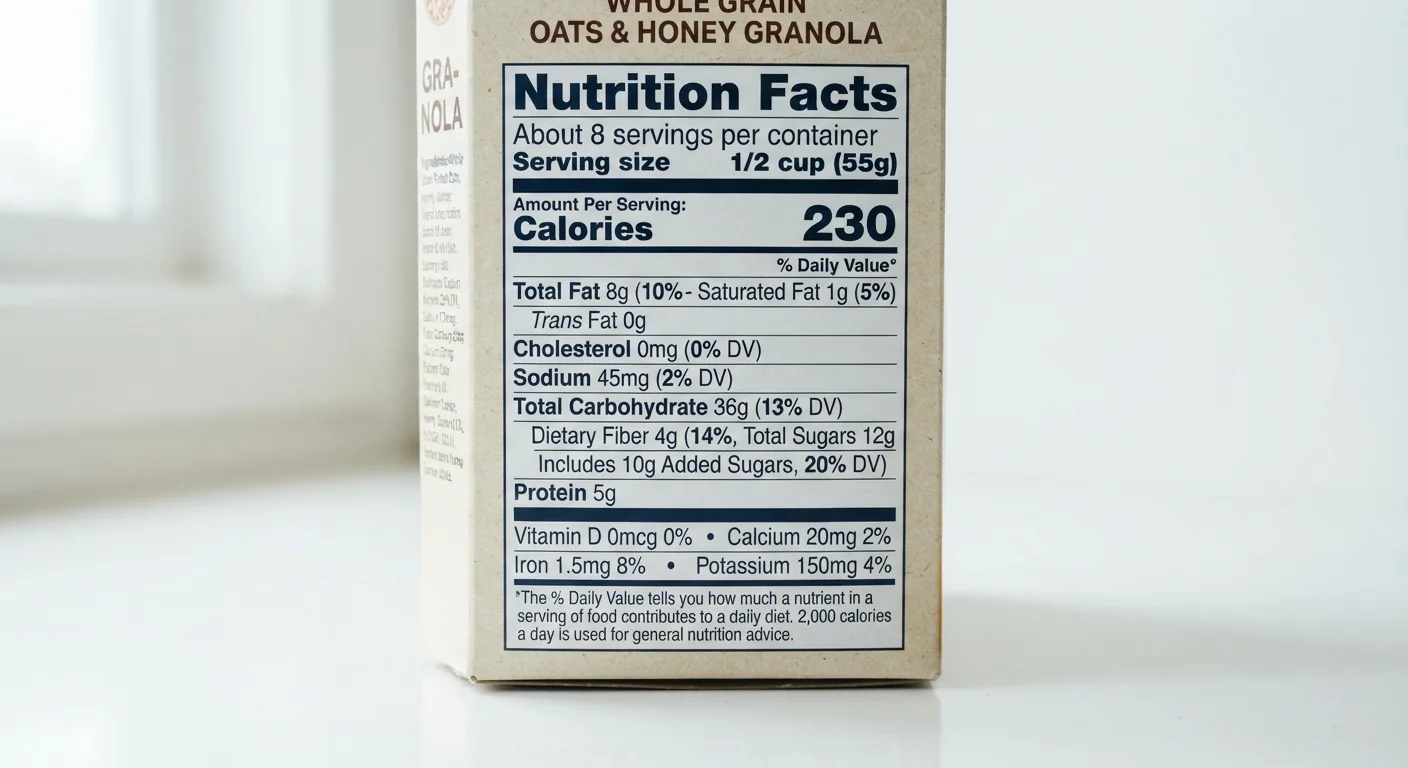
Photo credit: Infolagoon.com | Blogs To Rely On
In this article
Decode every section of a U.S. Nutrition Facts panel—from serving sizes to daily values—so you can compare foods at a glance.
Key Takeaways
- Serving size is the single most important reference point on any Nutrition Facts panel.
- Percent Daily Value (%DV) of 5% or less is low; 20% or more is high for any nutrient.
- Nutrients like sodium, saturated fat, and added sugars are worth limiting, while fiber and vitamins are worth seeking.
- All %DV figures are based on a 2,000-calorie reference diet and may not match your individual needs.
- Label literacy helps you spot misleading marketing claims on front-of-package labeling.
Why the Nutrition Facts Panel Exists
The U.S. Nutrition Facts label is a federally mandated panel regulated by the Food and Drug Administration (FDA). It was first introduced in 1994 and significantly updated in 2020 to reflect current dietary science - most notably by adding a dedicated line for Added Sugars and enlarging the calorie display.
The panel's purpose is straightforward: give consumers a standardized, comparable snapshot of what's in a food before they buy or eat it. Every manufacturer selling packaged food in the U.S. must use the same format, which makes comparison shopping possible even across very different product categories.
Understanding the label pairs naturally with broader nutrition habits. If you're also thinking about how food portions translate to a balanced daily diet, our article on building a balanced plate provides helpful context.
Labels Inform - They Don't Diagnose
Nutrition Facts panels are general education tools, not medical guidance. If you have a health condition, food allergy, or specific dietary need, consult a registered dietitian or your healthcare provider before making significant changes to your eating habits.
How to Read the Label Step by Step
Follow these steps in order the first few times - once the structure becomes familiar, you'll move through a label in under a minute. Have a real package on hand so you can practice as you go.
What you will need
Packaged food item
Provides a real Nutrition Facts panel to practice reading as you follow each step.
USDA FoodData Central (online database)
Lets you look up nutrient profiles for whole foods that don't carry a label.
Start with the serving size
Every number on the label - calories, fat grams, %DV - applies to one serving, not the whole package. Find the Serving Size line at the very top of the panel, listed in a common household measure (e.g., 1 cup) plus the gram equivalent in parentheses.
Also check Servings Per Container. A bag that looks single-serve may contain 2.5 servings. If you eat the whole bag, multiply every value on the label by 2.5.
Check the calorie count
Calories appear in large bold type directly below the serving information. This figure represents the total energy one serving provides from all macronutrients combined. It's a useful reference point, but calories alone don't tell you about nutritional quality.
For context, the %DV column on the panel uses a 2,000-calorie daily reference diet - a general benchmark set by the FDA that may be higher or lower than your actual needs.
Review nutrients to limit
The middle section of the label lists nutrients most Americans tend to overconsume. Pay particular attention to:
- Saturated Fat - linked to cardiovascular risk in excess; keep %DV low
- Sodium - a key factor in blood pressure management for many people
- Added Sugars - listed separately from total sugars since 2020; a high %DV warrants attention
- Trans Fat - no safe level has been established; aim for 0 g per serving
Use the 5%/20% rule: a %DV of 5% or less is considered low; 20% or more is high.
Identify nutrients to seek out
Below the nutrients-to-limit section, you'll find nutrients many Americans fall short on. Look for higher %DV in:
- Dietary Fiber - supports digestive health and satiety; most Americans consume far less than recommended (see our guide to dietary fiber for more)
- Vitamin D, Calcium, Iron, Potassium - mandatory on updated U.S. labels because deficiencies are widespread
For a broader look at what these micronutrients do, the plain-language vitamins and minerals reference is a useful companion.
Scan the ingredients list
The ingredients list is separate from the Nutrition Facts panel but equally important. Ingredients are listed in descending order by weight - what appears first makes up the largest share of the product.
A short list with recognizable ingredients generally signals a less processed food. Look for whole grains, fruits, or vegetables near the top; be alert if added sugars appear multiple times under different names (e.g., corn syrup, dextrose, cane juice).
Front-of-Package Claims Can Mislead
Words like 'natural,' 'light,' or 'multigrain' on the front of a package are not tightly regulated and can create a false impression of healthfulness. Always flip to the Nutrition Facts panel and ingredients list to verify what you're actually getting. For a deeper look at this, see our article on nutrition traps hidden in 'healthy' food marketing.
Use %DV to Compare Products Quickly
When choosing between two similar products, line up the %DV columns for the nutrients you care most about. This side-by-side comparison works regardless of differing serving sizes and gives you a fast, consistent benchmark.
Putting It All Together
Reading a Nutrition Facts label is a skill that compounds over time. After a few weeks of checking panels at the grocery store, you'll develop an intuitive sense of what a typical sodium or fiber level looks like for a given food category - and you'll immediately notice when something is unusually high or low.
Keep in mind that the label reflects one serving of one food. Nutritional quality emerges from overall dietary patterns, not individual items. A food with a high saturated fat %DV isn't automatically off-limits; context and frequency matter more than any single number.
For insight into how hydration fits into the picture, see our article on hydration and nutrition. And if you want to stay active alongside eating well, the Fitness & Exercise hub has practical routines to complement your nutrition goals.
This article is for general informational purposes only and does not constitute medical or dietary advice. Consult a qualified healthcare professional or registered dietitian for guidance tailored to your individual health needs.

Author
Health & Wellness Editorial Team
Health & Wellness Editorial Team is the collective byline for our editorial team and contributor network. Articles published under this byline or an editorial pen name are researched, written, and reviewed according to our editorial standards for clarity, consistency, and independence before publication.
View all articles →