
Free Weights vs. Resistance Machines: Choosing the Right Tool for Your Goals
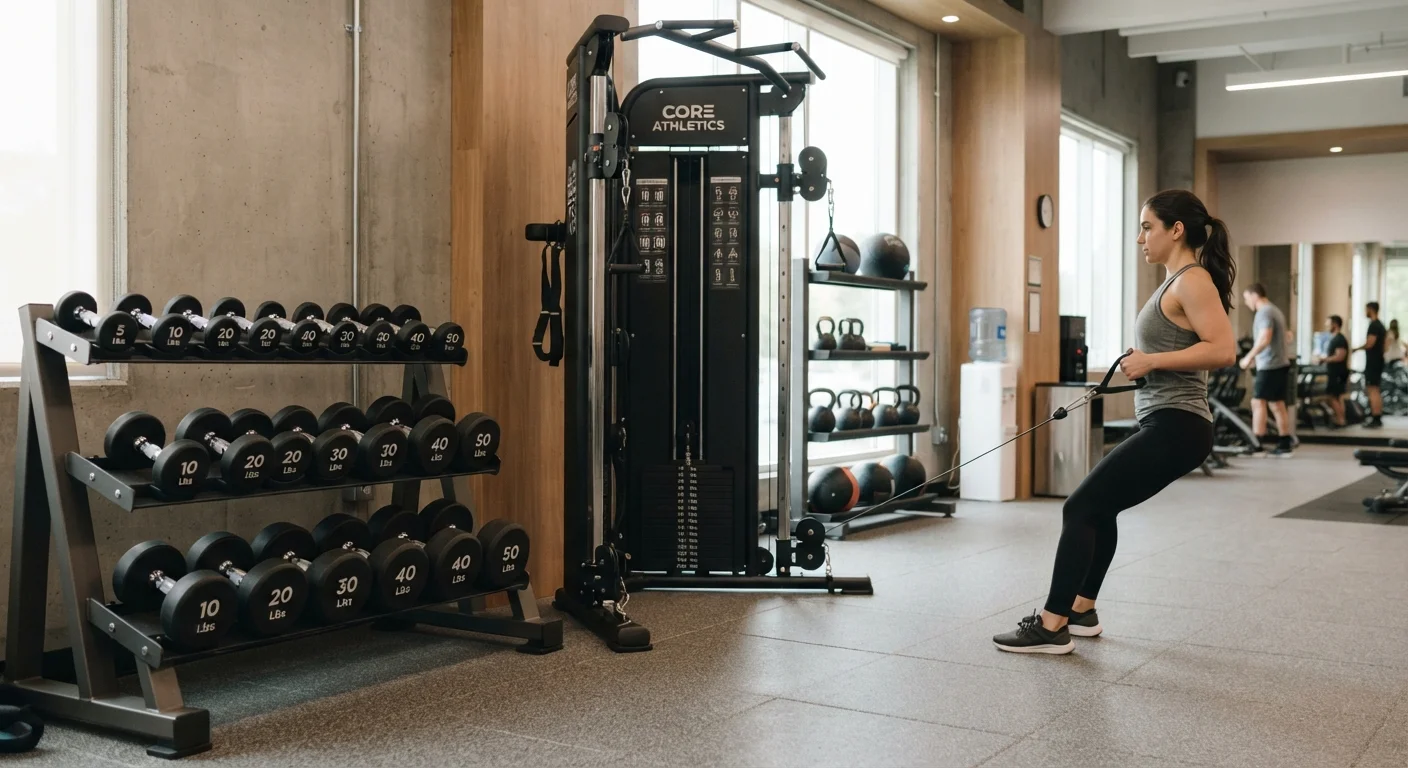
Photo credit: Infolagoon.com | Blogs To Rely On
In this article
Both free weights and machines build strength, but they work differently. Understand the trade-offs to make smarter choices at the gym or at home.
Key Takeaways
- Free weights engage more stabilizer muscles, making them effective for functional, real-world strength.
- Resistance machines reduce injury risk for beginners by guiding movement through a fixed path.
- Neither tool is universally superior - your goals, experience level, and physical condition all matter.
- Combining both approaches in a routine often delivers the most balanced results.
- Proper form is essential with either tool to avoid injury and get the most benefit.
What Makes Each Tool Different
Free weights - including dumbbells, barbells, and kettlebells - require you to control the weight through three-dimensional space. That means your body recruits not just the target muscle, but also the surrounding stabilizer muscles that keep joints aligned and movement balanced. This mirrors the way your body moves in everyday life.
Resistance machines, by contrast, guide your movement along a fixed track. A leg press machine, for example, dictates the path the weight travels, reducing the demand on stabilizers and letting you focus almost entirely on the primary muscle. That constraint is exactly what makes machines useful for beginners and for rehabilitation contexts.
Understanding foundational movement patterns - push, pull, hinge, squat - helps clarify why this distinction matters. Free weights tend to train these patterns more completely, while machines often target one piece of the puzzle.
| Criterion | Free Weights | Resistance Machines |
|---|---|---|
| Stabilizer muscle engagement | High - requires active stabilization | Low - machine guides the path |
| Learning curve | Steeper - form takes practice | Gentler - guided movement helps beginners |
| Injury risk for beginners | Higher if form breaks down | Lower with proper machine setup |
| Muscle isolation | Moderate - compound focus | High - designed for targeted work |
| Versatility | Very high - countless exercise variations | Limited to machine's intended use |
| Space and cost | Compact and relatively affordable | Large footprint, higher cost |
| Functional strength carryover | Strong - mirrors real-world movement | Moderate - less real-world transfer |
The Case for Free Weights
Free weights shine when the goal is functional strength - the kind that carries over into lifting, carrying, and moving in daily life. Because you must stabilize the weight yourself, exercises like the dumbbell Romanian deadlift or a barbell squat demand coordination across multiple muscle groups simultaneously.
Research in exercise science consistently shows that multi-joint, free-weight compound movements produce strong adaptations in both muscle size and overall strength. They're also highly adaptable: a single pair of adjustable dumbbells can substitute for an entire rack of machines if you know how to use them. See our guide on home vs. gym training for a practical breakdown of equipment trade-offs.
The trade-off is a steeper learning curve. Poor form with a loaded barbell carries a real injury risk, especially for the lower back and shoulders. If you're new to strength training, starting with lighter loads and seeking instruction - from a certified personal trainer or a structured beginner program - is strongly advisable.
~2×
Greater stabilizer activation with free weights
Studies in the Journal of Strength and Conditioning Research have found free-weight exercises recruit significantly more stabilizing muscle activity than machine equivalents.
58%
Adults who cite injury fear as a gym barrier
Survey data from the American College of Sports Medicine suggests fear of injury is among the most common reasons adults avoid or delay starting strength training.
The Case for Resistance Machines
Machines reduce the technical barrier to strength training. Because the movement path is predetermined, a beginner can load a chest press machine and perform a reasonable facsimile of the exercise with less risk of serious form breakdown than with a barbell bench press. This makes machines particularly valuable when someone is just starting out, returning after a long break, or working around a physical limitation.
Machines also excel at muscle isolation. If your goal is to specifically strengthen the quadriceps after a knee injury - always with professional guidance - a leg extension machine gives you targeted control that free weights can't easily replicate. Similarly, cable machines offer adjustable angles and constant tension, blending some free-weight versatility with the stability of a guided system.
The limitation is that machines are fixed and specific. They don't train the stabilizing muscles that free weights demand, and over-reliance on machines alone can leave functional strength gaps. They're also expensive and space-intensive, making them largely inaccessible outside a gym setting.
This article is for general informational purposes only and is not a substitute for professional medical or fitness advice. Consult a qualified healthcare provider or certified fitness professional before beginning any new exercise program, especially if you have an injury or chronic health condition.
How to Use Both Effectively
For most people, the smartest approach isn't choosing one tool over the other - it's using each where it makes sense. A well-structured program might anchor workouts around compound free-weight movements like squats, deadlifts, rows, and presses, then use machines or cables to add targeted volume for specific muscles without overtaxing the stabilizers.
If you're building a routine, the weekly workout structure guide offers a practical framework for fitting strength work into a realistic schedule. And if you're newer to the gym environment, starting from scratch covers the fundamentals before you worry about which equipment to prioritize.
Ultimately, the best strength training tool is the one you use consistently and with good form. Both free weights and resistance machines are legitimate, research-supported paths to building strength. The choice comes down to your experience, goals, access to equipment, and any physical considerations you're managing.
A Note on Special Populations
If you are pregnant, recovering from surgery, managing a chronic condition, or have been sedentary for an extended period, the guidance here is general and may not apply to your situation. Please consult a qualified healthcare professional or a certified fitness specialist before starting or changing a strength training program. They can recommend the appropriate tools, loads, and movement patterns for your specific needs.

Author
Health & Wellness Editorial Team
Health & Wellness Editorial Team is the collective byline for our editorial team and contributor network. Articles published under this byline or an editorial pen name are researched, written, and reviewed according to our editorial standards for clarity, consistency, and independence before publication.
View all articles →