
Working Out at Home vs. at a Gym: What Changes and What Doesn't
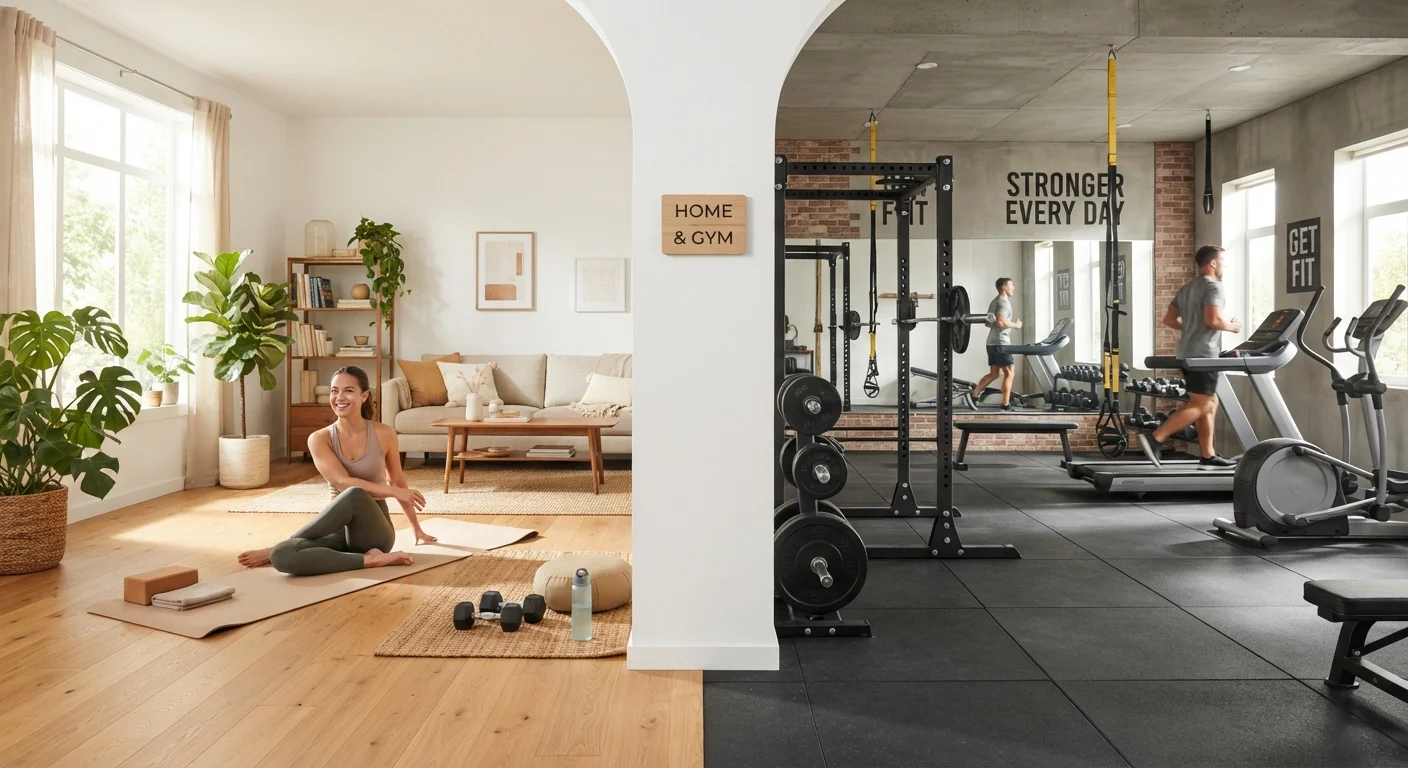
Photo credit: Infolagoon.com | Blogs To Rely On
In this article
Home and gym workouts each come with real trade-offs. Here's an honest look at convenience, equipment, cost, and motivation for both settings.
Key Takeaways
- Both home and gym workouts can produce comparable fitness results when done consistently.
- Gyms offer more equipment variety and social energy; home workouts win on convenience and cost over time.
- The best setting is whichever one removes the most barriers to showing up regularly.
- Motivation strategies differ by environment, but the core principles of training remain the same.
- Many people find a hybrid approach - using both settings - works better than committing to one exclusively.
The Real Variables: Convenience, Cost, and Equipment
When comparing home and gym workouts, three practical factors shape the experience most: how easy it is to get started, what it costs, and what tools are available.
Convenience is where home workouts hold a clear edge. Removing the commute - even a 10-minute drive - reduces the friction that derails regular exercise. You can start a session in minutes, at any hour, without packing a bag. For people with demanding schedules, this alone can be the difference between a consistent habit and a sporadic one. Consistency, not intensity, drives long-term fitness gains - so anything that lowers the barrier to starting matters.
Cost tilts similarly over time. Gym memberships in the U.S. typically run $30-$80 per month, and premium clubs or specialty studios cost considerably more. A modest home setup - resistance bands, adjustable dumbbells, a mat - requires an upfront investment but no recurring fee. That said, building a well-rounded home gym with cardio equipment or a full rack represents a significant one-time expense.
Equipment access is where gyms win decisively. A commercial gym offers cable machines, barbells, benches, and cardio equipment that are difficult or expensive to replicate at home. For those pursuing progressive strength training, serious powerlifting, or sport-specific conditioning, the gym's range is hard to match. Understanding the trade-offs between free weights and machines becomes especially relevant once equipment access is a factor.
| Home Workouts | Gym Workouts | |
|---|---|---|
| Convenience | No commute, any time | Requires travel, set hours |
| Monthly Cost | Low after initial setup | $30-$80+ membership fee |
| Equipment Variety | Limited unless heavily invested | Extensive, including specialty gear |
| Motivation Environment | Requires self-discipline | Built-in cues and social energy |
| Privacy | Complete privacy | Shared public space |
| Expert Access | Requires seeking out online | Trainers typically available on-site |
| Flexibility | Maximum scheduling freedom | Dependent on gym hours and crowds |
Motivation and Accountability: Environment Matters More Than People Expect
One underappreciated variable is how the physical environment shapes motivation. Gyms create a context-specific cue - walking in signals that it's time to train. The presence of others exercising, the ambient noise, and the dedicated purpose of the space can reinforce effort. Research on habit formation consistently shows that environmental cues are powerful triggers for behavior.
Home workouts remove those cues and replace them with distractions: household tasks, family interruptions, and the ever-present pull of a couch. This doesn't make home training ineffective - it just means motivation has to come more from internal structure. Scheduled workout times, a dedicated corner of a room, and app-based programming can all help create the psychological separation that a gym provides automatically.
Build a Routine That Matches Your Environment
If training at home, treat your workout like a scheduled appointment - same time, same space, same warm-up ritual. These consistent cues help your brain shift into workout mode even without the external environment of a gym. If you train at a gym, use the commute itself as mental preparation time rather than viewing it as wasted effort.
Social accountability is another dimension where gyms have a natural advantage. Group fitness classes, training partners, and even the informal social presence of other gym-goers can sustain motivation during low-energy periods. For people who find exercise beneficial for mood and mental well-being, the social component of gym training may amplify that effect.
What Doesn't Change Regardless of Where You Train
The setting changes; the fundamentals don't. Progressive overload - gradually increasing the challenge placed on muscles over time - drives strength and conditioning gains whether you're in a garage or a commercial gym. Adequate recovery, sleep, and nutrition support adaptation in both environments equally. And the risk of injury from poor form exists in both settings.
Warm-ups and cool-downs are equally important regardless of location. So is honest self-assessment of technique - an area where working with a qualified trainer, at least occasionally, benefits people in either setting. Those new to exercise especially benefit from learning foundational movement patterns before adding load or intensity, wherever they train.
Home Workouts Still Carry Injury Risk
Training at home without supervision doesn't eliminate injury risk - it may increase it for beginners unfamiliar with proper form. Exercises like deadlifts, squats, and overhead pressing require sound technique regardless of setting. If you're new to these movements, consider a few sessions with a qualified trainer before going solo, and progress load gradually rather than rushing intensity.
Programming structure also transfers across environments. A well-designed weekly plan balancing cardiovascular work, strength training, and recovery remains the template whether you're using bodyweight at home or machines at a gym. See how to build a weekly workout schedule that actually sticks for a framework applicable to either setting.
~60%
Americans who prefer home workouts for convenience
Multiple consumer surveys have consistently found that convenience and time savings are the top reasons people choose home exercise over gym memberships.
50%+
Gym members who stop attending within 6 months
Industry research suggests that a significant proportion of new gym members reduce or stop attendance well before the year mark, often citing time and motivation.
This article is for general informational purposes only and does not constitute medical or fitness advice. Consult a qualified healthcare or fitness professional before beginning a new exercise program.

Author
Health & Wellness Editorial Team
Health & Wellness Editorial Team is the collective byline for our editorial team and contributor network. Articles published under this byline or an editorial pen name are researched, written, and reviewed according to our editorial standards for clarity, consistency, and independence before publication.
View all articles →