
What Tailgating Actually Does to Traffic Flow - and Why It Backfires
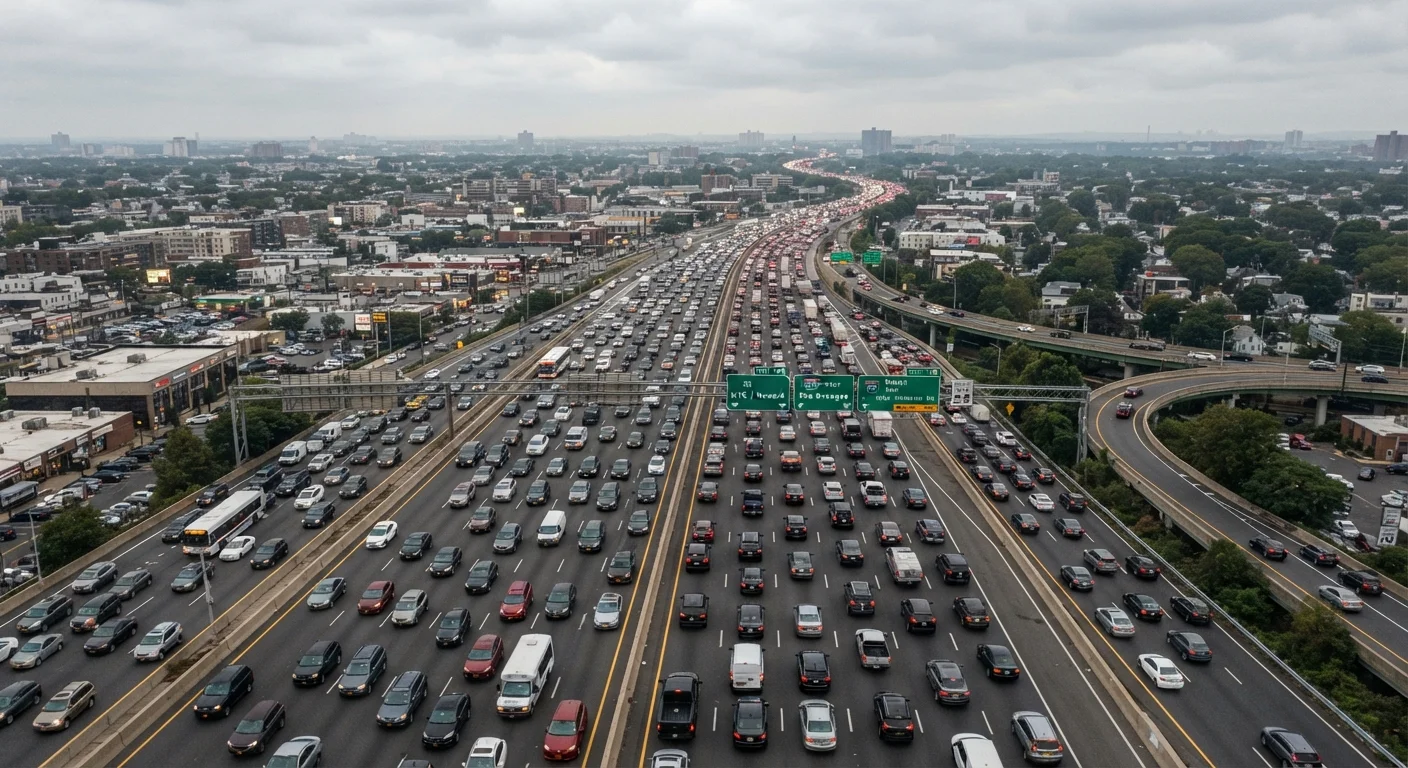
Photo credit: Infolagoon.com | Blogs To Rely On
In this article
Following too closely doesn't just raise crash risk — it actively makes traffic worse for everyone. Here's the research-backed explanation of why it backfires.
Key Takeaways
- Tailgating reduces your ability to brake in time and dramatically raises rear-end crash risk.
- When one driver follows too closely, the disruption ripples backward through traffic, slowing cars far behind.
- Phantom traffic jams - slowdowns with no obvious cause - are frequently triggered by tailgating behavior.
- Maintaining a larger following gap actually helps traffic move faster and more smoothly for everyone.
- Stress and road rage are heightened by close following, compounding the problem on busy roads.
The Chain Reaction You Start When You Follow Too Close
Picture a line of twenty cars on the highway. The lead car taps the brakes - a minor adjustment, barely a half-second slowdown. If the second driver is keeping a healthy following distance, they ease off the gas and absorb the change smoothly. But if the second driver is tailgating, they have to brake sharply. The third driver, also following too close, has to brake even harder. By the time that reaction reaches the tenth or fifteenth car, drivers are slamming their brakes to a near-stop - even though nothing actually blocked the road.
This amplification is called a traffic wave, and it travels backward through traffic faster than the cars themselves are moving. The original disturbance may last less than a second, but the wave it creates can persist for several minutes and extend back miles. Drivers who encounter that jam have no way of knowing what caused it - which is why these events are also called phantom traffic jams.
~33%
Rear-end crashes involving following-distance violations
The National Highway Traffic Safety Administration has consistently identified following-too-closely as a contributing factor in roughly one-third of rear-end collisions.
2-4 sec
Recommended minimum following distance
Traffic safety guidelines broadly recommend a two-second gap under normal conditions, expanding to three or four seconds in adverse weather or reduced visibility.
Miles
How far back a phantom traffic jam can extend
Research simulations have shown that a single braking event in a chain of closely-following vehicles can generate stop-and-go waves extending several miles backward.
Understanding your stopping distance factors is the foundation of safe following distance. Most drivers significantly underestimate how far their car travels between the moment they perceive a hazard and the moment the vehicle fully stops.
Why Tailgating Feels Rational (But Isn't)
Most tailgating isn't a deliberate act of aggression. Drivers do it because it feels like the right thing to do in heavy traffic - staying close to the car ahead feels like 'keeping pace' and avoiding gaps that other vehicles might fill. This logic is understandable, but it's backwards.
When you leave a generous gap, you give yourself time to react to changes in the flow ahead. Instead of braking reactively, you can adjust your speed gradually. That smoothing effect doesn't just benefit you - it breaks the chain that would otherwise transmit a disruption backward. You become a buffer, not a link in a chain.
Use a Fixed Landmark to Check Your Gap
Instead of estimating distance by eye - which most drivers do poorly - pick a fixed point like a road sign or overpass as the car ahead passes it, then count 'one-one-thousand, two-one-thousand.' If you reach that marker before finishing the count, you're too close. This method works at any speed and takes only a moment to practice.
The same misplaced logic drives frustration and road rage behavior - the sense that every gap in traffic is an obstacle rather than a necessary cushion. In reality, a driver who maintains a larger following gap and travels at a steady pace typically arrives at their destination in comparable time to someone who weaves and tailgates aggressively through the same corridor.
What the Research Says About Following Distance and Traffic Flow
Traffic flow researchers at institutions including MIT and the University of Exeter have studied how individual driver behavior propagates through traffic systems. Their simulations and real-world observations consistently show that stop-and-go waves are not inevitable features of high-volume roads - they're byproducts of the way drivers space themselves.
When even a small percentage of drivers deliberately maintain larger gaps, the data shows reduced wave formation and smoother average speeds across the entire stretch of road. The underlying math is straightforward: a bigger buffer absorbs fluctuations before they can amplify.
“Traffic flow breaks down not because roads are full, but because drivers react to each other instead of to the road ahead. A single driver who smooths their own behavior can stabilize a surprisingly large section of traffic behind them.”
— Berthold Horn, Professor of Computer Science and Engineering, MIT - researcher on bilateral traffic control and following-distance behavior
This matters practically for commuters. Over-reliance on navigation apps can also contribute to clustering - when thousands of drivers are routed onto the same road simultaneously, following distance deteriorates fast. See how navigation app habits can quietly make your commute worse for a fuller picture of how digital routing interacts with traffic density.
The Simple Habit That Helps Everyone on the Road
The two-second rule - counting at least two seconds between when the car ahead passes a road marker and when your car reaches it - is a widely accepted minimum under dry, normal-visibility conditions. In rain, fog, or at highway speeds, three to four seconds is a more appropriate buffer. The adjustments needed for night driving apply equally here: reduced visibility and slower reaction times under fatigue make a larger gap essential.
Practically speaking, maintaining this distance means resisting the urge to immediately fill gaps that open in front of you. It means accepting that another driver might merge into that space - and recognizing that the space is doing useful work either way. The commuter who builds this habit isn't losing time; they're reducing the number of hard braking events in their trip, which also reduces fuel consumption, brake wear, and stress.
Following Distance Laws Vary by State
Most U.S. states define following-too-closely in terms of 'reasonable and prudent' distance rather than a specific number of feet or seconds. This gives officers discretion to issue citations based on conditions. If you're cited, penalties - including fines and license points - vary by state and can affect insurance rates. Check your state's vehicle code for specifics.
Tailgating is one of those behaviors where individual cost and collective cost diverge sharply. The driver following too closely may shave seconds - or gain nothing at all - while adding measurable delay to hundreds of other commuters behind them. Adjusting following distance is one of the lowest-effort, highest-impact changes a driver can make to their daily commute.
Frequently Asked Questions

Author
Autos & Transport Editorial Team
Autos & Transport Editorial Team is the collective byline for our editorial team and contributor network. Articles published under this byline or an editorial pen name are researched, written, and reviewed according to our editorial standards for clarity, consistency, and independence before publication.
View all articles →