
Smart Thermostat Myths That Keep Getting Repeated
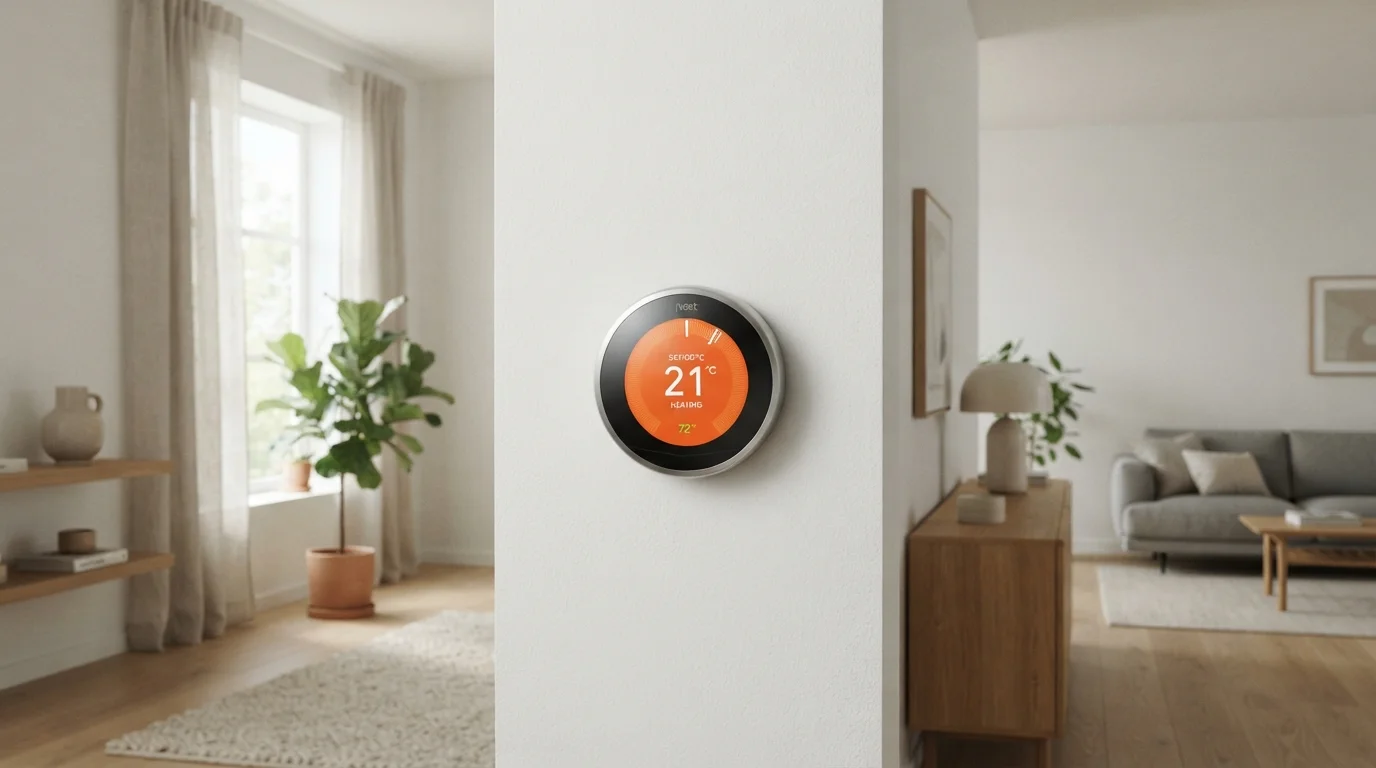
Photo credit: Infolagoon.com | Blogs To Rely On
In this article
From guaranteed energy savings to learning timelines, several common beliefs about smart thermostats don't hold up. Here's what the evidence actually shows.
Key Takeaways
- Smart thermostats don't guarantee energy savings without thoughtful setup and consistent usage habits.
- Most learning thermostats need several weeks of real household routines before they optimize effectively.
- A smart thermostat cannot compensate for poor insulation, leaky ducts, or an aging HVAC system.
- Wi-Fi connectivity alone doesn't make a thermostat 'smart' — the value lies in scheduling and usage insights.
- Installation is DIY-friendly for many homes, but homes with multi-wire or proprietary systems may need a professional.
Why These Myths Keep Circulating
Smart thermostats occupy an interesting space in the connected home market. They're heavily marketed, widely stocked, and frequently gifted — yet many households that install one never unlock more than basic remote control. The gap between expectation and reality often traces back to a handful of persistent myths that spread through word-of-mouth, enthusiastic reviews, and marketing copy that blurs general potential with guaranteed outcomes.
Understanding what these devices actually do — and don't do — helps you get real value from them rather than disappointment. Much like the savings goal myths that delay financial progress, smart thermostat misconceptions often stop people from either using these tools correctly or from abandoning them prematurely.
Myth
A smart thermostat will automatically lower my energy bill as soon as I install it.
Fact
Energy savings depend on how the device is configured and how consistently occupants follow its schedules — installation alone changes nothing.
The most common disappointment with smart thermostats stems from this assumption. The device has no inherent ability to reduce energy use; it only adjusts your HVAC system's schedule more precisely than a manual dial. If you install it and leave it in a default or 'hold' setting, your energy consumption may be virtually identical to before. Savings materialize when the thermostat runs the system less during hours no one is home or during sleep — and that requires either manual scheduling or a reliable learning period based on predictable household routines.
Myth
The thermostat learns my schedule and optimizes itself within the first day or two.
Fact
Most learning thermostats require at least one to three weeks of consistent household behavior before their scheduling becomes meaningfully accurate.
Learning algorithms in smart thermostats build patterns by observing when you manually adjust temperature and when you're typically home or away. This process requires repetition across varied days — including weekdays, weekends, and work-from-home variations. Rushing the learning phase by constantly overriding the thermostat manually actually slows it down, because the device interprets frequent changes as randomness rather than a pattern. Manufacturers generally recommend allowing two to four weeks before evaluating whether the learned schedule is working.
Myth
Smart thermostats work equally well in every home.
Fact
Older HVAC systems, multi-stage equipment, proprietary wiring, and homes without a common ('C') wire can create compatibility issues that limit functionality.
Smart thermostats are designed to replace standard low-voltage thermostats and typically require a continuous power source through a C-wire. Many older American homes — particularly those built before the 1990s — were wired without one. Some smart thermostat manufacturers offer adapter kits or power-stealing technology as workarounds, but these solutions vary in reliability. High-voltage systems (common in baseboard heating setups), proprietary HVAC communications protocols, and multi-zone systems can all require additional hardware or professional configuration. Checking compatibility before purchasing is essential.
Myth
Once it's set up, a smart thermostat requires no attention.
Fact
Seasonal adjustments, firmware updates, and periodic review of energy reports are part of getting ongoing value from the device.
A smart thermostat is more like a smartphone than a traditional appliance — it benefits from occasional user input. Seasonal schedule changes (summer versus winter preferences, school-year versus summer routines) should be updated manually if the device doesn't automatically detect them. Firmware updates improve performance and occasionally fix bugs that affect scheduling accuracy. Energy usage reports, which most platforms generate weekly or monthly, are most useful when you actually review them and use the insights to adjust behavior or identify HVAC performance problems.
Myth
Any Wi-Fi thermostat is a 'smart' thermostat.
Fact
Wi-Fi connectivity is a feature, not a definition — true smart functionality requires scheduling intelligence, usage reporting, or learning capabilities.
A thermostat with Wi-Fi that only allows remote temperature adjustment from a phone app is more accurately called a connected thermostat. The 'smart' designation is most meaningful when the device includes adaptive learning, geofencing (adjusting temperature based on your phone's location), integration with occupancy sensors, or detailed energy reporting. These features are what enable behavior-based efficiency gains. Without them, you have a convenient remote control — useful, but distinct from the automation that justifies the higher price point of full smart thermostat platforms.
What Actually Drives Thermostat Efficiency
A smart thermostat is a tool, not a solution by itself. The conditions that determine whether it saves energy or simply adds convenience are largely outside the device itself.
~8%
Estimated heating savings with smart scheduling
The U.S. Department of Energy has noted that turning back a thermostat 7–10°F for 8 hours per day can save roughly 8% on heating costs, depending on climate and home type.
1–4 weeks
Typical learning period for adaptive thermostats
Most smart thermostat manufacturers document a learning window of one to four weeks before schedules are considered fully optimized for a household.
~45%
Share of U.S. home energy use from heating and cooling
According to the U.S. Energy Information Administration, space heating and cooling together account for approximately 45% of residential energy consumption.
Your home's thermal envelope — meaning insulation quality, window sealing, and door gaps — dictates how much work your HVAC system has to do regardless of how intelligently the thermostat schedules it. Similarly, occupant behavior plays a significant role. A thermostat that learns irregular schedules, or one that household members constantly override manually, cannot settle into an efficient pattern.
For homeowners who want to address the full picture, it's also worth understanding what's happening in the walls and attic. Electrical and structural issues can compound energy waste in ways no thermostat can fix — a point that aligns with broader home electrical safety myths worth knowing before assuming any single device is a cure-all.
Don't Skip the Compatibility Check
Before purchasing a smart thermostat, verify that your HVAC system and wiring are compatible with the specific model you're considering. Most manufacturers provide online compatibility tools that require you to identify your current wiring configuration. If your home has a heat pump, multi-stage system, or baseboard heating, compatibility is especially important to confirm. When in doubt, consult a licensed HVAC technician before installation.
Getting Realistic Results From Your Device
The most reliable way to benefit from a smart thermostat is to treat the first few weeks as a calibration period rather than expecting immediate results. Enter a baseline schedule manually if the device supports it — this gives the learning algorithm a sensible starting point rather than learning from scratch. Review the energy reports your thermostat generates, since these often reveal patterns you wouldn't notice otherwise, such as HVAC systems running far longer than expected overnight.
If savings matter to you, check whether your utility offers a demand-response program. Many utilities in the U.S. allow compatible smart thermostats to participate in programs that briefly adjust your home's temperature during peak grid demand in exchange for bill credits. This is often where the measurable financial benefit is most direct and predictable — not simply from the device running autonomously.
This article provides general informational content about consumer technology and is not a substitute for professional HVAC or electrical advice. Results from any home device vary based on individual home conditions, usage habits, and local utility rates.

Author
Tech & Gadgets Editorial Team
Tech & Gadgets Editorial Team is the collective byline for our editorial team and contributor network. Articles published under this byline or an editorial pen name are researched, written, and reviewed according to our editorial standards for clarity, consistency, and independence before publication.
View all articles →