
Heat Styling Tools and Hair Damage: Separating the Science from the Scare
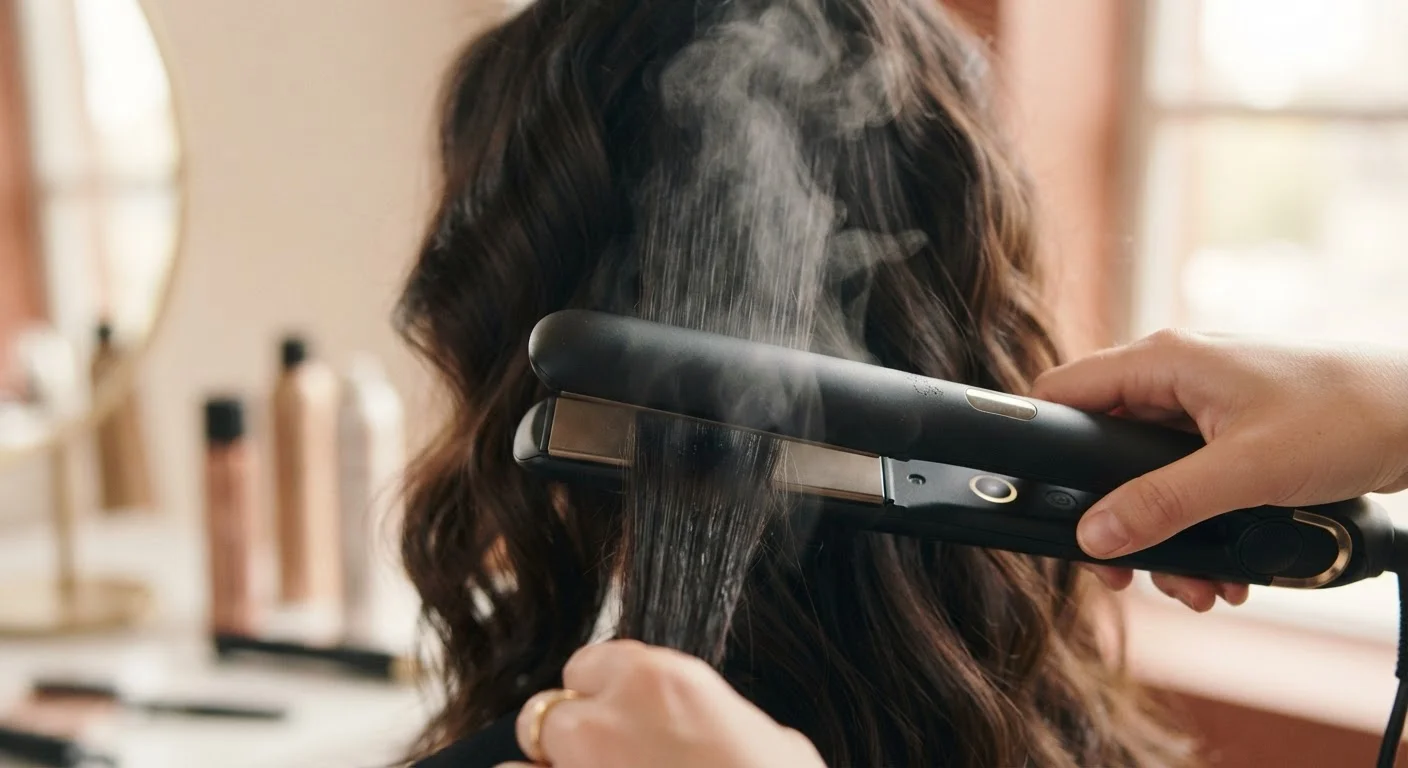
Photo credit: Infolagoon.com | Blogs To Rely On
In this article
Heat tools don't automatically destroy your hair. Understand what the research actually says about temperature, frequency, and protection.
Key Takeaways
- Heat styling does not automatically destroy hair — technique, temperature, and frequency matter most.
- Hair begins to sustain measurable damage at temperatures above approximately 300°F (150°C).
- Heat protectant products meaningfully reduce — but do not eliminate — thermal damage.
- Hair porosity and texture influence how heat is absorbed and how much protection is needed.
- Damage accumulates over time; occasional heat use on well-conditioned hair carries lower risk.
What Heat Actually Does to Hair
Your hair shaft is made up primarily of keratin — a fibrous protein organized in overlapping cuticle scales on the outside and a cortex underneath. When heat is applied, moisture inside the shaft converts to steam, cuticle scales lift, and at higher temperatures, the protein bonds within the cortex begin to break down. The degree of disruption depends on three key variables: temperature, exposure time, and the baseline condition of your hair.
Hair that is already chemically processed, highly porous, or mechanically stressed is working with a compromised structure — meaning it has less tolerance before noticeable damage occurs. Well-moisturized, unprocessed hair in good condition can tolerate moderate heat with far less consequence. Understanding this spectrum is more useful than treating heat as universally dangerous or harmlessly routine.
~300°F
Temperature where hair protein begins to degrade
Hair science research suggests measurable changes to the keratin structure start around 150°C (302°F), with damage accelerating significantly above that threshold.
2–3x
Higher cuticle damage risk without protectant
Laboratory comparisons of heat-styled hair samples suggest protectant-treated strands show notably less surface cuticle disruption at equivalent temperatures compared to unprotected strands.
65%+
American adults who use heat tools regularly
Consumer research on hair care habits consistently finds that a majority of U.S. adults use some form of heat styling device at least occasionally, making this a broadly relevant topic.
The Myths Worth Busting
Heat styling comes wrapped in a lot of conflicting advice — some grounded in real science, some rooted in exaggeration or oversimplification. The myth-fact breakdowns below address the most persistent misconceptions, drawing on what hair science research actually tells us rather than beauty folklore.
Myth
Using a flat iron or curling wand once will permanently fry your hair.
Fact
A single heat styling session is unlikely to cause lasting damage when reasonable temperatures and a heat protectant are used.
Hair damage from heat is largely a cumulative process. Research into hair fiber mechanics shows that occasional styling at moderate temperatures — generally below 300°F (150°C) — produces minimal structural disruption to the cortex or cuticle. Problems emerge with repeated exposure at high temperatures without recovery time, moisture replenishment, or protective products. One session is not the enemy; habitual misuse over time is.
Myth
Heat protectant sprays create a full barrier that prevents all heat damage.
Fact
Heat protectants reduce thermal stress but do not create a complete shield — they lower the risk, not eliminate it.
Most heat protectant formulas work by coating the hair shaft with film-forming agents — often silicones or polymers — that help distribute heat more evenly and slow moisture loss. Studies on these formulas confirm a meaningful reduction in surface damage at comparable temperatures, but no product fully insulates hair from sustained extreme heat. Think of a protectant as a significant safeguard, not a free pass to max out your tool's temperature dial.
Myth
Curly and coily hair is tougher, so it can handle more heat than straight hair.
Fact
Tighter curl patterns often have thinner cuticle layers and higher porosity, making them more — not less — vulnerable to heat damage.
Hair with naturally tighter coils tends to have more points of structural irregularity along the shaft, which can make it more susceptible to protein degradation from heat. Higher porosity (common in chemically processed or naturally coily hair) also means heat moves into the cortex more readily. Dermatology and trichology literature consistently notes that protective practices — lower temperatures, less frequent use, deep conditioning — are especially important for textured hair types. Check out our guide to breakage causes for more on how texture intersects with damage.
Myth
Air-drying is always safer than blow-drying.
Fact
Prolonged air-drying can cause osmotic swelling of the hair shaft — meaning extended wetness carries its own set of risks.
A commonly cited study in the Annals of Dermatology found that hair dried with a blow-dryer at a moderate distance and temperature showed less surface damage than hair left to air dry for extended periods, due to repeated swelling of the cortex from prolonged moisture exposure (a phenomenon called hygral fatigue). This doesn't mean you should always reach for the dryer — it means that low-to-medium heat, with movement and distance, can actually be gentler than you might assume. The ideal approach depends on your hair's porosity, condition, and how long it typically stays wet.
Myth
You can 'repair' heat-damaged hair with deep conditioning treatments.
Fact
Conditioning treatments improve the appearance and manageability of damaged hair but cannot reverse structural changes to the hair shaft.
Hair is not living tissue once it exits the scalp — it cannot biologically repair itself. Deep conditioners, protein treatments, and masks work by temporarily filling gaps in the cuticle, adding moisture to the cortex, and smoothing the surface. They make hair look and feel healthier and reduce the risk of further breakage. But if the internal protein bonds have been disrupted by heat, those structural changes remain. The good news is that consistent conditioning genuinely slows further deterioration and improves daily manageability while you grow out healthier strands. For the long game, scalp health is where lasting improvement begins.
It's also worth noting that other grooming habits layer onto heat-related stress. Everyday grooming patterns — like rough towel-drying or tight styling — can amplify the impact of heat tools even when the tools themselves are used responsibly.
Practical Guidelines for Safer Heat Styling
Science doesn't say "never use heat" — it says use it thoughtfully. A few evidence-informed habits make a real difference:
- Match temperature to hair type. Fine or chemically treated hair generally benefits from settings below 300°F; thicker, coarser, or naturally resistant hair may require up to 350°F for results — rarely more.
- Always apply a heat protectant to dry or mostly dry hair. Most protectants perform better on dry strands than soaking wet ones — read your product's instructions.
- Limit passes. Each pass of a flat iron or curling wand adds cumulative exposure. One or two deliberate passes beat six hurried ones.
- Space out sessions. Giving hair time to recover between heat sessions — and incorporating moisturizing or protein treatments in between — reduces cumulative wear.
- Inspect your tools. Worn or uneven heating plates create hot spots that concentrate damage in specific areas.
Heat Damage Is Cumulative, Not Instant
A single blowout is unlikely to cause visible damage on its own. The real risk comes from repeated high-heat exposure without adequate moisture, conditioning, or protective measures. If you notice increased breakage, dullness, or texture changes, it may reflect months of accumulated stress on the hair shaft — not just one session.
If you rely heavily on heat to manage your hair and are considering alternatives, protective styles offer a genuine break from thermal stress — though they come with their own considerations worth understanding before committing.
This article is for general informational purposes only and is not a substitute for professional hair care advice. Consult a licensed cosmetologist or trichologist if you have concerns about significant hair damage or loss.

Author
Style & Beauty Editorial Team
Style & Beauty Editorial Team is the collective byline for our editorial team and contributor network. Articles published under this byline or an editorial pen name are researched, written, and reviewed according to our editorial standards for clarity, consistency, and independence before publication.
View all articles →