
Your First Week With a New Puppy: Building Habits That Last
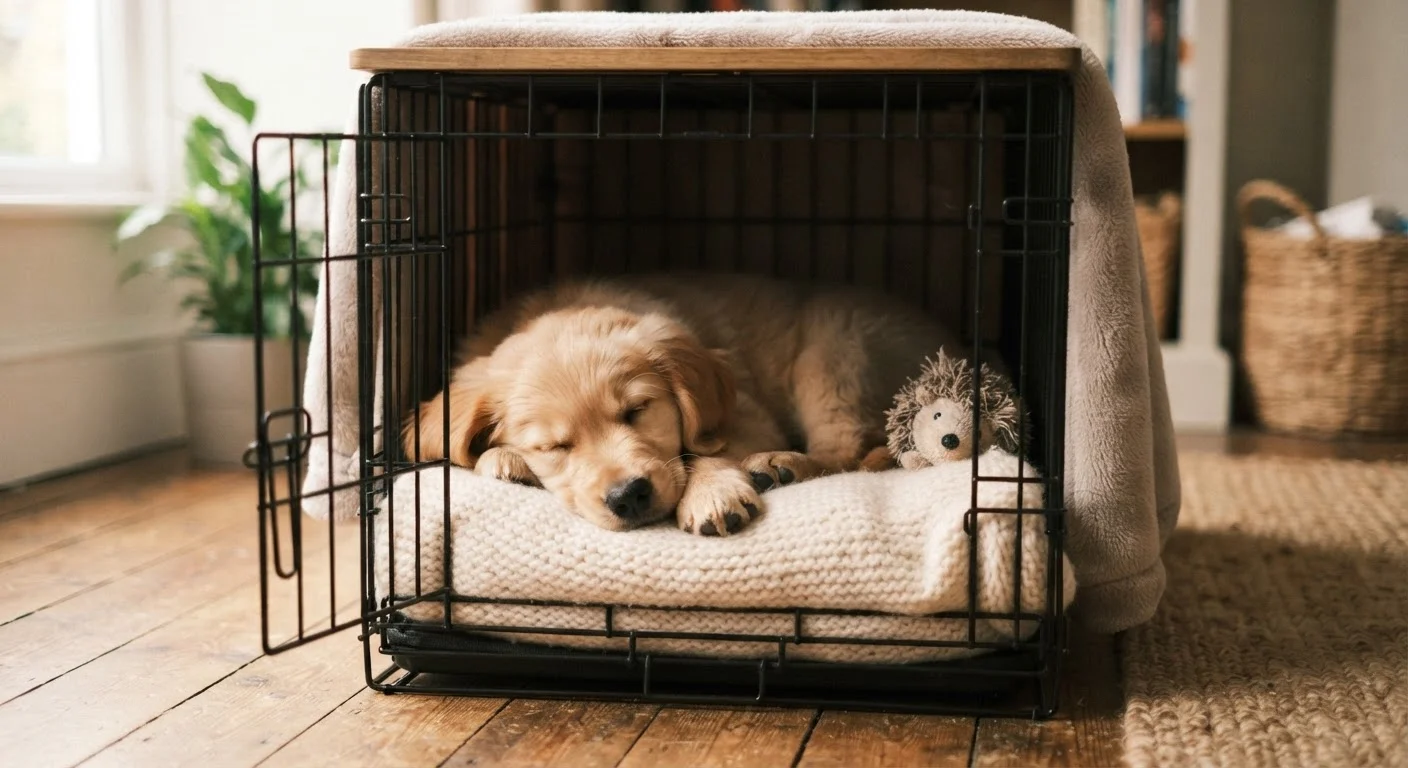
Photo credit: Infolagoon.com | Blogs To Rely On
In this article
The early days with a puppy set the tone for years of behavior. Learn what to prioritize in those first seven days to start on the right foot.
Key Takeaways
- Consistent routines for feeding, toileting, and sleep prevent confusion and speed up house-training.
- Positive reinforcement — rewarding desired behavior immediately — is the most effective and humane training approach.
- A crate introduced correctly becomes a safe den, not a punishment, and helps manage overnight behavior.
- Socialization during the first weeks of life has a lasting impact on temperament and confidence.
- Avoid overwhelming your puppy with visitors or new experiences in the very first days home.
- Schedule a veterinary appointment within the first week to establish a health baseline.
Why the First Week Matters So Much
The habits, associations, and routines a puppy forms in its earliest days at home tend to persist. This isn't about applying pressure — it's about understanding that puppies are always learning, whether or not you're intentionally teaching. Every interaction is data your puppy uses to build a picture of the world and its place in it.
Before your puppy even arrives, there's important groundwork to lay. Our article on what every new pet owner should know covers setup, supplies, and first-day preparation in detail.
Your Puppy Is Still Very Young
Most puppies arrive home between 8 and 12 weeks of age — a critical developmental window. Their brains are rapidly forming associations between experiences and emotions. Harsh corrections or overwhelming situations during this period can cause lasting anxiety. Prioritize calm, predictable, and positive interactions above all else.
The steps below aren't about perfection — they're about establishing a foundation of predictability, safety, and positive experience that supports everything that comes after.
What you will need
What You'll Need
Having the right tools in place before your puppy comes home reduces improvisation and keeps training consistent from the start.
Appropriately sized crate
Provides a safe, contained space for overnight sleep and unsupervised periods, supporting house-training.
Enzymatic cleaner
Neutralizes odor from accidents so the puppy is not drawn back to the same spot.
Soft-material collar and 6-foot leash
Used for supervised leash introduction and outdoor toilet trips.
Small, soft training treats
Used as immediate positive reinforcement during training moments throughout the day.
Puppy-safe chew toys
Redirect chewing behavior away from furniture and household items.
Baby gate or exercise pen
Limits unsupervised access to parts of the home, reducing accident and chewing opportunities.
Your First-Week Action Plan
Follow these steps in sequence across your puppy's first seven days. Some — like routine and crate conditioning — begin simultaneously from day one. Others, like formal command training, can start as early as day two or three once the puppy has had a chance to settle.
Introduce your puppy to its space calmly
On arrival day, resist the urge to invite friends over or take the puppy everywhere at once. Lead the puppy directly to the area you've designated as its space — sleeping zone, water bowl, and a few toys. Let it explore at its own pace without being passed around or overwhelmed.
If you're using a crate, leave the door open and place a treat or two just inside. Never force the puppy in. The goal on day one is simply: this place feels safe.
Establish a daily routine immediately
Puppies thrive on predictability. From day one, feed at the same times each day — typically three meals for puppies under 6 months — and take the puppy outside to toilet within 10–15 minutes of every meal, nap, and play session. Use the same outdoor spot each time.
When the puppy toilets outside, mark the behavior with a calm, consistent cue word and immediately offer a small treat. Consistency in the first week dramatically shortens the house-training timeline.
Begin crate conditioning with positive associations
For the first few nights, expect some whining — this is normal separation distress. Begin crate conditioning during the day when you're present. Feed meals near or inside the crate, toss treats in spontaneously, and let the puppy choose to enter.
Gradually close the door for very short intervals — seconds at first, then minutes — while you remain nearby and visible. Build duration slowly across several sessions rather than confining the puppy for long stretches before it's comfortable. Our guide to crate training covers the full progression and common missteps in detail.
Introduce basic commands using positive reinforcement
You don't need to wait until the puppy is older to start teaching. Simple commands like sit and come can begin in the first week using treat-lure techniques. Hold a treat at the puppy's nose, slowly move it back over its head — the hindquarters naturally lower. The moment it sits, say the cue word once, reward, and repeat.
Keep sessions to three to five minutes. Multiple short sessions across the day outperform single long sessions for young dogs. For a structured approach to foundational commands, see our guide to core commands.
Begin careful, controlled socialization
The window between 3 and 14 weeks is widely recognized by animal behaviorists as the primary socialization period. Gentle exposure to different sounds, surfaces, people, and — once vaccination allows — other vaccinated dogs builds resilience and reduces fear-based behavior later in life.
During the first week, keep this low-key: let the puppy hear household noises, meet calm adult family members, and explore different floor textures. Avoid dog parks or unvaccinated dogs until your vet clears it. Learn more about why this period matters in our article on socializing a young pet.
Set house rules and enforce them consistently from day one
Whatever you don't want the adult dog doing — jumping on furniture, mouthing hands, rushing through doors — address it now. It is far easier to prevent a habit than to undo one. Decide on rules before the puppy arrives and ensure everyone in the household applies them the same way.
When the puppy does something you want to discourage, redirect rather than punish. If it mouths your hand, offer a chew toy instead. If it jumps, turn your back and withhold attention until all four feet are on the floor, then reward immediately. Redirection paired with positive reinforcement is more effective and less stressful than correction-based methods for young puppies.
Short Sessions Work Best
Puppies have very short attention spans — three to five minutes of focused training is more productive than a 20-minute session that ends in frustration. End every session on a success, even if it means asking for something the puppy already knows well. Frequent, brief, upbeat repetitions build lasting habits faster than marathon drills.
If you're new to training entirely, our complete introduction to pet training provides foundational concepts that complement everything covered here.
Beyond Week One: Keeping the Momentum
The first week builds the scaffold; the months that follow fill it in. House-training typically solidifies between 4 and 6 months of age, though individual variation is significant. Command training deepens through repetition and gradually increasing distraction. Socialization should continue — in a controlled, positive way — throughout the first year.
Health is just as important as behavior during this period. Use our 30-day new pet health checklist alongside this guide to make sure your puppy's physical wellbeing keeps pace with its training progress.
Don't Skip the First Vet Visit
A veterinary check within the first week is not optional. Your puppy needs confirmation of vaccination status, a parasite screen, and a baseline health exam. See our guide to the first vet visit to know exactly what to prepare and ask.
Consistency, patience, and realistic expectations are the defining factors in how the first year unfolds. Puppies are not blank slates, and they are not adults — meeting them where they are developmentally, while holding firm on the habits that matter, is the core of effective early training.
This article is for general informational and educational purposes only and does not constitute veterinary or professional training advice. Consult a licensed veterinarian or certified animal behavior professional for guidance specific to your puppy's needs.

Author
Pets & Animals Editorial Team
Pets & Animals Editorial Team is the collective byline for our editorial team and contributor network. Articles published under this byline or an editorial pen name are researched, written, and reviewed according to our editorial standards for clarity, consistency, and independence before publication.
View all articles →