
Training Small Pets: Rabbits, Guinea Pigs, and Birds
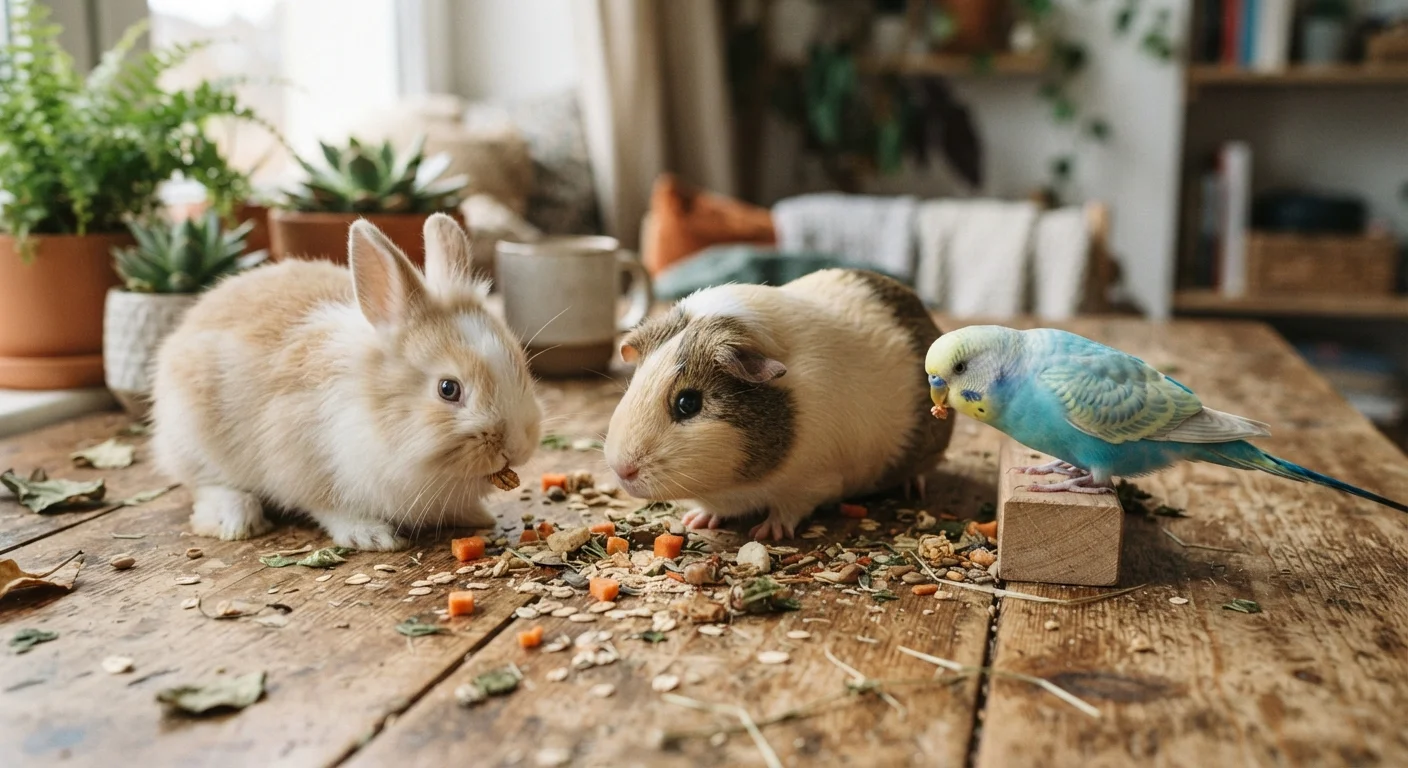
Photo credit: Infolagoon.com | Blogs To Rely On
In this article
Small animals are more trainable than most owners realize. This overview covers what's achievable with rabbits, guinea pigs, and common pet bird species.
Key Takeaways
- Rabbits, guinea pigs, and birds can all be trained using positive reinforcement techniques.
- Short, consistent training sessions yield better results than infrequent long ones.
- Each species has distinct learning tendencies that require adapted approaches.
- Food rewards are highly effective motivators, but timing and portion matter greatly.
- Reading your pet's body language helps you know when to push forward or pause.
Small Pets Are More Trainable Than You Think
When most people think about training a pet, dogs come to mind. But rabbits, guinea pigs, and common pet birds are all capable of learning cued behaviors — and doing so without coercion or stress. The key is understanding what each species responds to, and meeting them where they are rather than expecting canine-level compliance on a canine timeline.
For a broader orientation to reward-based training principles before diving into species-specific techniques, this foundational pet training guide covers the core concepts applicable across all pets. The six approaches below offer a practical framework for anyone working with small animals at home.
Use a Clicker for Precise Timing
A small handheld clicker can help bridge the gap between the moment an animal performs the correct behavior and the delivery of its treat. The click acts as a consistent, neutral signal that marks the exact behavior being rewarded. Clicker training is well-suited to rabbits and birds in particular, and can significantly sharpen the speed of learning once the animal understands the click means a reward is coming.
Six Techniques That Work Across These Species
Understand what each species is wired to do
Effective training starts with species literacy. Rabbits are prey animals with strong territorial instincts and keen spatial memory — they respond well to litter training and target stick exercises because these tap into natural foraging and navigation behaviors. Guinea pigs are highly social but also easily startled; they learn best in calm, familiar environments where trust has been established over time. Pet birds — particularly parakeets, cockatiels, and parrots — have evolved in social flocks and communicate through vocalization and gesture, which makes them remarkably receptive to cued behaviors and mimicry-based learning.
Recognizing these innate tendencies prevents frustration on both ends of the leash (or perch). Trying to train a guinea pig using fast-paced, high-energy cues will stress the animal rather than teach it. Matching your method to the animal's nature is the foundation of everything that follows.
Training works best when it aligns with what an animal is naturally wired to do.
Use positive reinforcement consistently
Across all three species, reward-based training is the most humane and effective approach. When a desired behavior is followed immediately by something the animal values — a small food treat, a gentle stroke, or verbal praise — the animal is more likely to repeat that behavior. The science behind this is well-established; for a deeper look, see what the research says about positive reinforcement in pet training.
For rabbits, small pieces of leafy greens or commercial herb treats work well. Guinea pigs respond to tiny fragments of bell pepper, apple, or cucumber. Birds often prize sunflower seeds or small nut pieces, though high-fat treats should be used sparingly. The reward must be delivered within two seconds of the behavior to create a clear association.
Rewards delivered within two seconds of a behavior create the clearest learning associations.
Keep sessions short and end on success
Small animals have limited attention spans and are physiologically sensitive to stress. Sessions of three to five minutes are typically ideal for rabbits and guinea pigs; birds can often sustain slightly longer sessions of five to ten minutes depending on temperament and species. What matters more than duration is frequency — two or three short daily sessions consistently outperform one long weekly attempt.
Always end each session with a behavior the animal already knows well, so it finishes on a positive note. This supports a sense of confidence in the animal and keeps motivation high for the next session. Pushing past signs of disorientation or disinterest risks associating the training space with anxiety, which can set progress back significantly.
Ending every session with a known success keeps motivation high for the next session.
Teach foundational behaviors before advanced ones
For rabbits, litter training is typically the first and most practical skill to develop — it builds on their natural instinct to designate latrine areas. From there, many owners successfully teach target training (touching a stick or hand with their nose), coming when called, and even simple agility behaviors like jumping small hurdles.
Guinea pigs can learn to come to a specific sound, stand on a small platform, or navigate a simple maze. These are less about commands and more about pattern recognition and environmental familiarity. Birds can progress from stepping up onto a hand (a fundamental safety behavior) to station training, turning around on cue, and eventually retrieving objects or mimicking words. Build each new behavior on a stable foundation rather than skipping ahead — this introduction to pet training for new owners outlines that progression clearly.
Litter training and step-up cues are the practical starting points for their respective species.
Read body language to guide your pace
A rabbit that thumps its hind feet, flattens its ears, or retreats to a corner is communicating stress — not stubbornness. A guinea pig that vocalizes in short, rapid squeaks (called chutting) is generally relaxed, whereas tooth chattering signals agitation. A bird that flattens its feathers and leans away is uncomfortable; one that leans in and vocalizes softly is engaged. Misreading these signals and continuing to train through them leads to negative associations and can damage the trust that makes training possible at all.
Learning to read these cues in context makes you a more responsive trainer. For a comprehensive breakdown of what pets communicate physically during training, understanding pet body language during training sessions offers useful guidance across multiple species.
Continuing to train through visible stress signals risks breaking the trust that makes learning possible.
Be patient with timelines and individual variation
No two animals learn at the same pace, even within the same species. A rescue rabbit that spent its early months in a cage with little handling may need weeks of gentle desensitization before it associates human presence with anything positive — let alone responds to a cue. A hand-raised cockatiel may pick up step-up training in a single session. Individual history, temperament, age, and health all factor into learning speed.
Avoid measuring progress against arbitrary timelines or comparison with other owners' pets. If progress stalls, revisit whether the reward is motivating enough, whether sessions are too long, or whether a health issue might be affecting the animal's engagement. A veterinarian familiar with exotic or small animal care can be a valuable resource when behavior seems to shift unexpectedly.
Individual history, temperament, and health all shape how quickly a small pet learns.
Training Does Not Replace Veterinary Care
Changes in a pet's responsiveness or behavior can sometimes indicate an underlying health issue rather than a training problem. If your rabbit, guinea pig, or bird shows sudden disinterest in food rewards, uncharacteristic lethargy, or behavioral regression, consult a veterinarian — ideally one experienced with small or exotic animals. This article provides general educational information and is not a substitute for professional veterinary advice.
Building a Training Relationship That Lasts
Training small pets is less about control and more about communication. The goal is an animal that feels safe enough to engage, motivated enough to try, and understood well enough that you can respond to what it's telling you. That relationship — built session by session with consistency and patience — also tends to improve overall welfare, reduce stress-related behaviors, and deepen the bond between owner and animal.
Whether you're working with a first-time guinea pig or an experienced parrot, the same principles apply: understand the animal's nature, reward clearly, keep it short, and pay attention. For guidance on how those same principles shift when working with older animals, training older pets requires some thoughtful adjustments.
This article is for general informational purposes only and does not constitute veterinary or professional animal behavior advice. Always consult a qualified veterinarian or certified animal behaviorist for concerns specific to your pet's health or behavior.

Author
Pets & Animals Editorial Team
Pets & Animals Editorial Team is the collective byline for our editorial team and contributor network. Articles published under this byline or an editorial pen name are researched, written, and reviewed according to our editorial standards for clarity, consistency, and independence before publication.
View all articles →