
What to Keep in a Pet First Aid Kit at Home
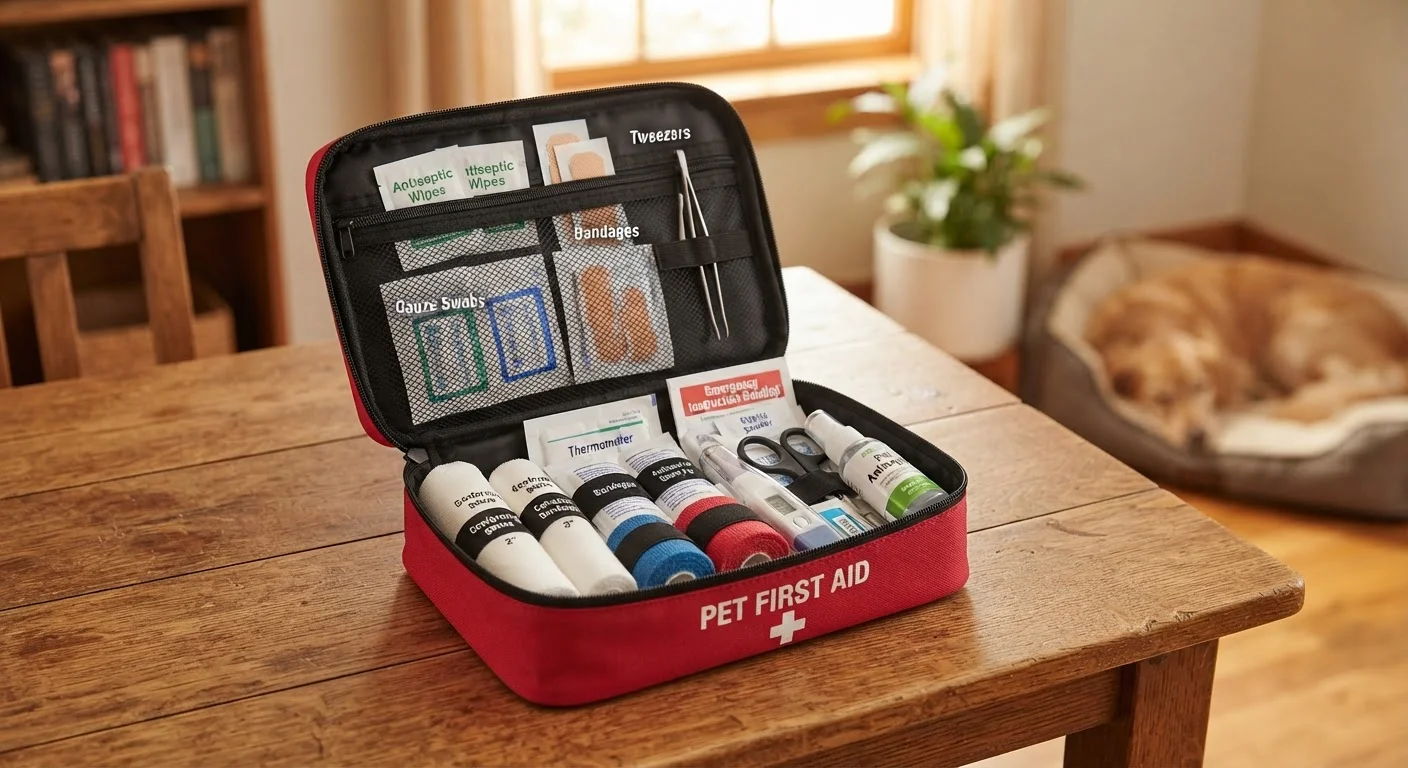
Photo credit: Infolagoon.com | Blogs To Rely On
In this article
A well-stocked first aid kit can help in minor emergencies before a vet is reached. Here's what general guidance recommends including.
Key Takeaways
- A home pet first aid kit is not a substitute for veterinary care — it buys critical time.
- Wound care, temperature monitoring, and restraint supplies form the core of any kit.
- Some human medications are toxic to pets; never include them without veterinary guidance.
- Review and restock your kit every six months to keep supplies current and unexpired.
- Keep your veterinarian's number and the ASPCA Animal Poison Control hotline visible near the kit.
Why Every Pet Owner Needs a First Aid Kit
Accidents happen when least expected — a dog cuts a paw on broken glass, a cat pulls a claw, or a pet swallows something it shouldn't. In those moments, having the right supplies within reach can reduce pain, slow bleeding, and stabilize your animal until you reach professional care.
A pet first aid kit is not a replacement for your veterinarian. It is a bridge. Knowing what to stock — and why — is part of the broader foundation of responsible pet ownership. If you're still building that foundation, our guide for new pet owners covers the essentials before your pet even walks through the door.
The checklist below draws on general guidance from veterinary organizations. Tailor it to your specific pet (dog, cat, rabbit, etc.) and always confirm product suitability with your vet.
Waterproof storage container
Keeps all supplies organized, dry, and easy to carry to an emergency.
Digital rectal thermometer
Monitors your pet's temperature to detect fever or hypothermia during an emergency.
Self-adhesive bandage wrap
Secures wound dressings without sticking to your pet's coat or skin.
Sterile saline wound wash
Flushes debris and bacteria from cuts and abrasions before bandaging.
Pet first aid reference booklet
Provides step-by-step guidance for common emergencies when you cannot reach a vet immediately.
Blunt-tipped scissors
Safely cuts gauze, bandages, and tape without risking cuts to your pet's skin.
What to Include: The Full Checklist
Organize your kit in a clearly labeled, waterproof container stored somewhere accessible to adults but out of reach of children and pets. Group items by function so you can find what you need quickly under stress.
Wound Care & Bleeding Control
Monitoring & Examination Tools
Handling & Restraint Supplies
Cleaning & Antiseptic Supplies
Comfort & Stabilization Items
Reference & Record-Keeping
Never Use Human Medications Without Vet Approval
Common over-the-counter human medications — including ibuprofen, acetaminophen, and certain antihistamines — can be severely toxic or fatal to dogs and cats. Do not add any medication to your pet's first aid kit unless a licensed veterinarian has explicitly confirmed it is safe and appropriate for your specific animal. When in doubt, call your vet before administering anything.
Once your kit is assembled, pair it with a financial safety net for larger emergencies. Our overview of pet insurance vs. a dedicated savings fund can help you think through your options.
Maintaining Your Kit and Knowing When to Use It
Assembling the kit is only the first step. Check expiration dates on antiseptics, medications, and saline every six months — set a calendar reminder. Replace anything that has expired, dried out, or been used.
A First Aid Kit Does Not Replace Emergency Care
Home first aid measures are meant to stabilize your pet, not to treat serious injuries or illness definitively. If your pet is bleeding heavily, unconscious, having difficulty breathing, or has ingested a toxin, contact an emergency veterinary clinic immediately. Do not delay professional care while attempting home treatment.
Familiarize yourself with basic pet first aid techniques before an emergency occurs. Many local humane societies and veterinary clinics offer pet first aid courses. Also keep the following numbers on or near your kit:
- Your primary veterinarian's phone number and after-hours line
- The nearest emergency animal hospital
- ASPCA Animal Poison Control Center (a fee may apply for calls)
For more on what to expect when you do reach the clinic, see our article on preparing for a vet visit.
This article is for general informational purposes only and does not constitute veterinary medical advice. Always consult a licensed veterinarian for guidance specific to your pet's health needs.

Author
Pets & Animals Editorial Team
Pets & Animals Editorial Team is the collective byline for our editorial team and contributor network. Articles published under this byline or an editorial pen name are researched, written, and reviewed according to our editorial standards for clarity, consistency, and independence before publication.
View all articles →