
Debt Consolidation: What It Is, How It Works, and When It Makes Sense
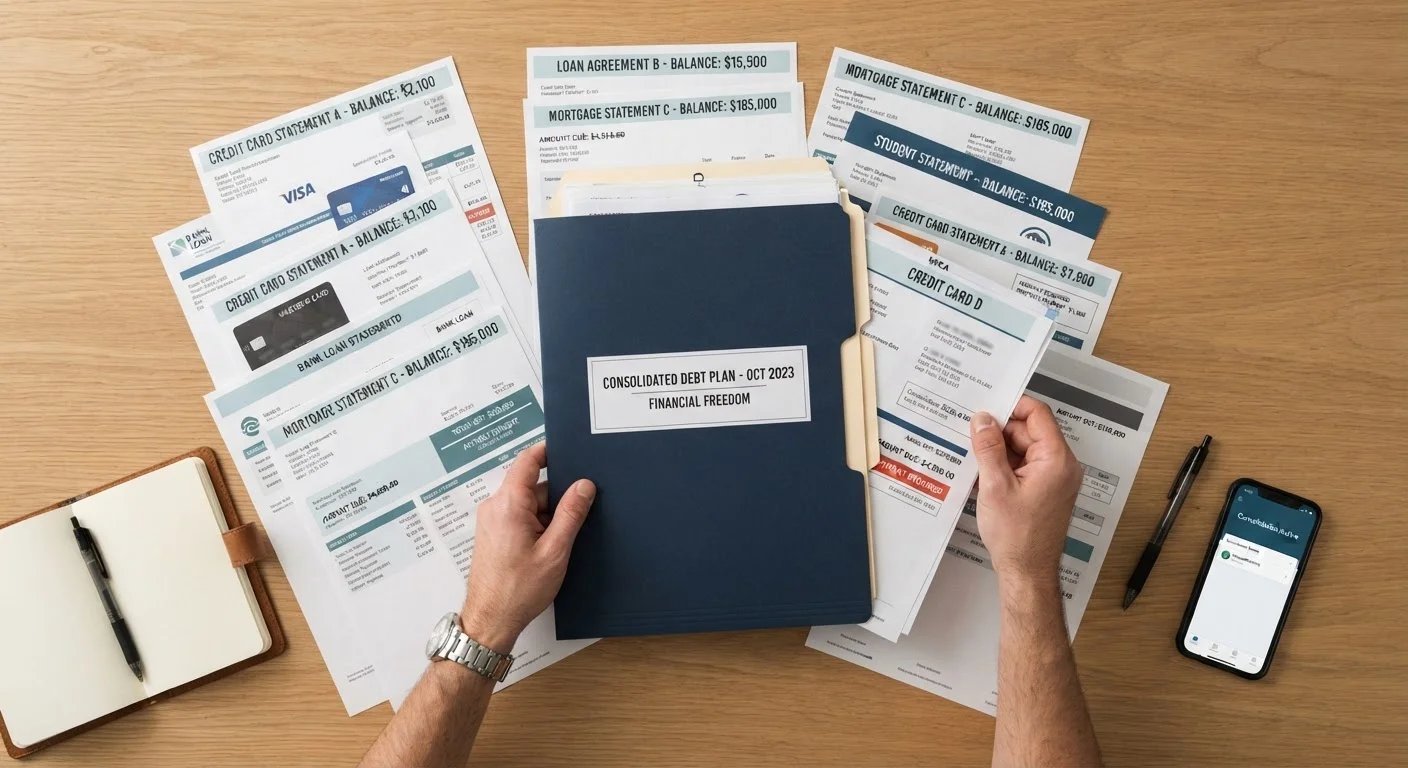
Photo credit: Infolagoon.com | Blogs To Rely On
In this article
Debt consolidation combines multiple debts into one. This guide covers the mechanics, common methods, and trade-offs to consider before pursuing it.
Key Takeaways
- Debt consolidation combines multiple balances into one payment, ideally at a lower interest rate.
- Common methods include personal loans, balance transfer cards, and home equity products.
- Consolidation can reduce monthly payments but may extend your repayment timeline.
- Your credit score significantly affects the rates you qualify for.
- Consolidation addresses symptoms — not the underlying spending habits — without behavioral change.
- Always consult a licensed financial professional before making major debt decisions.
What Is Debt Consolidation?
Debt consolidation is the process of combining two or more existing debts — such as credit card balances, medical bills, or personal loans — into a single new debt. The goal is typically to simplify repayment and, ideally, to secure a lower interest rate than what you're currently paying across your various accounts.
It's important to understand that consolidation does not eliminate debt. It restructures it. The total amount owed remains the same; what changes is how that debt is organized, who you owe it to, and at what rate. Understanding how interest accumulates over time is essential context before evaluating whether consolidation is worth pursuing.
How Debt Consolidation Works
The mechanics are straightforward: you obtain a new financial product — a loan, a line of credit, or a new credit account — and use the funds to pay off your existing balances. Going forward, you make a single monthly payment toward the consolidated debt instead of managing multiple due dates and minimum payments.
The potential financial benefit hinges entirely on the interest rate of the new consolidated debt compared to the weighted average rate of your existing debts. If the new rate is meaningfully lower, you may pay less in total interest over the life of the debt. If the rate is similar or higher, consolidation may only add complexity or extend your repayment period.
$1.12T
U.S. credit card debt outstanding
According to the Federal Reserve Bank of New York, total U.S. credit card balances reached approximately $1.12 trillion as of early 2024.
21%+
Average credit card APR
The Federal Reserve reported that average credit card interest rates exceeded 21% in 2023, making high-interest debt increasingly costly to carry.
3–5 years
Typical debt management plan duration
Nonprofit credit counseling agencies generally structure debt management plans over a three-to-five year repayment period.
Repayment term also matters. A longer term reduces monthly payment size but increases total interest paid. A shorter term costs less overall but requires higher monthly payments. This trade-off is central to evaluating any consolidation offer.
Common Methods of Consolidation
There are several widely used approaches to consolidating debt, each with distinct eligibility requirements, costs, and risks:
- Personal loans: An unsecured personal loan from a bank, credit union, or online lender can pay off multiple balances. Fixed interest rates and set repayment terms make budgeting predictable. The rate you receive depends largely on your credit profile.
- Balance transfer credit cards: Some credit cards offer low or 0% introductory APR periods for transferred balances. This can be effective for paying down high-interest credit card debt quickly — if the balance is paid before the promotional period ends. Transfer fees (typically 3%–5%) apply.
- Home equity loans or lines of credit (HELOCs): Homeowners may borrow against their home's equity at lower interest rates. However, this converts unsecured debt into secured debt — meaning your home becomes collateral.
- Debt management plans (DMPs): Offered through nonprofit credit counseling agencies, DMPs negotiate reduced interest rates with creditors and set up a structured repayment plan, usually over three to five years.
For a side-by-side comparison of personal loans and balance transfer cards specifically, see our guide on personal loans vs. balance transfer cards for paying off debt.
Before applying for any consolidation loan, get pre-qualified with multiple lenders using soft credit inquiries — this lets you compare realistic rate offers without damaging your credit score.
Hard inquiries from multiple applications in a short window can compound the negative credit score impact, whereas soft-pull pre-qualification provides rate estimates with no score effect.
When evaluating a balance transfer offer, divide the total balance by the number of months in the promotional period — that's the minimum monthly payment needed to retire the debt before the standard rate kicks in.
Many consumers underestimate the payment required to fully use a 0% APR window, and residual balances revert to high standard rates that can negate earlier savings.
When Debt Consolidation Makes Sense
Consolidation is most likely to be beneficial when several conditions align:
- You have multiple high-interest debts — particularly credit card balances — that you're struggling to manage across different due dates.
- You qualify for a consolidation product with a meaningfully lower interest rate than your current average.
- You have sufficient income and discipline to make consistent payments on the new consolidated debt.
- You are committed to not accumulating new high-interest debt once existing balances are paid off.
Consolidation is generally less effective if your credit score limits you to rates comparable to your existing debts, or if the root cause of the debt is a spending pattern that hasn't changed. In those cases, building a workable monthly budget may be a more foundational first step.
Match the Method to Your Credit Profile
Not all consolidation tools are equally accessible. Personal loans at favorable rates generally require a credit score of 670 or above, while balance transfer cards with 0% promotional periods often require good-to-excellent credit. If your score is lower, a nonprofit debt management plan may be a more realistic starting point than a new loan product.
Potential Risks and Trade-Offs
Debt consolidation is not a universally appropriate solution, and several risks deserve careful attention:
Avoid Converting Unsecured Debt to Secured Carelessly
Using a home equity loan or HELOC to pay off credit card debt may lower your interest rate, but it turns formerly unsecured debt into debt backed by your home. If you fall behind on payments, foreclosure becomes a risk. This trade-off is significant and should be evaluated carefully with a qualified financial professional before proceeding.
- Extended repayment timeline: Lower monthly payments often come with longer loan terms, which can mean paying more total interest even at a reduced rate.
- Secured debt risk: Using home equity to consolidate unsecured debt puts your home at risk if you default — a significant and often underappreciated trade-off.
- Credit score impact: Applying for new credit triggers a hard inquiry, which can temporarily lower your score. Opening a new account also changes your average account age.
- Fee exposure: Origination fees, balance transfer fees, or prepayment penalties can erode the financial benefit of consolidating.
- Behavioral risk: Paying off credit cards via consolidation may free up available credit — increasing the temptation to accumulate new balances.
If you're weighing consolidation against other structured repayment approaches, the debt avalanche vs. debt snowball comparison outlines two disciplined DIY alternatives that may suit your situation.
Steps to Take Before You Consolidate
Before pursuing any consolidation product, consider these preparatory steps:
- List all debts: Document each balance, interest rate, minimum payment, and remaining term. This creates a clear picture of your current total cost of debt.
- Check your credit score: Your score directly determines the rates you'll be offered. Knowing where you stand helps you evaluate whether available offers represent a genuine improvement.
- Compare total cost, not just monthly payment: Use the annual percentage rate (APR) and loan term to calculate total interest paid under each scenario.
- Review fees carefully: Factor in origination fees, transfer fees, or closing costs before concluding that a lower rate translates to savings.
- Address the spending pattern: Consolidation works best alongside changes to the habits that created the debt. Consider pairing it with a plan from the Saving & Goals hub to build financial momentum after payoff.
Nonprofit Credit Counseling Is a Free Resource
If you're uncertain where to start, nonprofit credit counseling agencies — many affiliated with the National Foundation for Credit Counseling (NFCC) — offer free or low-cost counseling sessions. A certified counselor can review your full financial picture and help you determine whether consolidation, a debt management plan, or another approach is most appropriate for your situation.
This article is for general informational purposes only and does not constitute personalized financial, legal, or tax advice. Debt situations vary widely by individual. Consult a licensed financial adviser, credit counselor, or attorney before making decisions about your own debt.

Author
Money & Finance Editorial Team
Money & Finance Editorial Team is the collective byline for our editorial team and contributor network. Articles published under this byline or an editorial pen name are researched, written, and reviewed according to our editorial standards for clarity, consistency, and independence before publication.
View all articles →