
Debt Avalanche vs. Debt Snowball: Two Repayment Strategies Worth Understanding
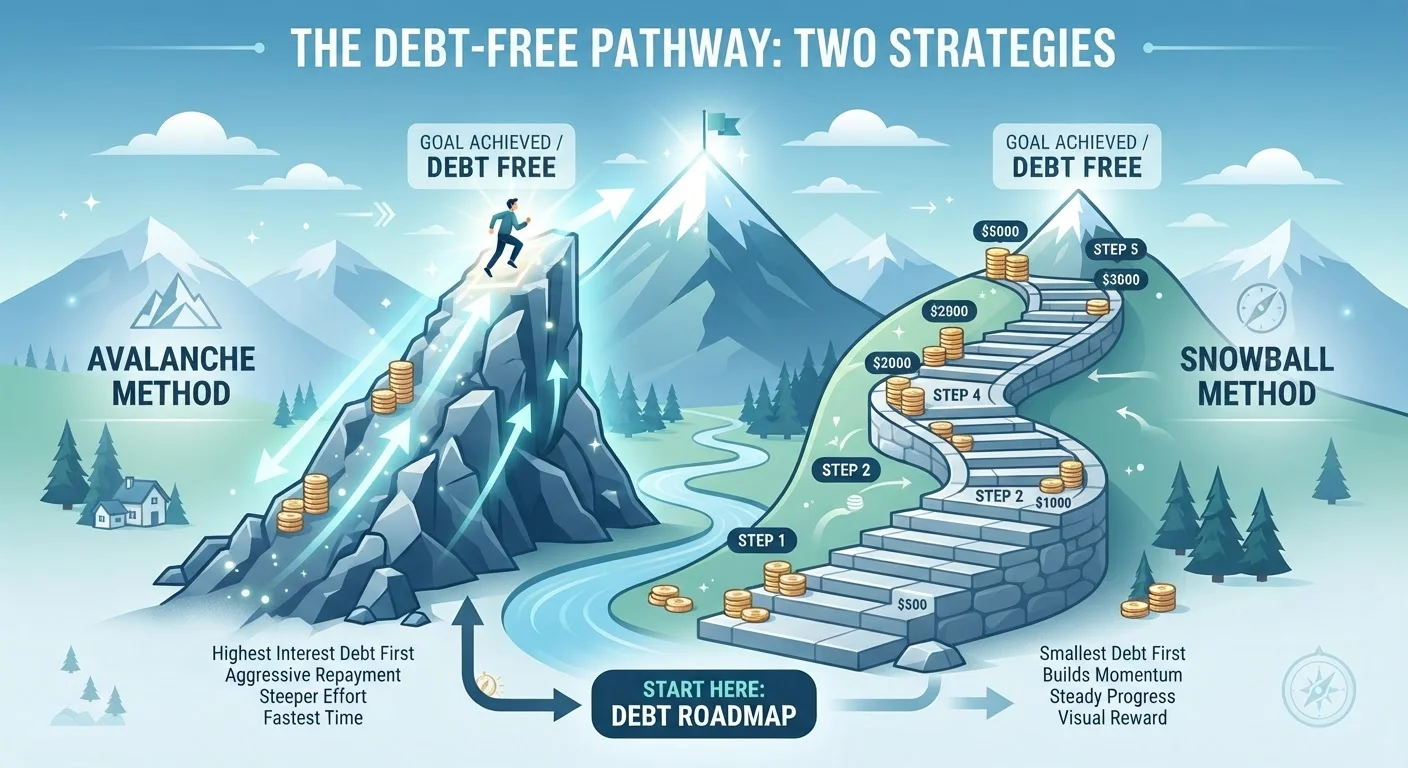
Photo credit: Infolagoon.com | Blogs To Rely On
In this article
Compare two widely used debt repayment approaches—avalanche and snowball—to understand how each works and which situations they suit best.
Key Takeaways
- The debt avalanche targets the highest-interest debt first, reducing total interest paid over time.
- The debt snowball targets the smallest balance first, generating early wins that can sustain motivation.
- Both methods require paying minimums on all debts while directing extra funds to one priority account.
- The mathematically superior strategy is only effective if you stick with it — consistency matters most.
- Your financial behavior and psychological makeup are just as important as the numbers when choosing a method.
- Either strategy can be combined with tools like budgeting or debt consolidation for greater impact.
How Each Strategy Works
Both the debt avalanche and debt snowball share the same mechanical foundation: you pay the minimum required on every debt each month, then direct any extra money toward one designated priority account. The strategies differ only in how that priority account is selected.
With the debt avalanche, you rank your debts by interest rate and focus extra payments on the account carrying the highest rate first. Once that balance reaches zero, you roll its payment amount toward the next-highest-rate debt, and so on. Because you're neutralizing the most expensive debt first, less interest accrues across your total balance over time.
With the debt snowball, you rank debts by outstanding balance and focus extra payments on the smallest balance first, regardless of interest rate. Paying off a small account entirely — even one with a modest rate — frees up a payment you can then add to the next-smallest debt. This creates a growing payment pool, or "snowball," as each account is eliminated.
Before choosing either approach, it helps to have a clear picture of what you owe. Understanding secured versus unsecured debt is a useful starting point, since the type of debt you carry can influence prioritization decisions.
| Criterion | Debt Avalanche | Debt Snowball |
|---|---|---|
| Priority order | Highest interest rate first | Smallest balance first |
| Total interest paid | Lower (mathematically optimal) | Potentially higher |
| Time to first payoff | Longer if high-rate debt is large | Shorter — small balances clear faster |
| Motivational structure | Delayed visible milestones | Frequent early wins |
| Best conditions | Wide spread between interest rates | Many small accounts or similar rates |
| Mathematical efficiency | Higher | Lower on average |
| Behavioral adherence support | Lower | Higher |
The Real-World Trade-Offs
The avalanche method has a clear mathematical edge. By reducing the highest-interest balances first, you limit the total amount of interest that compounds against you. If you have a credit card at 24% APR and a personal loan at 9% APR, every dollar applied to the credit card saves more than twice as much in future interest as a dollar applied to the loan. Over a multi-year repayment plan, that difference can add up to hundreds or even thousands of dollars — money you keep instead of paying to a lender.
The snowball's advantage is behavioral, not mathematical. Behavioral economics research has documented that people are often more likely to maintain habits when they see clear, frequent evidence of progress. Eliminating a debt account — even a small one — provides a sense of closure that can reinforce commitment to the overall plan. For borrowers who have previously abandoned repayment attempts, that psychological feedback may be worth more in practice than the mathematical savings on paper.
Neither approach is inherently superior for every person. A borrower who abandons the avalanche after six months has saved less than someone who completes the snowball over three years. The best strategy is the one you will actually follow consistently. For further context on how interest accumulates if you do nothing, see the lifetime cost of carrying debt.
~$6,500
Average American credit card balance
According to Federal Reserve consumer credit data, average revolving credit balances have remained in this range in recent years, underscoring why interest rate management matters.
20%+
Typical credit card APR in the U.S.
The Federal Reserve tracks average credit card interest rates; rates have exceeded 20% APR on accounts assessed interest in recent reporting periods.
3–5x
Potential interest cost multiplier on minimum payments
Consumer Financial Protection Bureau educational materials illustrate how paying only minimums on high-rate debt can result in total repayment costs several times the original balance.
Making Your Choice and Getting Started
Start by listing all your debts with their balances, interest rates, and minimum payments. This single step clarifies which method aligns with your situation. If your highest-interest debt also happens to be your smallest balance, both methods point to the same account — making the choice easy. If they diverge significantly, consider your own history with financial follow-through honestly.
Once you've chosen a method, the next practical challenge is finding the extra money to apply. A structured approach to monthly budgeting can help identify spending that can be redirected toward debt. Similarly, having a foundation in savings and financial goals ensures you're not derailing emergency preparedness while repaying debt.
Some borrowers also explore debt consolidation as a complementary step — combining multiple debts into a single account, potentially at a lower rate, before applying either the avalanche or snowball to the consolidated balance. Others evaluate personal loans versus balance transfer cards for similar reasons.
Both Methods Require a Budget Foundation
Neither the avalanche nor the snowball works without a consistent source of extra money to apply each month. If your income barely covers minimum payments, focus first on reducing expenses or increasing income before committing to either strategy. Even an additional $25–$50 per month directed to one account creates meaningful progress over time, but the key is sustaining that contribution reliably.
This article is for general informational and educational purposes only and does not constitute personalized financial, legal, or tax advice. Consult a qualified financial professional before making decisions about your specific debt situation.

Author
Money & Finance Editorial Team
Money & Finance Editorial Team is the collective byline for our editorial team and contributor network. Articles published under this byline or an editorial pen name are researched, written, and reviewed according to our editorial standards for clarity, consistency, and independence before publication.
View all articles →