
Paper vs. Digital Organization: Finding the Right System for Your Household
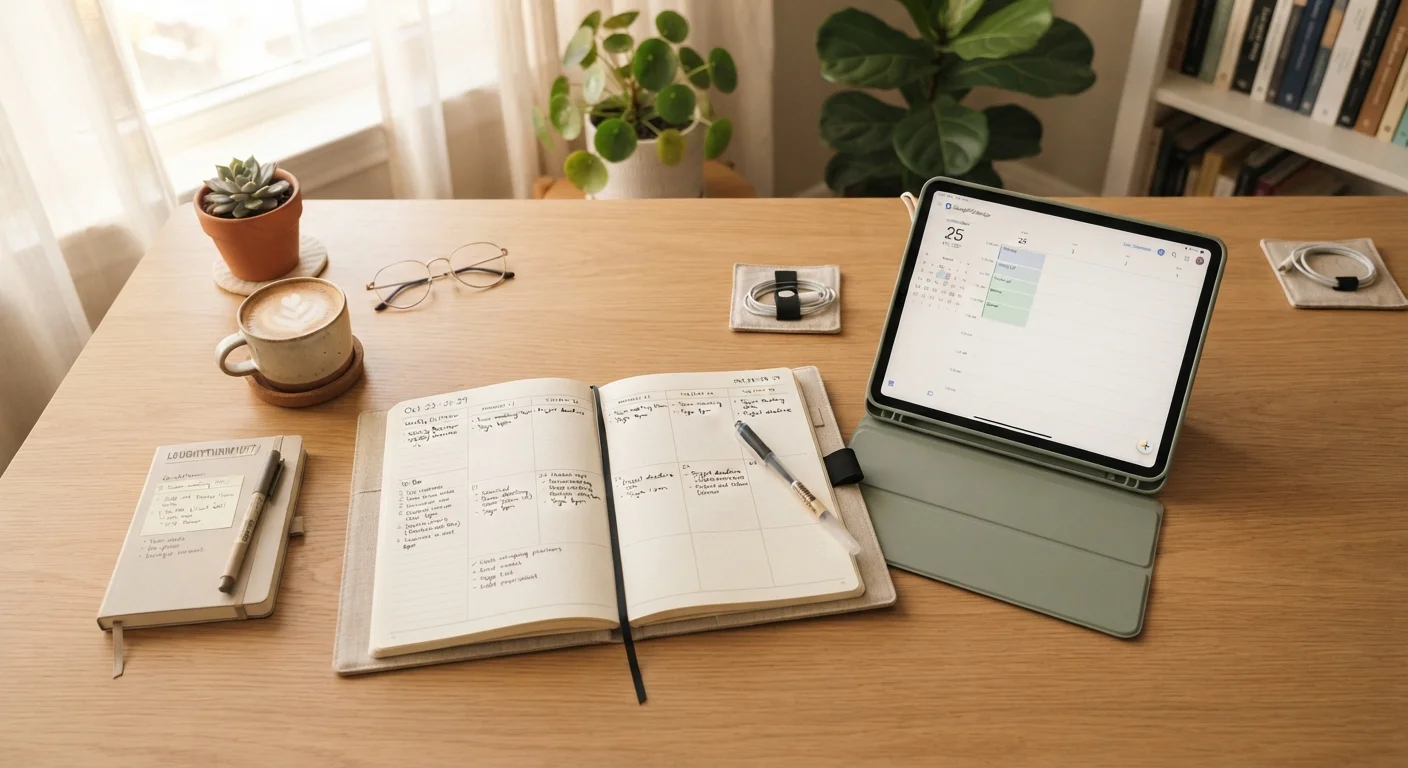
Photo credit: Infolagoon.com | Blogs To Rely On
In this article
Paper planners and digital tools each have real trade-offs for managing household information. See how they compare before committing to one.
Key Takeaways
- Paper systems offer tactile engagement and require no devices, passwords, or internet access.
- Digital tools excel at search, reminders, and sharing information across multiple household members.
- Hybrid approaches — using both paper and digital — work well for many households.
- The most effective system is the one your household will actually use consistently.
- Neither approach is universally superior; your lifestyle and household size matter most.
Why Your Organization Method Matters
Household organization isn't just about where you store things — it's also about how you track information. Appointments, grocery lists, maintenance schedules, school forms, bill due dates: every household generates a steady stream of details that need somewhere to live.
The question isn't whether to organize, but how. Paper planners and digital tools represent two fundamentally different approaches, each with genuine strengths and real limitations. Choosing between them — or combining them — can mean the difference between a system that runs on autopilot and one that slowly gets abandoned. If you're also working through the physical clutter side of home organization, see our room-by-room decluttering guide for a practical starting point.
The Case for Paper
Paper-based systems — planners, wall calendars, binders, index cards — have a staying power that digital tools haven't displaced. Here's why many households still swear by them:
- No login required. Paper never crashes, loses a password, or runs out of battery. It's always accessible.
- Writing aids memory. Research in cognitive science consistently suggests that handwriting information tends to improve retention compared to typing. For appointments and to-do lists, this can be a real advantage.
- Keeps screens out of certain spaces. A paper planner on the kitchen counter doesn't pull you into social media or notifications.
- Works for everyone in the household. Young children, older family members, and anyone uncomfortable with technology can all read a paper list.
The main drawbacks are equally real: paper can be lost or damaged, it doesn't send reminders, and sharing information with someone across town requires a photo or a phone call.
Start Simple Before You Invest
Before buying an elaborate planner system or signing up for a suite of apps, spend two weeks with what you already have — a notebook or your phone's default calendar. This low-stakes trial reveals what information you actually need to track and which format feels natural. You can always scale up from there.
The Case for Digital
Digital tools — calendar apps, note-taking platforms, task managers, shared cloud documents — offer capabilities paper simply can't match:
- Instant sharing. A shared grocery list or household calendar updates in real time for everyone with access.
- Automated reminders. You don't have to remember to check; the system prompts you.
- Searchability. Finding a warranty date or a doctor's contact from two years ago takes seconds rather than a trip to the filing cabinet.
- Backup and redundancy. Cloud storage means a spilled cup of coffee doesn't erase your records.
Digital organization does require some setup investment and depends on everyone in the household being willing to use the same tools. For multi-person households navigating different habits, our guide on organizing shared spaces addresses those coordination challenges directly.
| Paper System | Digital System | |
|---|---|---|
| Accessibility | Always available, no power needed | Requires device and often internet |
| Sharing with others | Manual (photo, verbal) | Real-time, automatic sync |
| Reminders & alerts | None built-in | Automated reminders available |
| Searchability | Manual browsing only | Instant keyword search |
| Risk of loss | Loss, damage, or destruction | Backed up to cloud |
| Tech skill required | None | Moderate setup and maintenance |
| Household inclusivity | Works for all ages | May exclude less tech-comfortable members |
The Hybrid Approach: Using Both
Most organized households don't pick a single system and stick to it rigidly — they layer tools. A common pattern is to use paper for personal daily planning (morning routines, daily to-do lists) and digital tools for shared household information (family calendar, recurring bills, maintenance logs).
This hybrid approach works because it plays to each format's strengths without forcing you to abandon what's working. The key is being intentional: define which system owns which type of information, so you're not duplicating effort or hunting across both. For a deeper look at frameworks that hold up over time, see our article on organizing systems that last.
Avoid Maintaining Two Competing Systems
A hybrid approach works well when each system has a clear, separate role. Problems arise when the same type of information lives in both places — for example, tracking appointments in a paper planner and a shared app simultaneously. This creates confusion about which version is current and often leads to both systems being abandoned. Assign ownership clearly from the start.
How to Choose What Works for Your Household
Before committing to a system, ask a few practical questions:
- How many people need access? A solo adult can run entirely on paper. A household of four with overlapping schedules will likely benefit from at least some shared digital tool.
- What's your relationship with screens? If you already feel overstimulated by devices, adding another app may create more friction than it solves.
- What have you actually stuck with before? The fanciest system means nothing if you stop using it in three weeks.
- What information do you need to find quickly? Records, receipts, and contacts are far easier to retrieve digitally. Daily routines and short-term plans often work better on paper.
If financial tracking is also part of your household organization goals, the same logic applies there — see how different approaches compare in our article on budgeting methods.

Author
Home & Living Editorial Team
Home & Living Editorial Team is the collective byline for our editorial team and contributor network. Articles published under this byline or an editorial pen name are researched, written, and reviewed according to our editorial standards for clarity, consistency, and independence before publication.
View all articles →