
Tile vs. Luxury Vinyl Plank: Choosing a Floor That Fits Your Life
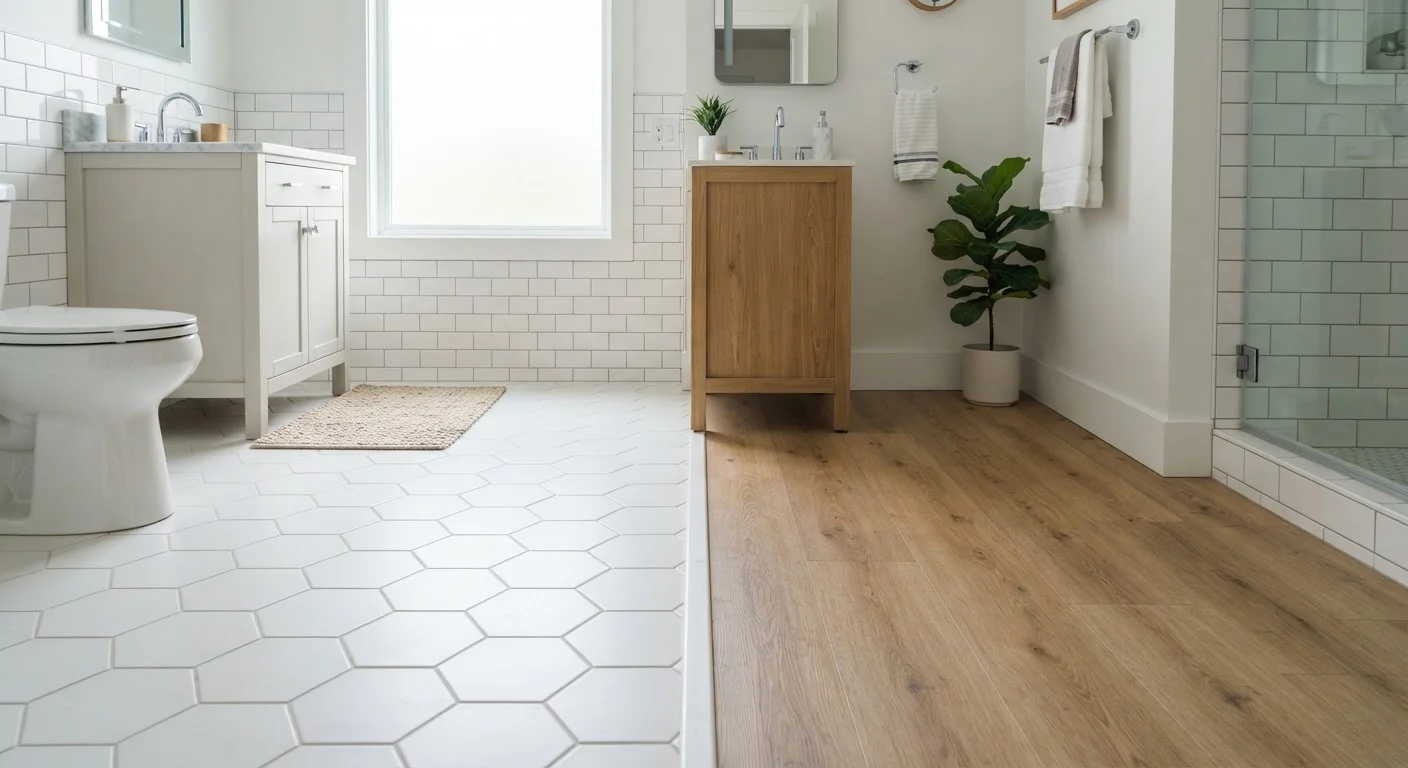
Photo credit: Infolagoon.com | Blogs To Rely On
In this article
Tile and luxury vinyl plank both handle moisture well, but they differ in cost, comfort, and installation complexity. Here's what sets them apart.
Key Takeaways
- Tile is harder, longer-lasting, and more heat-resistant, but cold and unforgiving underfoot.
- Luxury vinyl plank installs faster, costs less upfront, and feels warmer and quieter than tile.
- Both materials handle moisture well, making them suitable for kitchens, bathrooms, and basements.
- Tile repairs are difficult and disruptive; LVP planks can often be swapped out individually.
- LVP cannot be refinished and has a shorter lifespan than quality tile installations.
- Your subfloor condition, budget, and household activity level should drive the final decision.
What You're Actually Comparing
Ceramic and porcelain tile are fired clay products glazed to resist water and staining. They've been used in homes for centuries and remain a standard choice in bathrooms and kitchens. Porcelain is denser and less porous than standard ceramic, making it suitable for heavier-traffic spaces.
Luxury vinyl plank is a multi-layer synthetic product — typically a rigid or flexible core topped with a photographic design layer and a protective wear layer — that mimics the look of hardwood or stone. Modern LVP is fully waterproof through its entire thickness, not just at the surface.
Both materials tolerate moisture well, which is why they're frequently compared for the same spaces. But their physical characteristics, installation demands, and long-term behavior diverge significantly. If you're also evaluating flooring for a below-grade space, our article on basement waterproofing methods is worth reading first — moisture management below the floor matters as much as the surface above it.
| Criterion | Ceramic / Porcelain Tile | Luxury Vinyl Plank (LVP) |
|---|---|---|
| Typical lifespan | 20–50+ years | 10–25 years |
| Waterproof | Yes (grout needs sealing) | Yes (fully waterproof core) |
| DIY difficulty | Moderate to high | Low to moderate |
| Comfort underfoot | Hard and cold | Softer and warmer |
| Scratch resistance | Excellent | Good (wear-layer dependent) |
| Repair ease | Difficult | Relatively easy |
| Heat tolerance | Excellent | Limited |
| Upfront cost | Moderate to high | Lower |
Installation: Time, Skill, and Subfloor Requirements
Tile installation is labor-intensive. It requires a flat, structurally sound subfloor — often a cement backer board — thinset mortar, spacers, grout, and sealer. Even experienced DIYers should plan for a multi-day project with a meaningful drying and curing window before the floor can bear foot traffic. Mistakes in layout or leveling are difficult to correct once tile is set.
LVP, particularly click-lock floating planks, is far more forgiving. Many products install directly over existing flooring, provided the surface is reasonably flat and clean. There's no mortar, no grout, and no waiting for materials to cure. A motivated beginner can complete an average-sized room in a single weekend.
3–5×
Longer typical installation time for tile vs. LVP
Industry estimates generally place professional tile installation at 3 to 5 times more labor-intensive per square foot compared to floating LVP.
12 mil+
Wear layer thickness for heavy-use LVP
Flooring industry guidance suggests a wear layer of at least 12 mil for households with pets or significant foot traffic.
One important note: both materials require a flat subfloor, but tile tolerates very little variation — typically no more than 3/16 of an inch over a 10-foot span. LVP is slightly more forgiving, though significant dips or high spots should still be addressed before installation begins.
Durability, Comfort, and Long-Term Ownership
Tile is exceptionally hard-wearing. It resists scratches, doesn't dent, and won't degrade from sunlight or heat. A well-installed tile floor in a low-moisture area can last several decades. The weak point is grout: it requires periodic sealing and can crack or discolor over time, especially in high-traffic areas.
LVP is durable for a synthetic product, but it has real limits. The wear layer thickness — measured in mils — determines scratch resistance. Thicker wear layers (12 mil and above) handle pets and heavy foot traffic better, but no vinyl product matches the scratch resistance of glazed porcelain. LVP is also vulnerable to heavy furniture dents, high heat, and direct sunlight fading over time.
Comfort is where LVP wins clearly. Tile is cold in winter and hard underfoot — standing on it for long periods during cooking or work is noticeably fatiguing. LVP's layered construction absorbs impact and retains some warmth. For households where comfort matters as much as durability, that difference is significant. This is worth considering alongside how you'd approach maintaining other hard surface floors in the same home.
Radiant Heat Compatibility
Tile is an excellent conductor of radiant heat and works well over in-floor heating systems. LVP compatibility with radiant heat varies by product — many are rated for it, but maximum temperature limits apply. Always check the manufacturer's specifications before installing LVP over a heated subfloor, as exceeding temperature thresholds can cause warping or void the warranty.
Cost and Repair Considerations
Material costs vary widely by quality and region, but LVP is generally less expensive per square foot than mid-to-high-grade tile. Professional installation for tile is also costlier and more time-consuming, which compounds the price difference.
Repair tells a different story long-term. Cracked or chipped tile is difficult to replace invisibly unless you have matching material stored from the original installation — a smart practice. LVP planks in a floating installation can often be removed and replaced individually without disturbing the surrounding floor, which simplifies repairs considerably.
Consider your household honestly. Homes with large dogs, active children, or heavy workshop-style use may find tile's hardness an advantage in some rooms and a liability in others. LVP's comfort and easier repair cycle can make it the more practical choice room by room, even if tile wins on pure longevity.

Author
Home & Living Editorial Team
Home & Living Editorial Team is the collective byline for our editorial team and contributor network. Articles published under this byline or an editorial pen name are researched, written, and reviewed according to our editorial standards for clarity, consistency, and independence before publication.
View all articles →