
Whole Grains vs. Refined Grains: What Changes When You Process a Grain
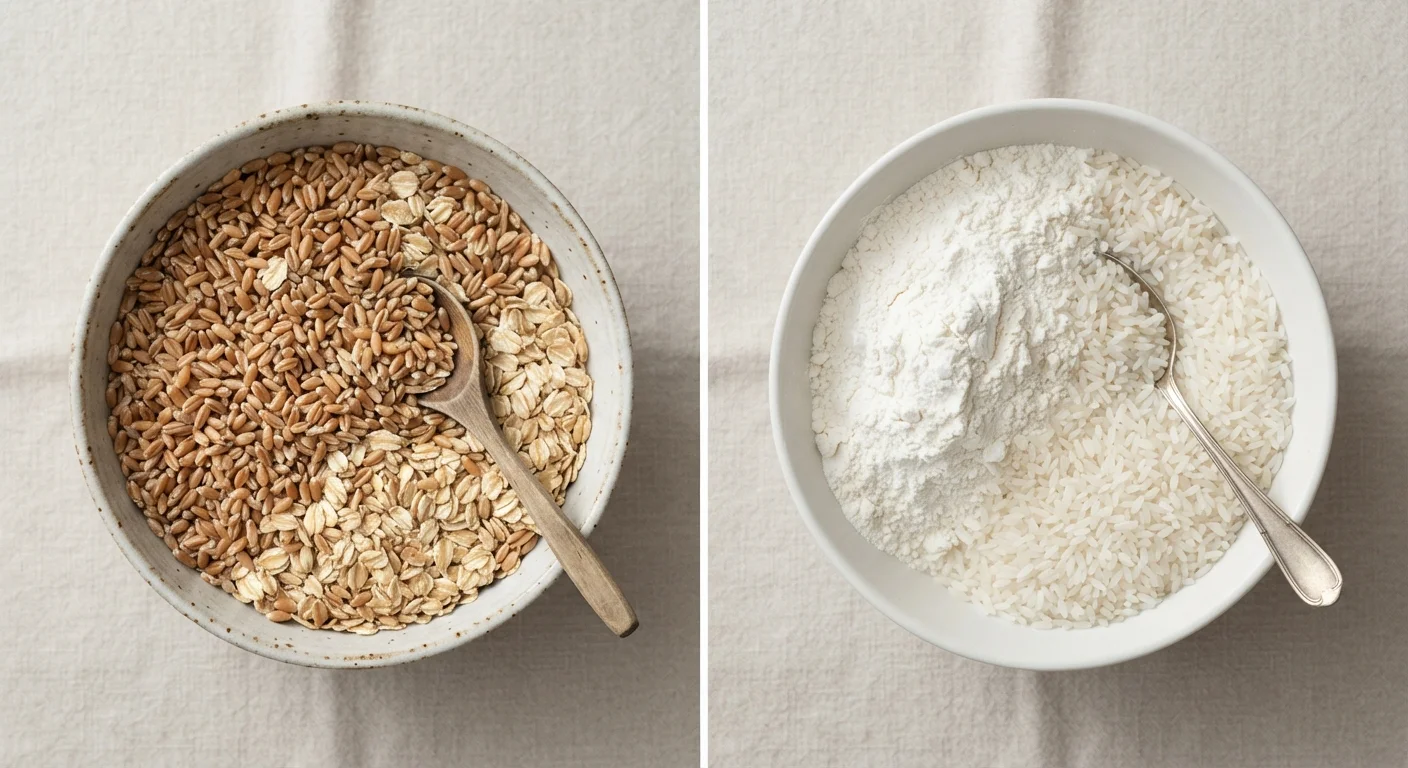
Photo credit: Infolagoon.com | Blogs To Rely On
In this article
Understand what's lost when grains are refined, what's added back in enriched versions, and what the evidence says about each.
Key Takeaways
- Refining a grain removes the bran and germ, stripping fiber, B vitamins, and minerals in the process.
- Enriched refined grains have some nutrients added back, but fiber is not among them.
- Research consistently links higher whole grain intake to reduced risk of heart disease and type 2 diabetes.
- "Multigrain" and "wheat bread" labels do not guarantee whole grain content — check the ingredient list.
- Most Americans consume far less whole grain than the Dietary Guidelines for Americans recommend.
- Both grain types can fit a balanced diet, but context and overall eating patterns matter most.
What Happens Inside the Milling Process
Every grain — whether wheat, rice, oats, or corn — is structured in three layers: the outer bran, the inner germ, and the starchy center called the endosperm. A whole grain keeps all three intact. When a grain is refined, the bran and germ are mechanically removed, leaving only the endosperm.
That removal is not trivial. The bran supplies most of a grain's dietary fiber, along with B vitamins and trace minerals. The germ contributes healthy fats, vitamin E, and additional B vitamins. What remains after milling — the endosperm — is predominantly starch with a small amount of protein and very few micronutrients.
The result is a product with a softer texture, lighter color, and longer shelf life. Those properties are genuinely useful in commercial food production, which is why refined grains dominate packaged foods, breads, and pastas across American grocery aisles.
| Criterion | Whole Grains | Refined Grains |
|---|---|---|
| Parts of the grain retained | Bran, germ, and endosperm | Endosperm only |
| Dietary fiber | High — naturally present | Low — removed in milling |
| B vitamins | Naturally present | Partially restored via enrichment |
| Iron | Naturally present | Added back in enriched products |
| Vitamin E & magnesium | Naturally present | Not restored after milling |
| Glycemic response | Slower, more gradual | Faster, higher spike |
| Shelf life | Shorter (oils in germ can go rancid) | Longer |
| Texture and taste | Denser, nuttier | Lighter, milder |
Enrichment: What Gets Added Back — and What Doesn't
To offset some nutrient loss from milling, the U.S. government requires certain refined grain products to be enriched — meaning specific nutrients are added back after processing. Under standards set by the Food and Drug Administration, enriched products must contain added thiamine, riboflavin, niacin, folic acid, and iron.
This policy has had genuine public health impact. Mandatory folic acid fortification of enriched grain products, introduced in 1998, contributed to a significant decline in neural tube defects in the United States, according to the Centers for Disease Control and Prevention.
However, enrichment has clear limits. Fiber is not added back. Neither are magnesium, zinc, vitamin E, or the dozens of phytochemicals (natural plant compounds) present in the bran and germ. Even when a refined grain product lists multiple nutrients on its label, it is not nutritionally equivalent to its whole grain counterpart.
< 5%
Americans meeting whole grain recommendations
Research published in the American Journal of Clinical Nutrition estimated that fewer than 5% of U.S. adults meet the Dietary Guidelines recommendation for whole grain intake.
25%
Decline in neural tube defects after folic acid fortification
The CDC reported approximately a 25% reduction in neural tube defect rates in the years following mandatory folic acid enrichment of grain products, introduced in 1998.
~21%
Lower cardiovascular disease risk with whole grains
A meta-analysis of prospective cohort studies found that higher whole grain consumption was associated with roughly a 21% lower risk of cardiovascular disease events.
This gap matters when thinking about label language. As our piece on nutrition traps in food marketing explains, terms like "multigrain" and "made with whole grain" do not mean a product is predominantly whole grain. The only reliable check is scanning the ingredient list for the word "whole" as the first grain listed.
What the Research Says About Health Outcomes
The evidence connecting whole grain consumption to health outcomes is substantial and consistent. Large observational studies — including data from the Nurses' Health Study and the Health Professionals Follow-up Study — have associated higher whole grain intake with lower risks of cardiovascular disease, type 2 diabetes, and certain digestive conditions. The Dietary Guidelines for Americans recommend that at least half of all grains consumed daily be whole grains.
The mechanisms are reasonably well understood. The fiber in whole grains slows the digestion of starch, producing a more gradual rise in blood glucose — a lower glycemic response. Fiber also feeds beneficial gut bacteria and contributes to feelings of fullness. The micronutrients and phytochemicals in the bran and germ appear to have additional anti-inflammatory and antioxidant effects, though research in this area continues to evolve.
Refined grains are not inherently harmful, and they have been dietary staples across many cultures for centuries. The concern is one of proportion: when refined grains consistently crowd out whole grain choices across an entire eating pattern, the cumulative effect on fiber intake, glycemic load, and micronutrient density can be meaningful. This parallels the conversation around added versus natural sugar — individual foods matter less than the overall dietary pattern they fit into.
A Note on "Whole Wheat" vs. "Wheat"
"Wheat bread" and "wheat flour" on an ingredient label simply mean the product is made from wheat — they say nothing about whether the whole grain is intact. Only the phrase "whole wheat" or "whole grain [grain name]" as the first ingredient confirms the bran and germ are present. The same logic applies to rice, corn, oats, and other grains. When in doubt, look for a product certified by the Whole Grain Council's Whole Grain Stamp, which specifies the gram count of whole grain per serving.
This article is for general informational purposes only and does not constitute medical or dietary advice. Individuals with specific health conditions, including diabetes or digestive disorders, should consult a qualified healthcare professional before making significant changes to their diet.

Author
Health & Wellness Editorial Team
Health & Wellness Editorial Team is the collective byline for our editorial team and contributor network. Articles published under this byline or an editorial pen name are researched, written, and reviewed according to our editorial standards for clarity, consistency, and independence before publication.
View all articles →