
The DIY vs. Shop Decision: When to Do It Yourself and When to Call a Mechanic
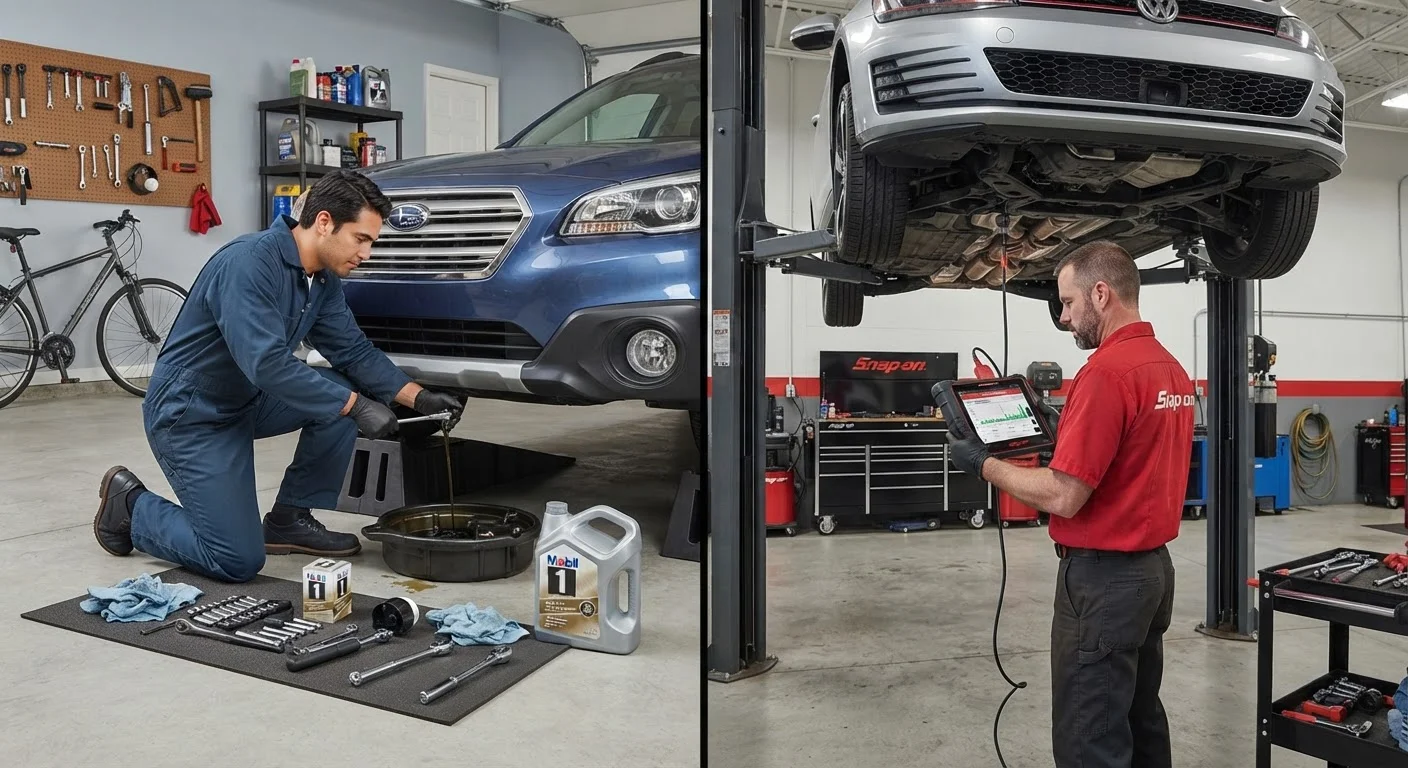
Photo credit: Infolagoon.com | Blogs To Rely On
In this article
Some tasks are genuinely manageable at home; others carry real safety risks. Here's a clear-eyed look at where the line sits.
Key Takeaways
- Simple maintenance tasks like air filters and wiper blades are safe and cost-effective to do yourself.
- Brakes, airbags, and anything affecting structural safety should always go to a qualified mechanic.
- The wrong DIY attempt can void warranties and create more expensive problems than the original issue.
- Tools, workspace, and confidence level all factor into whether a job is realistic at home.
- Deferred repairs - DIY or not - often escalate into significantly larger bills over time.
Significant cost savings on labor charges
Shop labor rates often run between $80 and $150 per hour depending on location and shop type. Routine tasks like an oil change can cost three to four times more at a shop compared to doing it yourself with purchased supplies.
Builds working knowledge of your vehicle
Performing basic maintenance yourself helps you recognize what's normal - and what isn't - under the hood, which can help you catch developing problems earlier.
Schedule flexibility without waiting for appointments
DIY work happens on your timeline, without coordinating drop-offs, loaner cars, or waiting room hours that disrupt your day.
Control over parts quality and sourcing
When you source your own parts, you can choose the specification and grade that matches your driving needs rather than accepting whatever the shop stocks at markup.
Safety errors carry serious physical consequences
Improperly installed brakes, loose suspension components, or incorrectly seated wheels can cause accidents. Unlike a cosmetic mistake, safety-system errors can have irreversible consequences.
Mistakes can create larger, more expensive problems
A stripped oil drain plug, a cracked coolant housing, or an overtorqued wheel bolt can turn a simple maintenance job into a costly repair requiring professional intervention.
Upfront tool investment reduces short-term savings
Certain jobs require purchasing tools - jack stands, torque wrenches, filter wrenches - that may cost more than the labor savings on a single job, though they pay off over time.
Risk of voiding warranty or service coverage
Manufacturer warranties and some extended service contracts include provisions that require specific work to be performed by certified technicians to remain valid.
Diagnostic complexity is often underestimated
Modern vehicles use complex, interlinked electronic systems. What looks like a simple fix may actually require professional diagnostic equipment to identify and resolve correctly.
Why This Decision Matters More Than Most Drivers Think
Every driver eventually faces a maintenance question: handle it yourself, or take it to a shop? The answer isn't always obvious, and the stakes aren't trivial. A botched brake job or an improperly installed sensor can create safety hazards that dwarf the original problem. On the flip side, paying shop rates for a cabin air filter swap is just unnecessary spending.
The goal here isn't to steer you toward one path. It's to give you an honest framework - what makes a task DIY-appropriate, what makes it genuinely risky, and how to read your own situation clearly. If you've ever wondered whether that deferred repair is snowballing into something worse, the answer usually lies in whether it was the right call to delay in the first place.
The Case for Doing It Yourself
For the right tasks, DIY maintenance is a legitimate way to save money, build mechanical fluency, and stay more connected to how your vehicle operates.
Significant cost savings on labor charges
Shop labor rates often run between $80 and $150 per hour depending on location and shop type. Routine tasks like an oil change can cost three to four times more at a shop compared to doing it yourself with purchased supplies.
Builds working knowledge of your vehicle
Performing basic maintenance yourself helps you recognize what's normal - and what isn't - under the hood, which can help you catch developing problems earlier.
Schedule flexibility without waiting for appointments
DIY work happens on your timeline, without coordinating drop-offs, loaner cars, or waiting room hours that disrupt your day.
Control over parts quality and sourcing
When you source your own parts, you can choose the specification and grade that matches your driving needs rather than accepting whatever the shop stocks at markup.
Tasks that generally fall within DIY territory for most drivers include: replacing engine and cabin air filters, swapping wiper blades, changing engine oil and filter (with proper disposal of used oil), replacing a dead battery, installing new spark plugs on accessible engines, and topping off fluids like coolant, power steering fluid, and windshield washer fluid.
What makes these manageable? They require basic hand tools, don't involve safety-critical systems, and have clear how-to documentation from reputable sources. Video walkthroughs specific to your make and model are widely available and worth checking before you start.
The Case for Going to a Professional
Confidence isn't the same as competence, and some jobs carry real consequences when they go wrong. The shop exists for a reason.
Safety errors carry serious physical consequences
Improperly installed brakes, loose suspension components, or incorrectly seated wheels can cause accidents. Unlike a cosmetic mistake, safety-system errors can have irreversible consequences.
Mistakes can create larger, more expensive problems
A stripped oil drain plug, a cracked coolant housing, or an overtorqued wheel bolt can turn a simple maintenance job into a costly repair requiring professional intervention.
Upfront tool investment reduces short-term savings
Certain jobs require purchasing tools - jack stands, torque wrenches, filter wrenches - that may cost more than the labor savings on a single job, though they pay off over time.
Risk of voiding warranty or service coverage
Manufacturer warranties and some extended service contracts include provisions that require specific work to be performed by certified technicians to remain valid.
Diagnostic complexity is often underestimated
Modern vehicles use complex, interlinked electronic systems. What looks like a simple fix may actually require professional diagnostic equipment to identify and resolve correctly.
Tasks that should consistently go to a qualified mechanic include: brake system work beyond basic pad replacement (calipers, brake lines, ABS components), suspension and steering repairs, timing belt or chain service, airbag and supplemental restraint system work, transmission diagnosis and repair, and anything that throws a diagnostic trouble code you can't confidently interpret.
When Symptoms Are Unclear, Don't Guess
Warning lights, unusual noises, and handling changes can each point to multiple possible causes. Attempting to fix the wrong thing not only wastes money but can mask the actual problem, making it harder for a professional to diagnose later. If you're not confident in what you're seeing, a diagnostic visit is money well spent.
If you're ever unsure what you're looking at under the hood, knowing how to describe a problem clearly to a professional can save you both money and frustration at the shop.
How to Assess Any Task Before You Start
Before committing to a DIY repair, run it through a practical checklist:
- Do you have the right tools? Some jobs require specialized tools - torque wrenches, spring compressors, OBD-II scanners - that aren't in a basic home toolkit.
- Is there a safe workspace? Never work under a vehicle supported only by a floor jack. Proper jack stands are non-negotiable.
- Does this affect safety systems? Brakes, steering, suspension, airbags - these are not the place to learn on the job.
- Could a mistake void your warranty? Some manufacturer warranties and extended service contracts require certain work be performed by certified technicians.
- Can you source quality parts? Using undersized or low-quality components can cause premature failure and additional costs.
$80-$150
Typical shop labor rate per hour
Labor rates vary widely by region, shop type, and specialization - dealerships often sit at the higher end of this range.
~35%
Of U.S. drivers perform some DIY maintenance
Consumer surveys consistently find a significant minority of American drivers handle at least some routine maintenance tasks themselves.
When in doubt, err toward the shop. The marginal savings on a complex repair rarely justify the risk if something goes wrong.

Author
Autos & Transport Editorial Team
Autos & Transport Editorial Team is the collective byline for our editorial team and contributor network. Articles published under this byline or an editorial pen name are researched, written, and reviewed according to our editorial standards for clarity, consistency, and independence before publication.
View all articles →