
Private Seller vs. Dealership: What Changes When You Buy a Car from an Individual
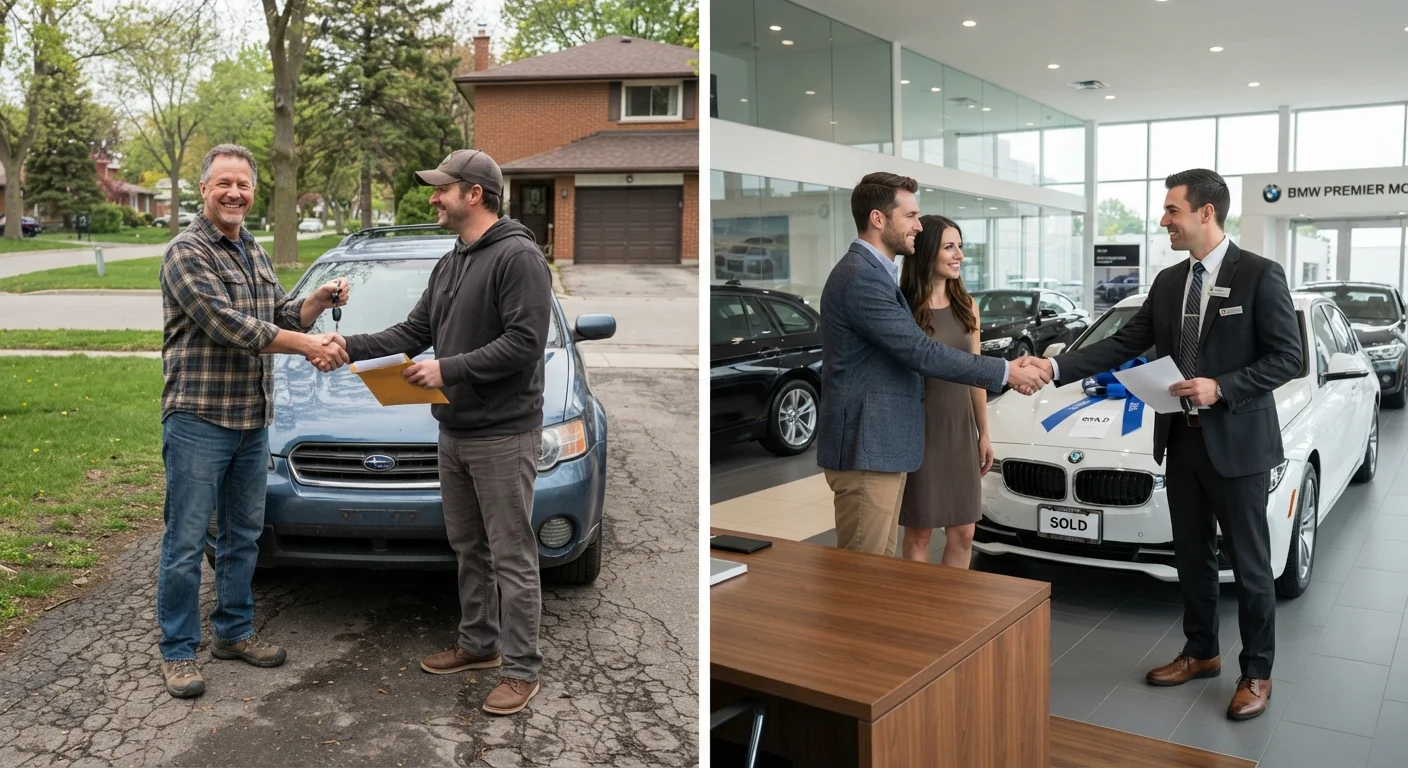
Photo credit: Infolagoon.com | Blogs To Rely On
In this article
Buying from a private seller can look like a deal—but the protections and risks are very different from buying through a dealer.
Key Takeaways
- Private sales are typically "as-is" - there is no implied warranty or mandated return policy.
- Dealerships are regulated by state and federal law; private sellers generally are not.
- Financing through a private seller usually means arranging your own loan before purchase.
- Title transfer and lien checks fall on the buyer in a private sale - errors can be costly.
- A pre-purchase inspection by a qualified mechanic is essential when buying from any private individual.
- Certified Pre-Owned programs and implied warranties only exist through licensed dealers.
The Core Difference: Regulation and Accountability
When you buy from a licensed dealership, you're entering a transaction governed by a layered set of rules. The Federal Trade Commission's Used Car Rule, for example, requires dealers to display a Buyers Guide disclosing whether a vehicle is sold as-is or with a warranty. State dealer licensing laws add another layer - dealers can lose their license for fraudulent conduct. That accountability creates meaningful leverage for buyers.
A private seller operates outside most of these requirements. They're typically not required to provide disclosures, honor warranties, or meet any licensing standard. In most states, a private sale is legally "as-is" by default, meaning the seller owes you no implied guarantee about the vehicle's condition. If a serious mechanical problem surfaces the week after you drive away, you generally have no automatic legal claim against the seller.
This doesn't mean private sellers are dishonest - most are ordinary people selling a vehicle they no longer need. But the absence of regulatory structure means the burden of verification falls almost entirely on the buyer. See our used car shopping guide for a breakdown of the issues that blindside buyers most often.
| Criterion | Private Seller | Licensed Dealership |
|---|---|---|
| Regulatory oversight | Minimal to none | State and federal licensing laws |
| As-is sales | Standard in most states | Must be disclosed via FTC Buyers Guide |
| Warranty options | None (unless written into contract) | Dealer, manufacturer, or CPO warranties available |
| Financing | Buyer arranges independently | On-site financing options available |
| Title verification | Buyer's responsibility | Dealer handles lien payoff and transfer |
| Price negotiation | Direct, flexible | Structured, may include fees |
| Buyer recourse | Limited; often civil litigation only | Consumer protection laws and state licensing boards |
| Vehicle history disclosure | Voluntary | Required disclosures for known defects |
Financing, Title, and the Paperwork You're Responsible For
Dealerships offer integrated financing through their own lending relationships. You apply, get approved, and sign - all in one place. Private sales don't work that way. To finance a vehicle from an individual, you'll typically need to secure a personal auto loan from your own bank or credit union before you finalize the deal. That requires knowing the vehicle's value in advance and having a lender willing to approve a private-party purchase, which some lenders limit or price differently.
Title transfer is another area where private sales require more hands-on work. You'll need to verify the title is clean - meaning no outstanding liens from a previous auto loan - before handing over money. A lienholder not listed on the title, or a title that's still in a prior owner's name, can create serious complications. Your state's DMV website can guide you on how to check, and a vehicle history report (using the VIN) is a practical starting point.
~40%
Used car sales occurring through private parties
Industry estimates suggest roughly 40% of used vehicle transactions in the U.S. take place between private individuals, not through dealerships.
1 in 5
Used vehicles with outstanding liens at sale
Vehicle history report providers have noted that a significant share of used vehicles listed for private sale carry unresolved liens at the time of listing.
If the seller still owes money on the vehicle, the existing lender holds the title. That transaction is manageable, but it adds steps - typically the loan must be paid off and the lien released before you can register the vehicle in your name. For more on navigating these complexities as a newer buyer, the first-timer's vehicle ownership guide walks through the full process.
Warranties, Condition, and What Recourse You Actually Have
One of the clearest practical differences between the two channels is warranty coverage. Dealerships can sell vehicles with remaining manufacturer warranties, dealer warranties, or certified pre-owned (CPO) coverage - a program that requires a multi-point inspection and provides a defined warranty period. Private sellers cannot offer CPO vehicles. Whatever warranty language a private seller uses verbally carries little legal weight unless it's written into the bill of sale.
For the as-is private sale, the pre-purchase inspection is your primary protection. Having an independent, qualified mechanic inspect the vehicle before you commit is one of the most effective ways to surface hidden problems - engine issues, suspension wear, frame damage - that aren't visible during a test drive. Most sellers will accommodate this request; those who refuse are worth walking away from.
If a dealership misrepresents a vehicle's condition, you may have recourse under state consumer protection laws or by filing a complaint with your state attorney general or the FTC. With a private seller, your legal options are narrower and typically require civil litigation - an expensive path for most buyers. The dealership process guide explains what disclosures and steps to expect when going the dealer route.
CPO Vehicles Are Dealer-Exclusive
Certified Pre-Owned programs are administered by manufacturers and are only available through franchised dealerships. They require a documented multi-point inspection and come with a defined warranty - typically covering powertrain and major systems for a set period. No private seller can legally offer a CPO vehicle. If a private listing uses CPO-style language, treat it with skepticism and verify independently. For a fuller picture of how new, used, and CPO vehicles compare, see this breakdown of vehicle types.
This article is for general informational purposes only and does not constitute legal, financial, or professional advice. Consult a licensed professional for guidance specific to your situation.

Author
Autos & Transport Editorial Team
Autos & Transport Editorial Team is the collective byline for our editorial team and contributor network. Articles published under this byline or an editorial pen name are researched, written, and reviewed according to our editorial standards for clarity, consistency, and independence before publication.
View all articles →