
How Depreciation Works-and What It Means for the Car You Choose
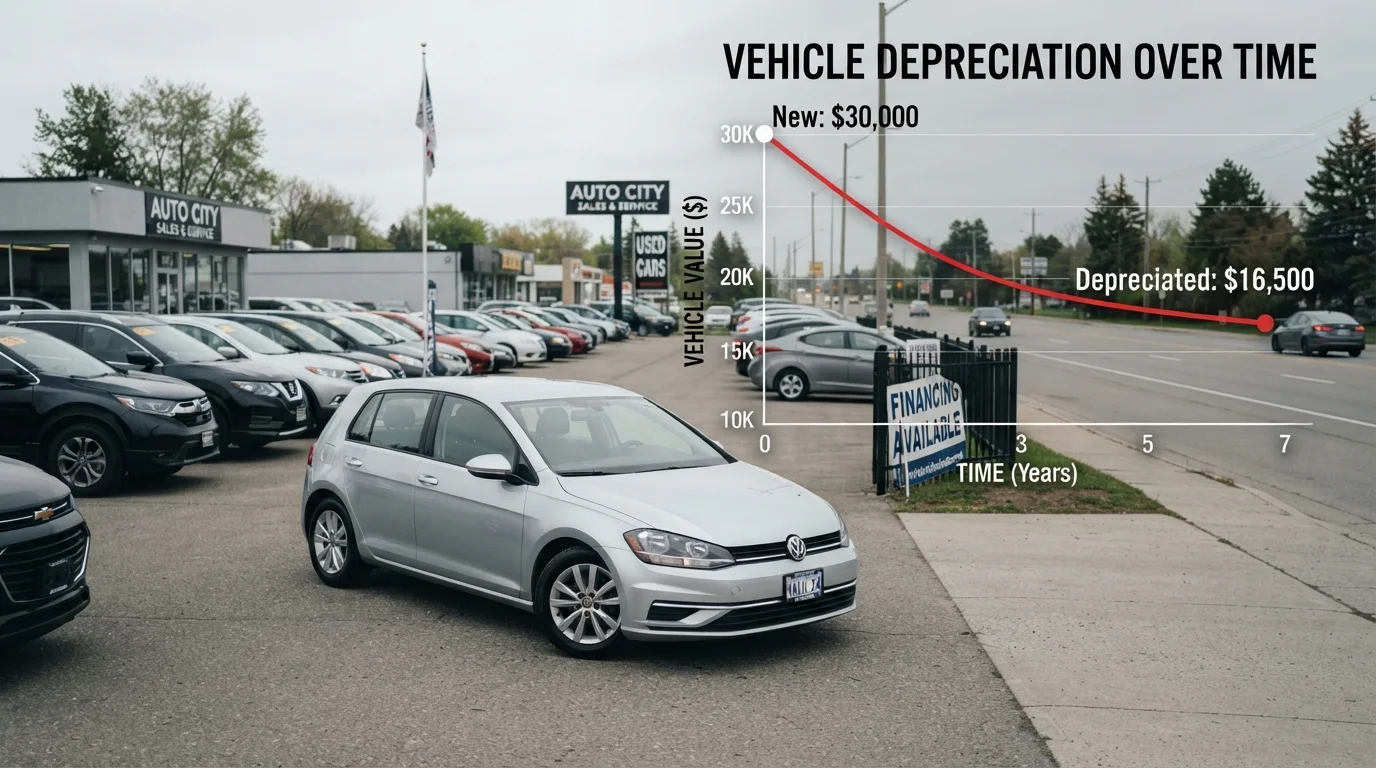
Photo credit: Infolagoon.com | Blogs To Rely On
In this article
Most vehicles lose value the moment they leave the lot. Understanding depreciation can meaningfully change which car makes sense for you.
Key Takeaways
- New vehicles typically lose 15-25% of their value in the first year alone.
- The steepest depreciation occurs in years one through three of ownership.
- Some vehicle types and segments historically hold their value better than others.
- Buying a lightly used vehicle lets someone else absorb the early depreciation hit.
- Depreciation directly affects what you can recoup when you sell or trade in.
Why Depreciation Is the Cost Nobody Talks About
Most car shoppers focus on the sticker price, the monthly payment, and maybe the interest rate. Depreciation rarely makes the conversation-yet for many owners, it represents a larger financial impact than fuel, insurance, or maintenance combined.
When you buy a vehicle and later sell or trade it in, the difference between what you paid and what you receive is largely driven by depreciation. Understanding how that loss accrues-and what influences it-gives you a clearer view of what a vehicle actually costs over time. See our full breakdown of car-buying costs for how depreciation fits into the bigger financial picture.
15-25%
New vehicle value lost in year one
Industry estimates from vehicle valuation services consistently show new cars shed roughly 15-25% of their value within the first 12 months.
~50%
Value retained after five years (typical)
Most mainstream vehicles retain approximately 40-60% of their original value after five years, depending on segment, mileage, and market conditions.
Year 1-3
Period of steepest depreciation
The sharpest value decline for most vehicles occurs in the first three years of ownership, after which the rate of loss moderates significantly.
How the Depreciation Curve Actually Works
Depreciation isn't a straight line. It front-loads. A new vehicle typically loses the most value in its first one to three years, then the rate of loss gradually slows.
The first-year drop is especially steep because a new car becomes a used car the moment it's registered-even before you've left the parking lot. Supply and demand dynamics compound this: new model-year vehicles entering the market push down the value of the previous year's models.
By years four through six, most vehicles have already shed the bulk of their value and depreciate at a more gradual pace. This is one reason a vehicle that is two or three years old can represent meaningful savings compared to its new equivalent.
Consider the Two-to-Three Year Sweet Spot
Vehicles aged two to three years have already absorbed the steepest depreciation drop but typically still have plenty of useful life remaining. This window often represents the point where per-dollar value is highest for buyers who don't need a brand-new model. Checking a vehicle's service history and having a pre-purchase inspection done by a qualified mechanic remains important regardless of age.
What Influences How Fast a Vehicle Depreciates
Not all vehicles depreciate at the same rate. Several factors push that curve up or down:
- Brand reputation and reliability perception: Vehicles with a strong track record for reliability tend to hold value longer because buyers remain willing to pay more for them used.
- Fuel type and market demand: Consumer preferences shift. Vehicles that fall out of favor-due to changing fuel costs, cultural trends, or new regulations-can depreciate faster.
- Mileage: Higher annual mileage accelerates value loss. Most depreciation benchmarks assume roughly 12,000-15,000 miles per year.
- Condition and service history: A well-documented maintenance record and clean condition slow value loss at resale.
- Market supply: When a model is discontinued or scarce, used values can hold stronger. Conversely, a market flooded with off-lease units of a particular model pushes prices down.
Vehicle segment also matters. Pickup trucks and some SUVs have historically held value better than sedans or luxury vehicles in many markets-though this varies and should not be assumed to hold in every situation or economic climate.
What Depreciation Means When You're Choosing a Vehicle
Understanding depreciation should influence several practical decisions:
New vs. used: Buying a vehicle that is two to four years old lets you avoid the steepest part of the depreciation curve. The differences between new, used, and CPO vehicles go beyond price-but depreciation is a significant factor in the value calculus.
Financing and equity: When you finance a vehicle, depreciation can temporarily put you "underwater"-meaning you owe more than the vehicle is worth. This matters if you need to sell or if the car is totaled. How financing and leasing interact with depreciation is worth understanding before you sign.
Leasing: Lease payments are essentially payments for depreciation plus financing costs. Vehicles that depreciate slowly often have more favorable lease terms because the projected residual value is higher.
Resale planning: If you expect to sell within a few years, choosing a model with historically strong resale value reduces your net ownership cost. If you plan to keep a vehicle for ten or more years, early depreciation matters far less.
For a plain-language explanation of terms like residual value, GAP insurance, and trade-in equity, the car-buying glossary is a useful reference.
“Depreciation is the single largest cost of ownership for most vehicles, yet it's the one cost that buyers rarely see itemized anywhere in the transaction.”
— Consumer automotive researchers, Vehicle cost-of-ownership analysts
Frequently Asked Questions

Author
Autos & Transport Editorial Team
Autos & Transport Editorial Team is the collective byline for our editorial team and contributor network. Articles published under this byline or an editorial pen name are researched, written, and reviewed according to our editorial standards for clarity, consistency, and independence before publication.
View all articles →