
Smart Speaker vs. Smart Display: Which Hub Fits Your Home?
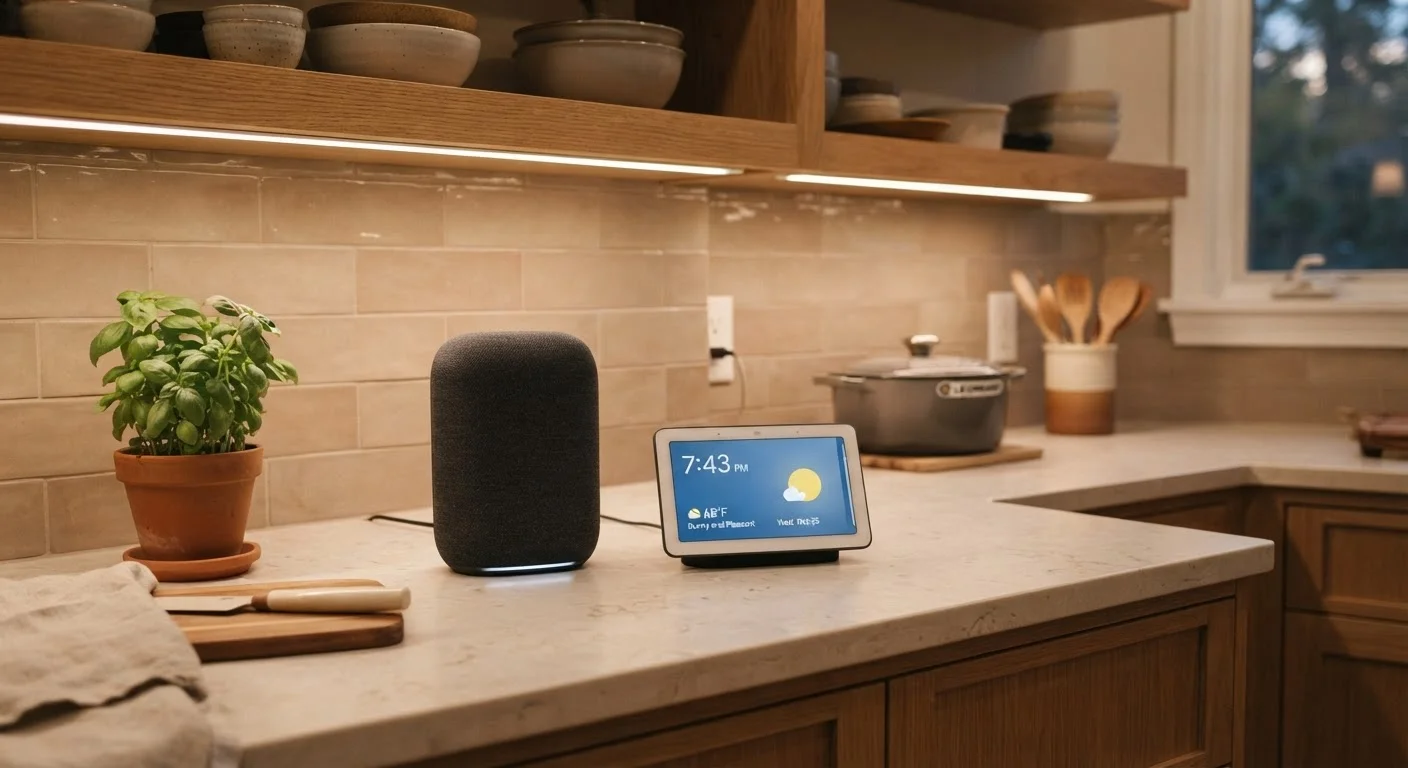
Photo credit: Infolagoon.com | Blogs To Rely On
In this article
Smart speakers and smart displays share DNA but serve different needs. Here's how they differ in daily use so you can decide what suits your household.
Key Takeaways
- Smart speakers rely entirely on voice and audio; smart displays add a touchscreen for visual interaction.
- Smart displays cost more and occupy more counter space, but deliver meaningfully more functionality.
- Both device types typically anchor to a specific ecosystem such as Amazon Alexa or Google Home.
- For most kitchens and family common areas, a smart display offers more practical daily value.
- A smart speaker is often the simpler, less intrusive choice for bedrooms or home offices.
What Each Device Actually Does
A smart speaker is essentially a voice assistant in a speaker shell. You speak a command — set a timer, play a playlist, ask about the weather, control a smart light — and it responds through audio. There is no screen, so every interaction is purely conversational.
A smart display adds a touchscreen to that same foundation. You still issue voice commands, but the device can also show you visual answers: a map, a recipe card, a live camera feed, a video call. You can also tap and swipe the screen directly, which removes the need to phrase everything as a voice request.
Both devices connect to your home Wi-Fi and typically require pairing with a smart home ecosystem. Understanding how these ecosystems work matters before you choose, because the assistant built into your device — Alexa, Google Assistant, or others — largely determines which smart home products it can control.
| Criterion | Smart Speaker | Smart Display |
|---|---|---|
| Screen | None | Touchscreen (varies by size) |
| Primary interaction | Voice only | Voice and touch |
| Video calling | Audio only | Yes, with built-in camera |
| Recipe / visual guidance | Audio descriptions only | On-screen step-by-step display |
| Camera feed viewing | Not supported | Supported (smart cameras) |
| Physical footprint | Compact, minimal | Larger, requires counter space |
| Typical price range | Lower | Higher |
| Best room placement | Bedroom, office, shelf | Kitchen, living room, entryway |
Where Each Shines in Daily Life
Smart speakers tend to fade into the background. Their compact form means they fit comfortably on a nightstand, shelf, or desk without demanding attention. Because there's no screen, there's also nothing to look at — which is genuinely useful in a bedroom, home office, or any space where you'd rather not introduce another glowing surface.
Smart displays earn their extra footprint in high-activity rooms. In a kitchen, seeing a recipe step-by-step without touching a phone is a practical win. In a living room or entryway, being able to glance at who's at the front door — pulled from a doorbell camera — is a real safety convenience rather than a gimmick.
Video calling is another meaningful differentiator. Smart displays include front-facing cameras built specifically for this use case, which makes them a viable shared-room communication device, particularly for households with family members who aren't comfortable navigating a smartphone app.
Both Devices Share an Important Limitation
Neither smart speakers nor smart displays work as standalone smart home hubs for every protocol. Depending on which connected devices you already own or plan to add, you may need a separate hub or bridge. Check whether your specific devices communicate over Wi-Fi, Zigbee, Z-Wave, or the newer Matter standard before assuming the speaker or display will control them automatically.
If you're unsure how a device fits into your broader home setup, a clear overview of what smart home technology actually involves can help frame the decision.
Trade-Offs Worth Knowing Before You Decide
Smart displays cost noticeably more than speakers in the same product line, and screen size is typically the largest price driver — bigger displays carry higher price tags. They also take up more counter space and draw more power continuously.
Privacy is a relevant consideration for both device types, but displays add a camera to the usual microphone concerns. The privacy trade-offs of living with smart home devices are worth reviewing before placing either type in a private space like a bathroom or bedroom.
35%
U.S. adults with a smart speaker
According to Pew Research Center data, roughly 35% of American adults reported owning a smart speaker as of a recent survey period.
~2x
Average price premium for displays over speakers
Smart displays in comparable product lines generally cost approximately twice as much as their speaker counterparts within the same ecosystem.
Compatibility with the rest of your home tech stack should factor in early. Checking ecosystem fit and connectivity requirements before purchase helps avoid the most common source of smart home frustration. And if you're curious about practical uses beyond voice control, everyday smart home applications that often get overlooked is worth a read.

Author
Tech & Gadgets Editorial Team
Tech & Gadgets Editorial Team is the collective byline for our editorial team and contributor network. Articles published under this byline or an editorial pen name are researched, written, and reviewed according to our editorial standards for clarity, consistency, and independence before publication.
View all articles →